Who is each approach for?

Regular carrot-juice makers

If carrots are part of a regular routine, consider how much cutting and washing you are willing to do each time. A slow juicer is worth considering if greens or celery will also go through the machine; check the supported ingredients and feed design of the particular model.

Quick-batch juicers

If you mainly want several servings of carrot juice without a lengthy extraction process, a centrifugal machine fits that priority. Allow for the possibility of more froth, and check the juice container, pulp container and running instructions before planning larger batches.

Low-prep, low-fuss buyers

If chopping carrots or washing several parts would put you off using the juicer, look closely at its loading instructions and removable parts. A wide opening can help with preparation, but it does not by itself mean every carrot can be fed whole.

What matters when choosing?

Slow juicer

Consider it when: You make carrot juice regularly and also want to press greens or celery.

Trade-off: The auger-based process is slower, and preparation and cleaning still depend on the model.

Centrifugal juicer

Consider it when: Getting through a batch of carrots quickly is your main priority.

Trade-off: Juice can be frothier, and this route may be less useful if leafy greens become a regular ingredient.

Concern What to check Who this matters to
Extraction and ingredients Check whether the machine uses a slow auger or centrifugal extraction, and whether its instructions cover the other produce you intend to juice. I want carrot juice but also expect to use greens or celery, so the ingredients the machine accepts matter more to me than speed alone. Roughly 36% of consumers put this versatility first.
Speed and batches Compare the extraction method, container capacities and any maximum continuous-use instruction. When I am making several glasses, I want the process to fit the time I have available. For around 29% of consumers, quick batch-making is the primary concern.
Preparation and cleaning Check the feed opening, carrot-loading instructions, removable parts and any reverse function. Cutting carrots and washing the machine after each use would make the routine harder to keep up. About 21% of consumers place lower-prep, easier-cleaning use first.
Storage and warranty Measure the space available and read the exact model's written motor and parts warranty terms. I need somewhere practical to keep the juicer and want to understand what its warranty covers. For roughly 14% of consumers, fit and ownership reassurance take priority.

Mistakes to avoid

  • Choosing by motor wattage alone

    Wattage does not tell you how a juicer handles carrots, how much preparation it needs or how its parts are cleaned. Centrifugal and slow machines also extract juice in different ways.

    Choose the extraction method for your routine first, then compare the feed opening, containers and cleaning steps on the exact model.

  • Assuming a wide chute takes every carrot whole

    Feed openings differ in shape as well as width, and loading instructions may require carrots to be cut or fed with the supplied pusher.

    Use whole carrots only where the model's instructions permit them; otherwise prepare them to the specified size and follow the loading instructions.

  • Treating yield or nutrient claims as a guaranteed advantage

    Brands describe their slow-juicing designs in terms of yield, oxidation or texture, but those claims are not interchangeable comparisons across all carrot juicers.

    Use the claims as questions to investigate, not as a substitute for checking the model's feed design and everyday workflow.

  • Counting every extra glass towards 5 A Day

    The NHS says unsweetened 100% fruit or vegetable juice and smoothies count as a maximum 150 ml portion once a day towards 5 A Day.

    Choose a batch size for how you plan to serve juice, rather than assuming a larger batch adds further 5 A Day portions.

Brands to consider

Kuvings

Its UK slow-juicer range includes models with different approaches to feeding carrots and other vegetables.

  • Kuvings says the REVO830S can accommodate whole carrots through its long-vegetable feed arrangement. The B8200S is specified with an 82 mm feed tube.
  • The B8200S instructions specify use for less than 30 minutes at a time. Check the running and loading instructions for the model you choose.

Philips

The HR1922/21 provides a centrifugal option for a carrot-juice routine centred on speed.

  • Philips lists the HR1922/21 as a 1200 W juicer with a water-based pre-clean function.
  • Those features do not establish carrot yield or cleaning time. Consider whether centrifugal juice's potential froth suits you.

Ninja

Its JC151UK is a slow-juicer option with a named anti-clog design.

  • Ninja describes the JC151UK as combining an auger and anti-clog filter; its claims about reduced clogging and foam are the brand's own.
  • Check the feed arrangement, washable parts and current warranty terms for the exact listing before deciding whether it fits your routine.

Hurom

Its UK range includes slow juicers of different sizes and feeding designs.

  • Hurom describes its machines as using lower-speed pressing. Compare individual models if counter space or feeding style matters to you.
  • Hurom's statements about oxidation and yield are brand positioning, not proof that every model outperforms a centrifugal juicer for carrots.

Sage

Sage Appliances UK explains both centrifugal and auger-based juicing as distinct ways to process produce.

  • Its explanation can help you decide whether faster spinning or slower pressing better matches your carrot-juice routine.
  • A comparison of extraction methods does not establish the performance of a particular Sage model; check that model's own instructions and features.

Joybuy products for carrot juicing

These choices cover a centrifugal juicer for quicker carrot batches and a slow juicer for an auger-based routine. For either machine, confirm that the selected electrical variant and plug suit your setup before buying.

Nutribullet Juicer 800 W with 1.5 L pulp basin

Nutribullet Juicer 800 W, 1.5 L Pulp Basin

Consider this centrifugal juicer if quick carrot batches are your priority.

Its listed features include a 3-inch chute and dishwasher-safe parts. The 1.5 L figure describes the pulp basin, not the amount of juice produced; follow the loading instructions rather than assuming every carrot fits whole.

Confirm the selected voltage variant and plug compatibility before purchase.

View on Joybuy
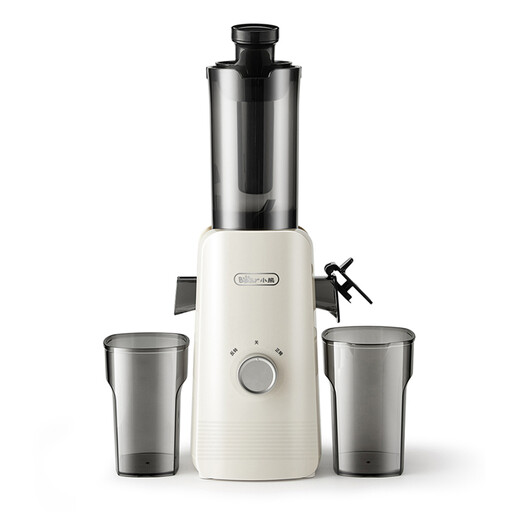
Bear YZJ-F01D6 80 mm slow juicer with 1 L capacity

Bear YZJ-F01D6 80 mm Slow Juicer, 1 L

Consider this model if you prefer slow pressing and want to assess a wider feed opening for your carrot routine.

The listed opening is 80 mm; that measurement alone does not confirm whole-carrot loading. The Joybuy listing instructs users to select REV if ingredients become stuck. Follow its operating limit when planning repeated batches.

Check the carrot-loading instructions, voltage and plug compatibility for the variant you select.

View on Joybuy

Carrot juicer questions

Is a slow juicer always better for carrots?

No. A slow juicer makes sense if you want an auger-based routine and also plan to juice greens or celery; a centrifugal juicer makes sense if quick carrot batches matter more. Check the specific feed arrangement, containers and cleaning steps rather than assuming either method wins on every measure.

Can I put whole carrots into a juicer?

Only if the exact model's instructions allow it. Kuvings says its REVO830S accommodates whole carrots, but a wide opening on another model does not establish the same loading guidance. Cut carrots where required and use the supplied loading equipment as instructed.

What if carrot fibres clog a slow juicer?

Follow that model's stopping and clearing instructions. The Joybuy listing for the Bear YZJ-F01D6 directs users to select REV when ingredients become stuck; check whether your own model has that function before using it.

How much carrot juice counts towards 5 A Day in the UK?

The NHS says unsweetened 100% vegetable juice can count as a maximum 150 ml portion once a day towards 5 A Day. Drinking a larger amount does not add further portions.

How should I compare juicer warranties?

Read the written terms for the precise model and seller, including which components are covered. Kuvings lists seven years for the B8200S motor and two years for its parts, while its REVO830S page lists a 10-year warranty; confirm the applicable coverage and exclusions before purchase.