Hosts serving a guest who needs gluten-free food
Check the current product label, then plan how to keep bread crumbs and shared spreads away from the guest’s serving. Coeliac UK advises using separate condiments or clean cutlery for shared spreads.


Choose a carton coconut drink for coffee, cereal or a lighter pancake batter, and consider canned coconut milk when a recipe needs a richer coconut base. If a guest needs gluten-free food, check the exact current pack for a gluten-free or product-specific free-from statement: according to the Food Standards Agency, food labelled gluten-free must contain no more than 20 mg/kg of gluten as sold. Check other allergens and prevent breadcrumb transfer during preparation; a gluten-free statement alone does not establish independent certification.
Check the current product label, then plan how to keep bread crumbs and shared spreads away from the guest’s serving. Coeliac UK advises using separate condiments or clean cutlery for shared spreads.
A barista-style coconut drink is a format to consider for lattes and cappuccinos. Check its ingredients too: the Alpro Barista Coconut products described by Tesco Groceries and Joybuy contain soya.
Compare the coconut content and fat per 100 ml when a sauce or dessert calls for a richer base. Tesco Groceries lists its 400 ml canned coconut milk at 51% coconut extract and 15 g fat per 100 ml; check the exact can’s gluten-free labelling before serving it to a guest who needs gluten-free food.
Start with the guest’s dietary requirements, then choose a coconut drink or cooking milk for the dish or drink you are making.
| Priority | What to check | Your needs and respondents’ views |
|---|---|---|
| Gluten-free evidence | Read the exact current pack for a gluten-free statement or product-specific free-from declaration. The Food Standards Agency defines gluten-free as no more than 20 mg/kg of gluten in the food as sold. Check separately whether the pack carries the Coeliac UK Crossed Grain Trademark if that mark matters to you. | I need more than an assumption based on coconut or vegan labelling. In Coeliac UK’s 2025 Shopping Habits survey, 74.7% of its 3,785 respondents said they trusted the Crossed Grain Trademark more than a gluten-free statement; that is a finding about those respondents, not all shoppers. |
| Recipe and texture | For coffee, check whether the drink is intended for foaming. For cooking, compare coconut content and fat per 100 ml rather than treating cartons and cans as interchangeable: Tesco Groceries lists 51% coconut extract and 15 g fat per 100 ml for its canned milk. | A coffee carton needs to suit the drinks I am serving; for a richer sauce or dessert, I would check whether the recipe calls for canned coconut milk. |
| Other ingredients | Read the full ingredient and allergen information on the current pack. Alpro Barista Coconut contains soya, while Marks & Spencer states that its Creamy Coconut Drink is not suitable for people with a milk allergy. | Gluten-free labelling does not answer a guest’s separate questions about soya or milk-allergy suitability. |
| Shared preparation | Keep gluten-containing bread and crumbs away from gluten-free food. Coeliac UK advises separate condiments or clean cutlery for shared butter, jam and spreads. | When friends bring ordinary bread, I need a serving plan that keeps crumbs out of the gluten-free portion. |
Those descriptions do not establish that a particular product meets the Food Standards Agency’s gluten-free threshold. A coconut drink can also lack an explicit gluten-free statement.
Check the exact current pack for a gluten-free or product-specific free-from declaration before serving it to a guest who needs gluten-free food.
A drink intended for cereal or coffee may not give a recipe the coconut richness it calls for. Tesco Groceries lists 51% coconut extract and 15 g fat per 100 ml for its canned coconut milk; its Koko unsweetened carton lists 9% coconut milk and 1.4 g fat per 100 ml.
Choose the format the recipe requires, and check gluten-free labelling on the exact can if a guest needs it.
Alpro Barista Coconut contains soya, and Marks & Spencer states that its Creamy Coconut Drink is not suitable for people with a milk allergy. A gluten-free claim does not settle either requirement.
Ask guests about relevant allergies and read the full allergen information for the product you buy.
Shared spreads and cutlery can transfer bread crumbs after you have chosen a gluten-free product.
Follow Coeliac UK’s advice to use separate condiments or clean cutlery for shared butter, jam and spreads, and keep bread preparation separate from the gluten-free serving.
These examples describe particular coconut products, not every product made by each brand; use the current pack for the item you choose.
Tesco Groceries lists Koko Dairy Free Unsweetened Alternative Drink as a 1L carton with a free-from declaration for cereals containing gluten.
Tesco Groceries describes its 1L Barista Coconut drink as gluten-free and marketed for foaming in coffee.
Waitrose & Partners describes Rude Health Chilled Coconut Drink as unsweetened, gluten-free and vegan friendly.
Tesco Groceries lists a 400 ml canned coconut milk with 51% coconut extract and 15 g fat per 100 ml.
Marks & Spencer lists a Creamy Coconut Drink with a specific milk-allergy warning.
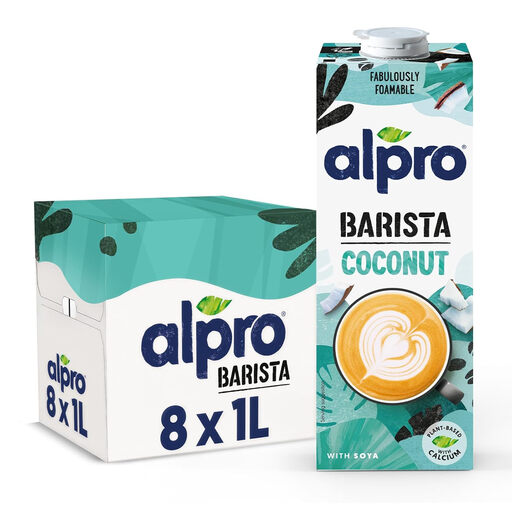
This coconut drink multipack is a coffee-focused option for a brunch menu, rather than a canned milk for richer cooking. Check the current pack against each guest’s dietary requirements.
 No image available
This coffee-focused coconut drink is described as foamable and gluten-free. The 8 x 1L multipack contains soya, and its ingredient information lists 2.5% coconut milk; check the current pack for guests’ allergen needs and any certification mark they require. It is a drink, not canned coconut milk for richer recipes.
According to the Food Standards Agency, food labelled gluten-free must contain no more than 20 mg/kg of gluten as sold to the final consumer. Check that the statement applies to the exact product and current pack, rather than assuming it from coconut content.
No. Vegan and dairy-free descriptions do not establish a gluten-free claim. Check the exact pack for a gluten-free or product-specific free-from declaration, then read the full allergen information for any other requirements.
No. A gluten-free statement does not establish that a product carries the Coeliac UK Crossed Grain Trademark. If that mark matters to your guest, check the current pack or ask the manufacturer about the exact product rather than assuming it is certified.
Consider a barista-style carton for coffee and a coconut drink for a lighter pancake batter; use canned coconut milk when the recipe calls for a richer coconut base. Tesco Groceries lists 51% coconut extract and 15 g fat per 100 ml for its canned milk, compared with 9% coconut milk and 1.4 g fat per 100 ml for the Koko unsweetened carton. Check gluten-free labelling on whichever exact product you choose.
Keep bread and crumbs away from the gluten-free serving and avoid sharing crumb-covered utensils. Coeliac UK advises separate condiments or clean cutlery for shared butter, jam and spreads.