Frequent revision-card printer
You expect to print and cut repeated batches throughout a term, so ink capacity and the frequency of replacing consumables matter to you.


For occasional revision-card batches in a student flat, consider a compact wireless cartridge inkjet; for sustained, repeated printing, an ink-tank model offers a different approach to ink capacity. Whichever you choose, check that the exact paper or card you plan to use is supported: automatic double-sided printing on plain paper does not establish that it will work with card stock.
You expect to print and cut repeated batches throughout a term, so ink capacity and the frequency of replacing consumables matter to you.
You need a printer for coursework, revision cards and occasional scanning, with wireless access and a manageable footprint in shared space.
You want to use heavier paper or card-like media and need to check the exact printer and stock together, rather than choosing by headline print speed.
Consider it when: You print occasional or moderate batches and want wireless printing in a shared flat.
Allow for: Cartridge replacement as printing continues; double-sided printing also varies by model and paper type.
Consider it when: You expect sustained, repeated printing and place greater importance on included ink capacity.
Allow for: Manufacturer page-yield claims are based on stated test conditions, not your individual revision-card output.
| Concern | What to check | Who this matters to |
|---|---|---|
| Ink capacity | Estimate your A4 printing over the term, then compare the model's included ink and replacement consumables. Read manufacturer yields with their stated test conditions. | If I print revision sheets repeatedly, I want to know how often I will need more ink. Around 42% of consumers with these student-flat printing needs put ink capacity first. |
| Shared-flat setup | Check the footprint with trays in use, the supported wireless printing method and whether scanning is useful to you. | When several of us use a small flat, I need a printer I can place conveniently and print to from my device; around 33% of consumers put straightforward shared-flat setup first. |
| Card-stock handling | Match your paper's type, weight and size to the specified feed path; check two-sided-printing conditions separately. | I want to print on sturdier stock without assuming that plain-paper settings will suit it. For around 25% of consumers, confirmed card-media compatibility is the primary concern. |
Canon specifies cartridge yields for A4 colour documents on the PIXMA TS6550i, while Epson states much higher included-ink yields for the EcoTank ET-2950. Those figures describe different products and test conditions, not the number of revision cards you will print.
Estimate your likely A4 sheets and colour coverage before deciding which ink system suits your printing frequency.
Canon specifies automatic duplex on the PIXMA TS6550i for A4 or LTR plain paper; Brother lists manual two-sided printing for the DCP-J1260W. A supported media weight does not extend either specification to every card stock.
Check your intended card's size, weight and paper type against the model's feed and duplex instructions before obtaining a large batch.
Manually re-feeding sheets can add work to a double-sided revision-card batch.
The compact PIXMA TS6550i is a wireless print, scan and copy option for everyday documents and revision materials.
The DCP-J1260W is a compact wireless print, scan and copy model with a 150-sheet input tray.
EcoTank models such as the ET-2950 offer refillable ink for consumers planning sustained printing.
These choices include cartridge inkjets for everyday revision materials and a refillable-ink model to consider for repeated batches. Check your intended card stock against each model before choosing.
 No image available
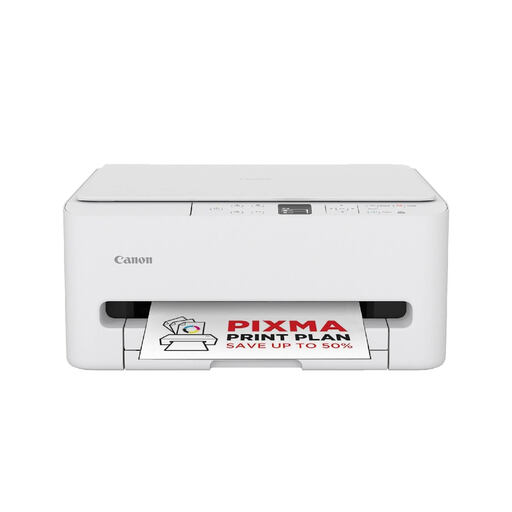
Consider this compact wireless model for revision materials and occasional scanning in a shared flat.
Canon specifies a 100-sheet cassette and automatic duplex for A4 or LTR plain paper. Check your exact card stock separately.
 No image available
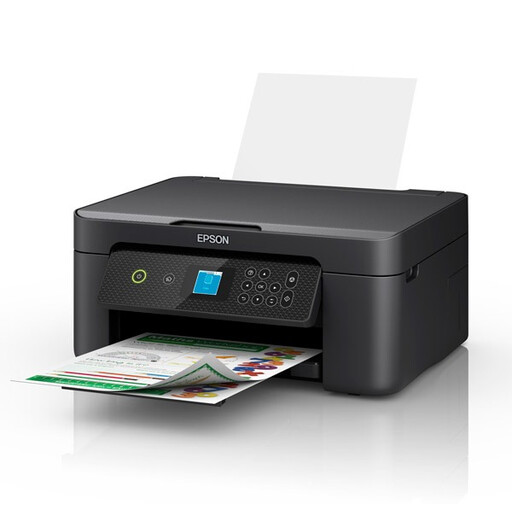
Consider this A4 cartridge inkjet if Wi-Fi printing, scanning and copying cover your revision and coursework needs.
The product title specifies automatic duplex and a 1.44-inch LCD. Confirm which paper types its duplex function accepts before planning double-sided cards.
 No image available
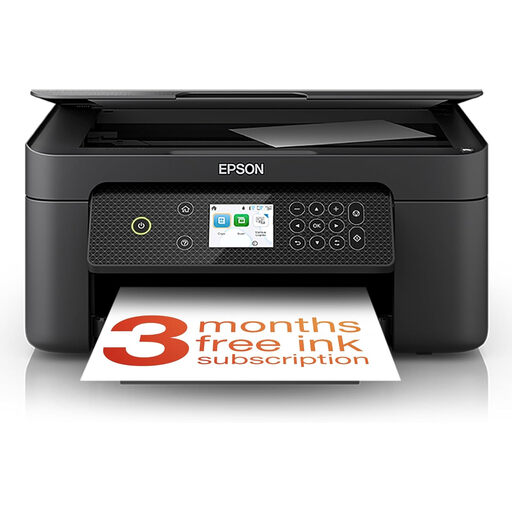
Consider this A4 Wi-Fi inkjet for printing revision materials from a connected device.
Before placing it in a shared room or using heavier stock, check its footprint, supported media and duplex conditions for that media.
 No image available
Consider this option if repeated study-printing batches make a refillable-ink route relevant to you.
Check its space requirements and the supported paper and duplex conditions for your intended revision cards.
No, but it can be useful if you frequently print on both sides of suitable sheets. Canon specifies automatic duplex on the PIXMA TS6550i for A4 or LTR plain paper, while Brother lists manual two-sided printing for the DCP-J1260W; neither statement confirms automatic duplex for thick card.
You can consider thicker stock only within the exact printer's media specifications. Brother specifies 64–220 g/m² media for the DCP-J1260W; Canon specifies 64–105 g/m² plain paper and Canon specialty media up to approximately 265 g/m² for the PIXMA TS6550i. Check the type and feed instructions for your particular card, not just its weight.
Consider one when you expect sustained, repeated printing and included ink capacity is a priority. Epson states that the ET-2950's included ink can yield up to 8,500 black-and-white or 6,500 colour pages under its stated test conditions; your revision-card output will depend on what you print.
Ask the retailer about take-back for an equivalent old electrical item. GOV.UK says retailers must offer to take back waste of the same type as an item a customer buys; check the arrangement available for your purchase.