
24/7 Customer Support

Free returns

Same-day & Next-day Delivery

Quality Guaranteed

Unlock Your Welcome Offers: FREE Delivery | Up to 80% OFF | Free 30-day JoyPlus trial
Download the APP
Choosing cashew nuts is rarely as simple as picking the largest bag on the shelf. Salt levels, added sugar, flavour coatings, pack size and allergen statements can make a noticeable difference to value and suitability. A small bag may suit an office drawer, while a larger pack can be more practical for family snacking or baking—but only if it can be stored properly and used before freshness declines.
This guide from the Joybuy Product Recommendation Officer explains the key details to check before buying, followed by product options matched to different shopping needs.
A cashew nuts 500g pack may offer more food per purchase, but it is not automatically the right choice. Once opened, nuts should be kept sealed in a cool, dry place and consumed according to the pack instructions. A smaller 100g or 120g pack can reduce waste if you snack occasionally, travel frequently or want to try a flavour before committing to a larger quantity.
“Flavoured cashews” can contain sugar, oil, spices and relatively high salt levels. A plain or lightly salted product may be more suitable for cooking, while sweet-and-savoury or chilli-seasoned options are designed primarily for ready-to-eat snacking. Always compare the ingredients list, salt, sugars and saturates per 100g, rather than relying on front-of-pack wording.
Terms such as “gourmet cashews”, “premium” and “roasted” describe style or positioning, not a universal quality standard. Check whether the nuts are whole or broken, whether the skin is retained and how much of the recipe is actually cashews. For example, one seasoned product lists cashews at 85%, while a plain purple-skin option lists cashews at 98% or 99%.
Cashews are tree nuts and must be identified clearly in the allergen information. Some products also contain peanuts, milk, soya, sesame or other ingredients. This is particularly important when buying a cashew and peanut mix, sharing at work or serving guests.
Read the full label if you have an allergy or need to avoid cross-contact. “May contain” wording is relevant to manufacturing conditions and should not be ignored.
Nut products are energy-dense, so compare like for like using the per-100g panel. Look at:
For context, Morrisons Cashew Nuts 250g lists 623 kcal, 19.4g protein and 0.04g salt per 100g. Its pack describes the product as suitable for cooking and snacking. By contrast, Mr Filbert’s Chicago Style Sweet & Salty Cashews lists 20g sugars and 1.1g salt per 100g, reflecting its caramelised, seasoned recipe.
Roasted cashews generally provide a firmer, crunchier texture than unroasted kernels. Cashews with purple skin retain the outer skin, creating a visibly different appearance and a more rustic presentation. Plain products can be useful as cashews for cooking, including chopping into stir-fries, salads, granola or baking recipes.
For ready-to-eat use, consider whether the pack is resealable or individually portioned. A 120g sealed pack can suit commuting or office breaks, whereas a 500g jar or bag may work better for family sharing and regular use.
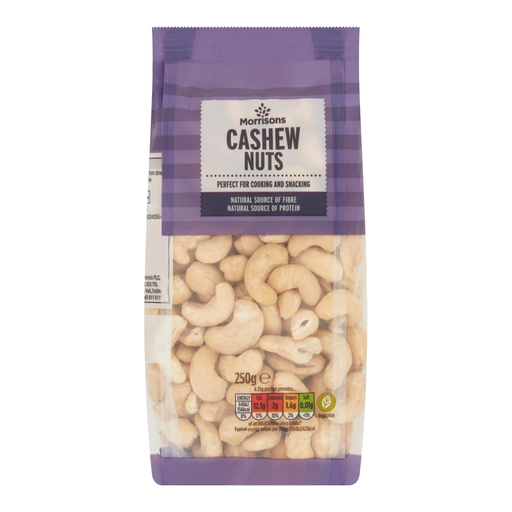
Why This Fits Their Persona: A moderate 250g pack suits shoppers who want plain cashews for everyday snacking or cooking without committing to a larger family-sized quantity.
The label provides per-100g and per-25g nutrition information, making portion and value comparisons more straightforward.
Plain format; listed as suitable for cooking and snacking; provides 10 stated portions per pack.
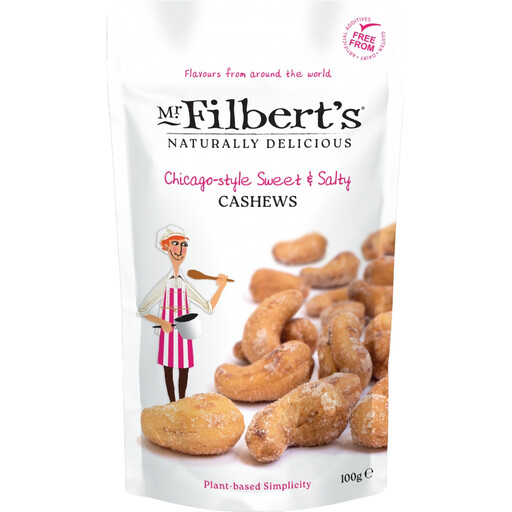
Why This Fits Their Persona: The 100g pack is suited to entertaining, charcuterie boards or shoppers looking for a more distinctive gourmet cashew flavour.
The quantitative ingredient declaration states cashews at 85%, while the seasoning ingredients are listed separately.
Includes sugar, sea salt, paprika, garlic, onion and black pepper; suitable for snacking or serving with food.

Why This Fits Their Persona: A 500g format is practical for regular household snacking, guest bowls, salad toppings or repeated use across several recipes.
The product lists cashews at 99% with salt, rather than using a complex sweet or heavily coated recipe.
Purple skin retained; lightly salted; ready to eat; 17.4g protein per 100g according to the product nutrition panel.
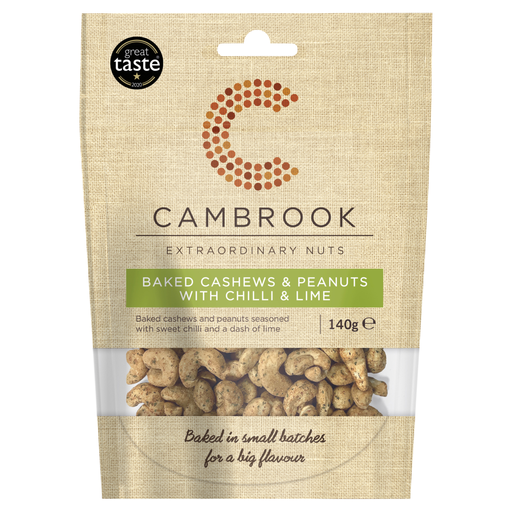
Why This Fits Their Persona: This is a ready-to-eat cashew and peanut mix for shoppers who prefer savoury heat and citrus flavour at gatherings or during an afternoon break.
The recipe and allergen details clearly identify 61% cashews, 33% peanuts, soya and possible sesame presence.
Baked rather than fried according to the product description; contains chilli and lime seasoning; 4.4g fibre per 100g.
We have compiled a complete, real-time list of products that fully satisfy these strict selection criteria and UK safety regulations.
Keep unopened cashews in a cool, dry place away from direct sunlight. Reseal the packaging after opening and follow the manufacturer’s stated guidance. If the aroma becomes stale or the texture loses its expected crunch, discard the product.
Plain cashews can be chopped into porridge, salads, curries and baking mixtures. Seasoned varieties are generally more suitable for eating directly or serving with drinks. If you are buying for children, guests or workplace sharing, check the allergen information before opening the pack.
Yes. Plain cashews are commonly used in stir-fries, sauces, salads, baking and toppings. Choose a product with minimal seasoning if you want greater control over salt and flavour in the finished dish.
Shelf life varies by product and packaging. Store the opened pack tightly sealed in a cool, dry place and follow the instructions on the label. Some products advise consuming soon after opening, while others provide a specific period such as two weeks.
They can be included according to individual dietary needs, but salt and portion size vary between products. Compare the nutrition panels: the products listed above range from 0.04g to 1.3g salt per 100g. This makes label comparison more useful than assuming all salted cashews have the same recipe.