
24/7 Customer Support

Free returns

Same-day & Next-day Delivery

Quality Guaranteed

Unlock Your Welcome Offers: FREE Delivery | Up to 80% OFF | Free 30-day JoyPlus trial
Download the APP
Choosing cashew nuts should be straightforward, but attractive packaging can make it difficult to compare what is actually inside the bag or jar. Terms such as “premium”, “natural” and “lightly seasoned” do not always tell you how much salt, sugar, oil or additional flavouring has been used.
For UK shoppers, the most useful checks are the ingredient list, nutrition panel, pack size and allergen statement. These details help you avoid paying extra for a small quantity, selecting a flavour that does not suit your routine or overlooking ingredients that matter to your household.
Whole, large or purple-skin cashews may look distinctive, but appearance alone does not determine flavour, freshness or value. Some shoppers pay more for a speciality presentation when a standard pack would be more suitable for cooking or regular snacking.
Check the cashew percentage, preparation method and price per 100g. A product containing 98–99% cashews offers a very different ingredient profile from flavoured cashews containing seasoning, sugar or oil.
Salted cashews can vary considerably. For example, the listed salt content is 0.9g per 100g for Three Squirrels Purple-Shell Cashews, 1.2g for BE&CHEERY Premium Cashews with Purple Skin and 0.04g for Morrisons Cashew Nuts.
Flavoured cashews may also contain sugar. Mr Filbert’s Chicago Style Sweet & Salty Cashews list 20g of sugars per 100g, while spicy cashews may include chilli, pepper, garlic, onion, soy or other seasoning ingredients. Always read the full label rather than relying on the front-of-pack flavour description.
A 500g pack can suit families, entertaining and frequent cooking, but it may lose freshness if opened infrequently. Smaller 100g or 120g packs are easier to carry and portion, while a 250g pack can be a practical middle ground.
Storage instructions matter too. Most ready-to-eat nuts should be kept in a cool, dry place away from direct sunlight and consumed promptly after opening. Reseal opened flavoured cashews carefully to help retain their crunch.
Decide whether you want:
Look for the percentage of cashews and note whether the recipe includes sunflower or rapeseed oil, sugar, soy, sesame or other possible allergens.
Cashews are energy-dense. The products listed here range from approximately 578 to 679 kcal per 100g, so portion size is important when selecting healthy nut snacks for everyday use. Compare:
Nutrition panels are normally stated per 100g, making it easier to compare a 500g family pack with a small on-the-go pouch.
Cashews are tree nuts and must be declared as an allergen. Some mixed or flavoured products also contain peanuts, soy, celery, sesame or milk, or may carry a “may contain” warning. Read the packaging supplied with the product before serving, particularly when catering for guests or school-age children.
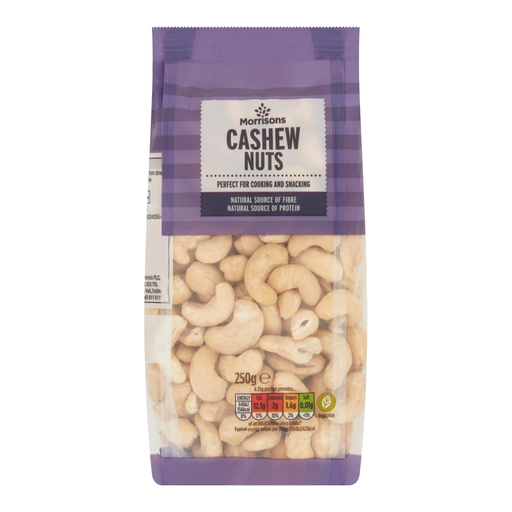
Why This Fits Their Persona: A versatile 250g pack suits shoppers trying cashews for lunches, baking, cooking or occasional snacking without committing to a larger family-sized pack.
The label lists plain cashews rather than a sweet or heavily seasoned recipe, with salt shown at 0.04g per 100g.
250g quantity; listed as suitable for vegetarians; provides 19.4g protein and 3.2g fibre per 100g.

Why This Fits Their Persona: The 500g jar is suited to households that want distinctive purple-skin cashews for sharing, grazing boards, salads or regular ready-to-eat snacks.
The ingredient list identifies cashews at 99% with salt, giving a clear alternative to recipes dominated by sugar or flavour coatings.
500g quantity; lightly roasted; listed at 17.4g protein and 0g sugars per 100g.
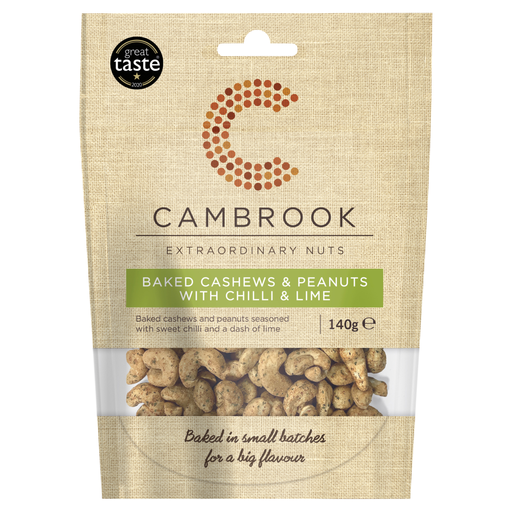
Why This Fits Their Persona: A practical option for adventurous snackers who want spicy cashews with citrus notes for drinks, gatherings or an afternoon snack.
The recipe clearly states 61% cashews and 33% peanuts, so shoppers can see that this is a mixed-nut snack rather than a pure cashew pack.
Baked rather than fried; includes chilli and 0.7% lime in the seasoning; provides 4.4g fibre per 100g.
We have compiled a complete, real-time list of products that fully fulfil these strict selection criteria and UK safety regulations.
They can form part of a varied diet, but they are energy-dense and portion size matters. Compare the nutrition panel, particularly calories, salt, sugars and saturates. Plain or lightly salted cashews may be easier to fit into different routines than heavily coated varieties.
Keep the pack sealed in a cool, dry place away from direct sunlight and heat. Follow the product’s specific instructions and consume promptly after opening. If the nuts develop an unusual smell, damp texture or stale taste, do not eat them.
Purple-skin cashews retain a visible skin on the kernel, giving them a darker, distinctive appearance. They are still cashews and should be assessed using the same checks: ingredient percentage, salt level, pack size, allergens and storage guidance.