
24/7 Customer Support

Free returns

Same-day & Next-day Delivery

Quality Guaranteed

Unlock Your Welcome Offers: FREE Delivery | Up to 80% OFF | Free 30-day JoyPlus trial
Download the APP
A casserole pot can become one of the most useful items in a UK kitchen, handling soups, stews, braised meat, pasta sauces and one-pot family meals. However, choosing by appearance or capacity alone can lead to an awkward, heavy or difficult-to-clean purchase.
Before selecting a casserole pot, look beyond promotional wording and check the construction, dimensions, cooking-surface compatibility and care instructions. The right choice depends on how you cook, how many people you serve and whether you need a pot that moves from hob to oven.
A pot described as 24cm may have a wide body but limited depth, while another 24cm model may be deeper and hold considerably more food. Product dimensions can also include handles and lids. Check the stated litre or quart capacity, not just the diameter.
For everyday meals, a 2.9–3.3 litre casserole pot may suit one to three people. A 4.5 litre or larger pot is more practical for batch cooking, Sunday lunches or meals for a family.
Induction-compatible cookware is not automatically suitable for oven use. The body may tolerate high temperatures while the lid knob, silicone sleeve or handle does not. Look for a clearly stated oven-safe specification and check the maximum temperature where one is provided.
Also remember that oven-safe does not mean suitable for use under a grill. Always follow the manufacturer’s instructions.
A non-stick stewpot can make food release and washing simpler, but coatings require suitable utensils and cleaning methods. Metal tools, abrasive pads and overheating an empty pot may shorten the coating’s useful life.
Enamelled cast iron avoids an interior non-stick coating, but its enamel surface can still chip if dropped or struck. Stainless steel has no internal coating in many designs, although food may stick if the pan is overheated or used without enough cooking fat.
Enamelled cast iron casserole pots retain heat for extended simmering and are suitable for slow cooking, braising and oven dishes. Their weight can make them less convenient to lift when full, so check the listed product weight and handle design.
A cast iron Dutch oven is a similar option, generally suited to recipes that benefit from steady heat and a covered cooking environment. Enamel interiors are simpler to maintain than uncoated cast iron because they do not usually require seasoning, but abrasive cleaning products should still be avoided.
Stainless steel stock pots and soup pots are typically lighter and useful for boiling, batch cooking and daily meals. A composite or tri-ply base can help distribute heat across the base, while a glass lid allows you to monitor simmering without removing the lid.
Aluminium stewpot designs tend to be lighter and heat quickly. If the interior is coated, check the care guidance and whether the product is dishwasher-safe.
A 24cm casserole dish or stewpot is a common middle size for domestic cooking. It can offer a useful balance between cooking surface and storage space, but capacity varies by shape.
An oval casserole dish can accommodate larger cuts of meat, while a round pot may fit more efficiently on a standard hob ring.
For induction use, the base must be magnetic and sit securely on the hob. Confirm compatibility with gas, electric, ceramic, halogen and induction cookers rather than relying on general descriptions.
Check that the base is flat, particularly if you use a ceramic or induction hob. Avoid dragging cast iron across glass surfaces, as this may cause scratches. Handles and lids should also be considered: metal handles are often more suitable for oven use, while silicone or plastic components may have temperature limits.
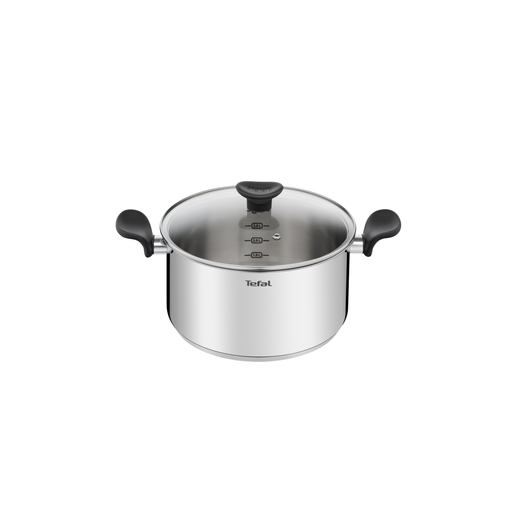
Why This Fits Their Persona: Its 24cm format is practical for smaller households and everyday soups, stews and one-pot meals without the bulk of a large family cooking pot.
The listed stainless steel construction and non-stick interior make the material and cleaning considerations clearer than relying on appearance alone.
24cm diameter; stainless steel body; non-stick interior designed for easier food release and cleaning.
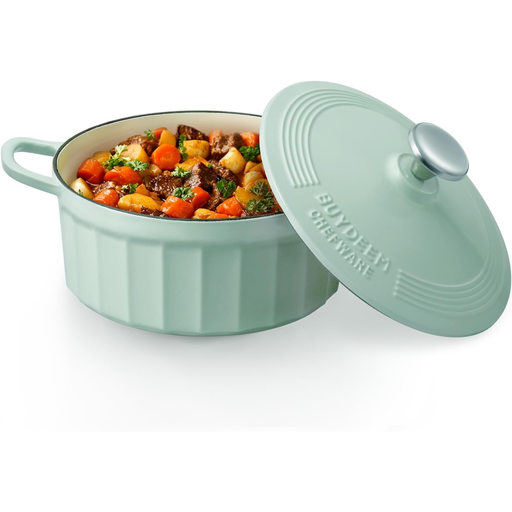
Why This Fits Their Persona: This 2.9L casserole suits cooks who value heat retention and a covered pot for braising, roasting, stewing and slow-cooking.
Its specifications state compatibility with gas, induction, electric, halogen and ceramic hobs, as well as oven use, so buyers can check these requirements directly.
Enamelled cast iron body; tight-fitting domed lid; stated 2.9L capacity and oven-safe design.
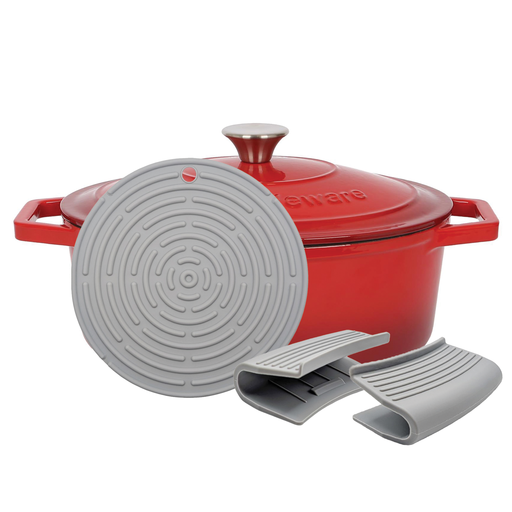
Why This Fits Their Persona: The 4.68L oval format is suited to family portions, batch cooking and recipes involving larger cuts of meat.
The stated capacity and dimensions help prevent underestimating the space needed for storage or the weight of a full cast iron dish.
4.68L capacity; oval cast iron construction; suitable for hob cooking and oven use according to the listing.
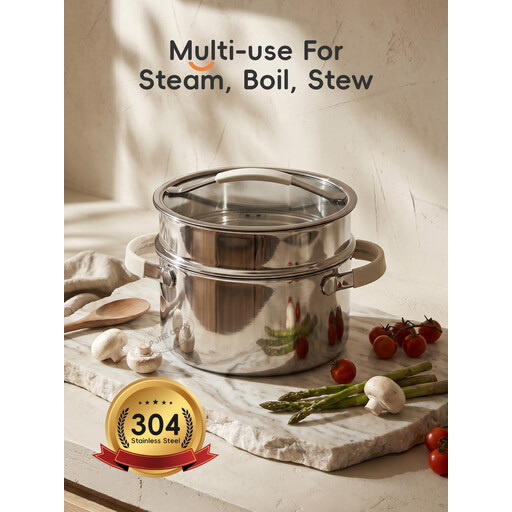
Why This Fits Their Persona: This large-capacity cooking pot is listed for three to five people and adds a detachable steaming function for varied family meals.
The 24cm diameter, stated serving size, included steaming rack and listed all-cooktop compatibility make its intended use easier to assess.
Tri-ply stainless steel construction; detachable steaming design; tempered glass lid and silicone-insulated handles.
We have compiled a complete, real-time list of products that fully satisfy these strict selection criteria and UK safety regulations.
Many are, but not all. Check the product listing for explicit induction compatibility and look for a flat magnetic base. Cast iron and stainless steel models with a magnetic composite base are commonly available for induction hobs.
A pot of approximately 4–5 litres is a practical starting point for many family meals. A 24cm model may be suitable where the stated capacity is sufficient, but compare the litre measurement and internal dimensions before ordering.
Energy use depends on the hob, heat setting, cooking time, lid fit and quantity of food. A well-fitting lid can help retain heat, while cast iron’s heat retention may suit longer cooking. Match the pot size to the amount being prepared and avoid using a cooking zone significantly larger than its base.