
24/7 Customer Support

Free returns

Same-day & Next-day Delivery

Quality Guaranteed

Unlock Your Welcome Offers: FREE Delivery | Up to 80% OFF | Free 30-day JoyPlus trial
Download the APP
A cast iron casserole pot can handle soups, stews, braised dishes, roasts and slow-cooked meals, but choosing the wrong one may leave you with a pot that is too heavy, too small or unsuitable for your hob. Product listings often focus on colour and capacity while leaving important practical details unclear.
Before buying an enamelled cast iron casserole, check the construction, cooking compatibility and care requirements rather than relying on broad phrases such as “multi-functional” or “heavy duty”.
A pot labelled 3 litres does not provide 3 litres of comfortable cooking space. Ingredients need room to simmer without bubbling over, particularly when preparing soup, pasta sauce or a stew with large pieces of meat and vegetables.
For a couple or small household, around 2.5–3.5 litres may be suitable. Families may prefer 4 litres or more, although larger cast iron pots are considerably heavier when full.
An induction hob requires a magnetic base. Cast iron is generally suitable for induction, but enamelled ceramic pots and other designs should still be checked against the product listing. A flat base is also important for stable contact on ceramic and electric hobs.
If you use gas, induction, ceramic and electric cooking surfaces, look specifically for stated all-hob compatibility or confirmation for your particular hob type.
“Oven-safe” should be considered alongside the lid, handles and knob. A metal knob may tolerate oven use differently from a plastic or silicone component. The maximum oven temperature may also vary, so check the manufacturer’s instructions before transferring a pot from hob to oven.
Avoid sudden temperature changes, such as placing a hot enamelled pot into cold water. Thermal shock can damage the enamel surface.
Traditional cast iron retains heat effectively, making it useful for gentle simmering and slow cooking. It is also heavy, so confirm that you can comfortably lift the pot when it contains food.
An enamelled cast iron casserole has a coated cooking surface that generally needs less seasoning than bare cast iron. It is also more convenient for tomato-based dishes, soups and wine-based sauces, which may be unsuitable for prolonged cooking in uncoated iron.
Inspect the listing for:
A 22cm casserole is a practical size for smaller households, side dishes and everyday portions. A 24cm model offers more room for family meals, while an oval Dutch oven pot can accommodate larger joints and elongated ingredients.
Consider cupboard space as well as hob space. Measure the pot’s full width, including handles, and check that the lid and body will fit inside your oven.
For an induction-compatible casserole dish, check that induction is explicitly listed. A flat bottom helps distribute contact across the hob and reduces movement during stirring.
For oven cooking, look for clear confirmation that the body and lid are suitable. Use oven gloves because cast iron stores heat for a long time, including the handles and lid knob.
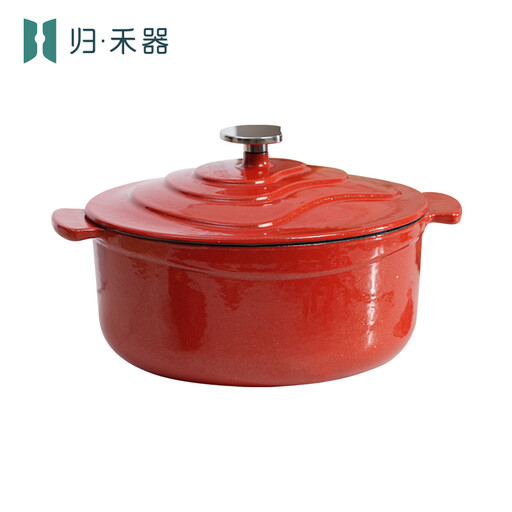
Why This Fits Their Persona: The 3.3L capacity and 22cm diameter suit smaller households that want one pot for soup, stew and slow-cooked meals without moving straight to a large family-sized model.
The listing specifies an enamelled cast iron body, flat bottom and induction compatibility, addressing the common mistake of choosing a decorative pot without checking hob suitability.
3.3L capacity; flat-bottom design; induction-compatible specification; enamelled finish.
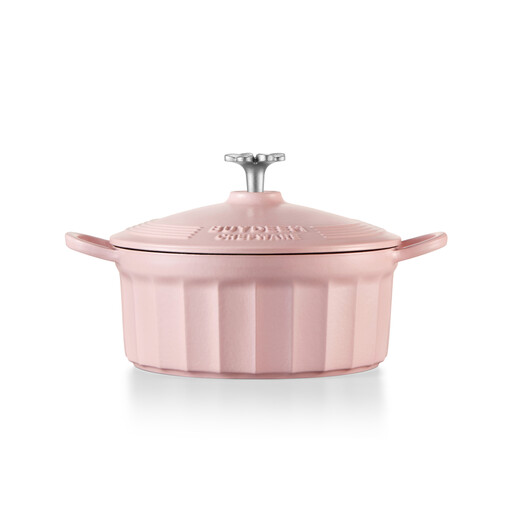
Why This Fits Their Persona: This compact casserole suits cooks who value a refined finish and want a pot for braising, simmering and oven-based meals in a smaller kitchen.
The specifications clearly state 2.9L capacity, a domed tight-fitting lid, multiple hob types and oven compatibility, reducing uncertainty around everyday use.
2.9L size; enamel interior and exterior; stainless steel lid knob; listed for gas, induction, electric, halogen, ceramic and oven use.
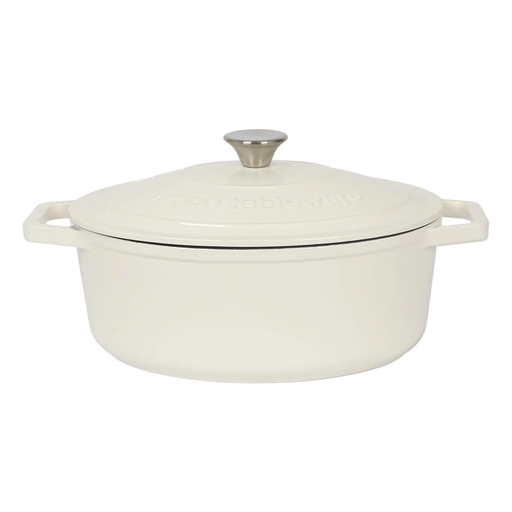
Why This Fits Their Persona: The 4.68L oval format gives families and frequent cooks more space for roasts, braises and larger batches of stew.
Its stated dimensions and 4.68L capacity make the available cooking space clearer than relying on a vague “large” description.
4.68L capacity; oval 37cm by 22cm format; suitable for sautéing, braising, roasting and baking on the hob or in the oven; two-year warranty listed.
We have compiled a complete, real-time list of products that fully satisfy these strict selection criteria and UK safety regulations.
Many cast iron models are suitable for induction because cast iron is magnetic. However, confirm this in the product specifications and check that the base is flat and compatible with the size of your induction zone.
A capacity of around 4–5 litres is usually more practical for family portions, batch cooking and larger joints. A 2.9–3.3L pot may suit one or two people or smaller everyday meals. Remember that a larger pot will also be heavier when full.
Cast iron takes time to heat but retains heat well. Once a stew or casserole is simmering, a lower hob setting may be sufficient. Use the smallest suitable cooking zone, avoid unnecessary preheating and keep the lid on to reduce heat loss.