
24/7 Customer Support

Free returns

Same-day & Next-day Delivery

Quality Guaranteed

Unlock Your Welcome Offers: FREE Delivery | Up to 80% OFF | Free 30-day JoyPlus trial
Download the APP
Choosing cat bowls and water fountains involves more than picking a colour that suits your kitchen. The wrong bowl may slide across the floor, trap food in difficult corners or irritate a cat’s whiskers. A water fountain can also become inconvenient if its filter costs are high, the pump is noisy or the parts are difficult to clean.
This guide explains the practical specifications worth checking before buying, followed by recommendations matched to different household needs.
A 2-litre cat water fountain may reduce refilling, but it still needs regular water changes and cleaning. Hair, food particles and mineral deposits can collect around the pump and filter compartment. Check whether the fountain can be dismantled easily and whether replacement filters are available before focusing on capacity.
Noise ratings such as under 20 dB or 25 dB are useful comparison points, but the sound you hear can also depend on water level, pump condition and the surface beneath the unit. A fountain placed on a hollow cabinet may sound louder than one positioned on a stable, level floor.
Textured feeding mats and maze-style bowls can make meals last longer, but narrow grooves may hold wet food. Look for smooth, washable materials and confirm whether the product is suitable for hand washing, a dishwasher or freezer use. A slow feeder that is difficult to clean may be neglected, undermining its purpose.
For everyday food and water, a 250ml cat bowl is suitable for many single-cat households, particularly when meals and water are refreshed regularly. A non-slip silicone base can help prevent sliding on smooth flooring such as tile or laminate.
A shallow, whisker-friendly cat bowl can make it easier for cats to reach food without their whiskers repeatedly touching the sides. This may be particularly helpful for kittens, flat-faced cats and older cats. If you are considering an elevated cat feeding bowl, check the actual height rather than relying on lifestyle photographs. Adjustable stands can be useful for growing pets or multi-pet households, but they also occupy more floor space.
Common materials include food-grade plastic, rubber, stainless steel, porcelain and ceramic. Compare the care instructions carefully:
Always wash a new bowl before use, rinse away detergent thoroughly and allow it to dry before refilling. Replace any bowl or mat showing cracks, splitting or significant surface damage.
A filtered cat water dispenser commonly uses mesh, activated carbon or ion exchange materials. These components have different roles, so “multi-stage” or “eight-layer” wording should not replace checking the actual filter design and replacement schedule.
Also compare:
A cat water fountain is not maintenance-free. Refresh the water frequently, clean the pump according to the instructions and unplug the unit before filling or dismantling it.
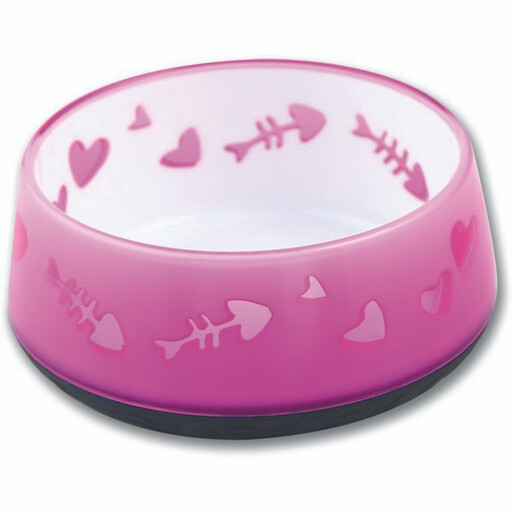
Why This Fits Their Persona: This 250ml bowl is a straightforward option for a new cat owner needing one everyday food or water bowl without a powered appliance.
The non-slip silicone base is designed to grip smooth floors, while the shallow shape helps reduce awkward reaching.
Food-grade PP plastic; smooth surfaces are suitable for hand washing or top-rack dishwasher cleaning.
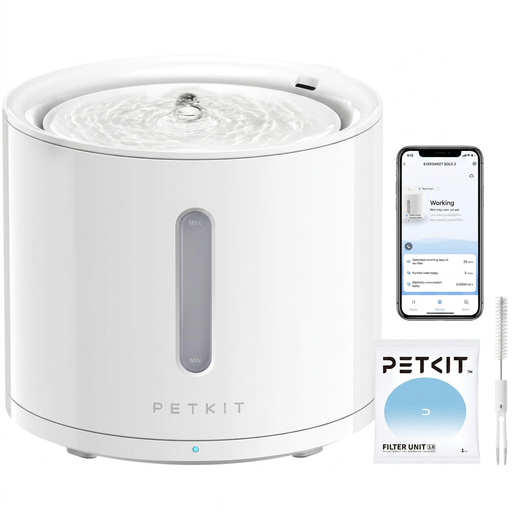
Why This Fits Their Persona: Its 2-litre tank, transparent water window and app-connected operating modes suit owners who want more visibility over daily hydration routines.
The 25 dB operating specification gives a clearer comparison point than an unsupported “silent” label, while dry protection helps stop the pump operating without water.
Three-stage filtration; Smart, Normal and Night modes; stainless steel water tray.
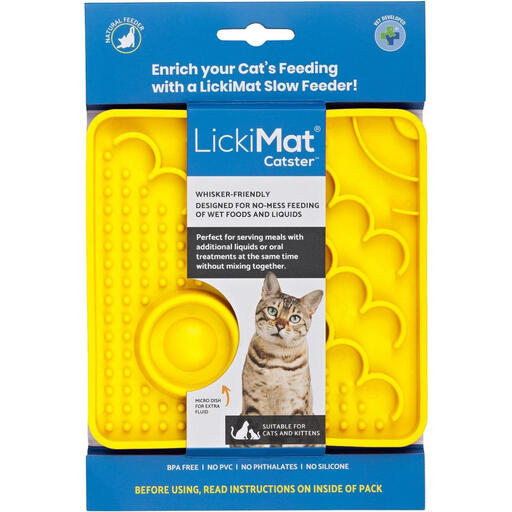
Why This Fits Their Persona: Owners managing fast eaters or varied wet, dry and liquid meals can use its multiple textured surfaces and hydration well.
The product is designed for licking rather than gulping, but its textured surface should still be cleaned and inspected regularly.
Food-grade rubber; supports wet, raw, dry and liquid food; freezer- and microwave-friendly according to the product details.

Why This Fits Their Persona: The cordless design allows flexible placement where several cats can access water, without keeping the pump submerged beside a cable.
The 2-litre capacity and detachable tank address frequent refilling, while the battery requires charging with the supplied base.
7,800mAh battery; three water modes; four-stage filtration; stated operating noise below 20 dB.
We have compiled a complete, real-time list of products that fully satisfy these strict selection criteria and UK safety regulations.
Follow the manufacturer’s instructions, but inspect the pump and filter compartment frequently. Remove visible hair or debris promptly, wash the tank and tray regularly and unplug the fountain before cleaning. Filter replacement intervals vary with water quality, usage and the model.
Ceramic or stoneware bowls have smooth surfaces and added weight, which can make them practical for some cats. However, chips and cracks can become difficult to clean. Inspect the bowl regularly and replace it if the glaze or structure is damaged.
Not necessarily. A slow feeder may suit a cat that eats quickly, but a nervous, elderly or unfamiliar cat may need a gradual introduction. Start with a small portion, supervise use and choose a low-profile, whisker-friendly design where appropriate.