
24/7 Customer Support

Free returns

Same-day & Next-day Delivery

Quality Guaranteed

Unlock Your Welcome Offers: FREE Delivery | Up to 80% OFF | Free 30-day JoyPlus trial
Download the APP
Choosing cat food in the UK can feel more complicated than it should. Wet food, dry cat food, cat food pouches, grain-free recipes and “natural” formulas all compete for attention, but attractive packaging does not always explain what your cat is actually getting.
The most useful starting point is the label, not the front-of-pack claims. Check whether the food is complete or complementary, whether it suits your cat’s life stage and how much you will need to feed each day.
Some wet cat food is designed as a topper or treat rather than a daily diet. Lily’s Kitchen Tuna with Salmon Shredded Fillets, for example, is listed as a complementary pet food, so it should be served alongside a complete diet rather than replacing every meal.
Look for wording such as “complete pet food for cats” when you need an everyday main meal. A complementary pouch can still be useful for variety, but feeding only this type may leave nutritional gaps.
Grain-free cat food excludes ingredients such as wheat, maize or rice, but it is not automatically the right choice for every cat. Grain-free recipes may use alternatives such as potato, peas, tapioca or sweet potato. The full composition still matters, particularly if your cat has known food sensitivities.
Grain-free also does not mean carbohydrate-free. Compare the ingredient list and analytical constituents rather than relying on the front label. You can browse the grain-free cat food range to compare suitable formats and flavours.
A large cat food multipack may appear cheaper, but the actual value depends on daily portions, pouch size and whether food is wasted after opening. Dry food is usually more concentrated and requires smaller serving weights, while wet food contains considerably more moisture.
Calculate the approximate daily cost before buying. Also consider storage: a 2kg bag of dry food needs to remain sealed and dry, whereas individual wet cat food pouches are convenient but may cost more per meal.
Kitten food, adult cat food and senior formulas are not interchangeable by default. Check the stated age range carefully:
For example, Harringtons Dry Cat Food Salmon is labelled for adult cats aged 1–7 years, while Scrumbles Wet Cat Food Jelly Fish Selection is listed for kittens from eight weeks and adult cats.
A complete and balanced cat food should provide the nutrients required for the stated life stage when fed according to the packaging directions. Complementary food is intended to accompany a complete diet.
This distinction is particularly important when buying shredded fillets, tuna in broth or single-protein treats. Check the statutory name and feeding instructions, not just phrases such as “natural ingredients” or “rich in meat”.
Wet food commonly contains around 80–85% moisture. For example, the Meowing Heads wet recipes list 80% moisture, while the Scrumbles fish selection lists 85%. Dry food generally contains far less moisture, so fresh drinking water should always be available.
Analytical figures are useful for comparing products in the same format. Meowing Heads Paw Lickin Chicken lists 11% crude protein and 5% crude fat, while Harringtons Salmon dry food lists at least 30% crude protein and 16% crude fat. These figures cannot be compared directly without accounting for moisture, so use the feeding guide and your cat’s body condition as well.
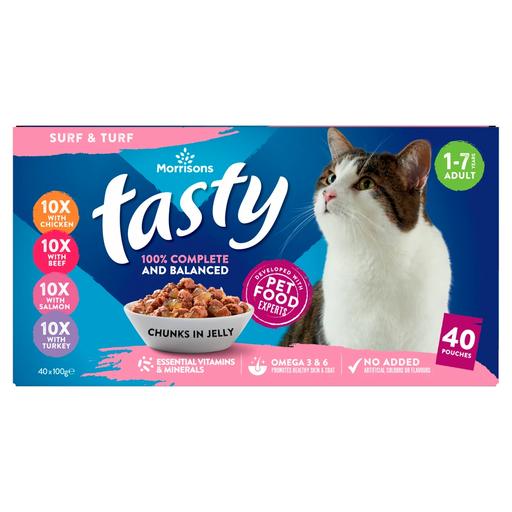
Why This Fits Their Persona: A large 40-pouch pack suits households feeding one or more adult cats and reduces the need for frequent reordering.
The listing identifies it as complete and balanced adult food, rather than a complementary topper, with feeding guidance for portion control.
40 x 100g pouches, four flavours and 82% moisture, with no added artificial colours or flavours.
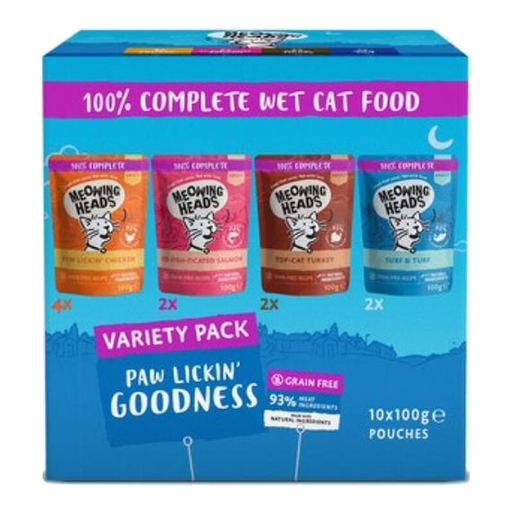
Why This Fits Their Persona: Suitable for owners who want rotating chicken, turkey, salmon and fish recipes without buying several full boxes.
The four recipes are clearly specified, making it easier to check proteins before serving a cat with preferences or sensitivities.
Ten 100g pouches, grain-free recipes and 93% stated meat and fish content.
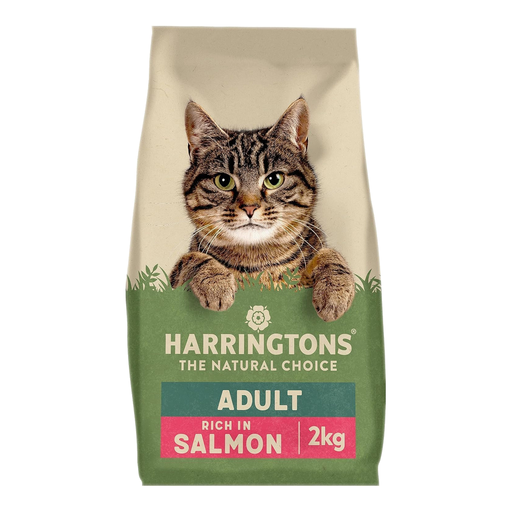
Why This Fits Their Persona: The larger bag is practical for multi-cat homes or owners who prefer measured dry feeding and fewer deliveries.
The label states the adult age range, feeding weights and storage requirements, helping prevent unsuitable feeding or stale kibble.
2kg pack, salmon meal listed at 28%, at least 30% crude protein and added FOS prebiotic.
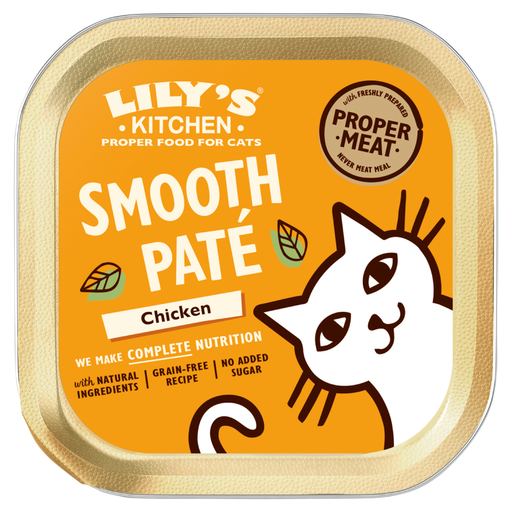
Why This Fits Their Persona: A smooth wet texture can suit cats that avoid chunks, shreds or jelly-style meals.
The product format is clearly stated as a smooth pâté, while its complete status is distinguished from complementary fillet products.
85g portion, chicken listed at 65%, grain-free recipe and 82% moisture.
We have compiled a complete, real-time list of products that fully satisfy these strict selection criteria and UK safety regulations.
Neither format is automatically suitable for every cat. Wet food provides substantial moisture and comes in textures such as pâté, chunks, jelly and broth. Dry food is easy to measure, store and serve. Many owners use a combination, provided the total daily amount is adjusted and both foods are nutritionally appropriate.
Follow the product label. Several wet cat food products recommend refrigeration after opening and use within two days, while some individual products specify up to 72 hours or 24 hours. Seal unused food, refrigerate it promptly and serve it at room temperature where instructed.
Yes. Introduce a new recipe over around 7–10 days, increasing the new food while reducing the old food. This is particularly important when changing protein, texture or moving between wet and dry formats. If your cat develops persistent digestive symptoms or stops eating, seek veterinary advice.