
24/7 Customer Support

Free returns

Same-day & Next-day Delivery

Quality Guaranteed

Unlock Your Welcome Offers: FREE Delivery | Up to 80% OFF | Free 30-day JoyPlus trial
Download the APP
Choosing cat food can become confusing when every packet highlights a different benefit. One recipe focuses on chicken, another promotes urinary tract support, while a third advertises hairball control or weight management. The right choice depends less on attractive packaging and more on your cat’s age, lifestyle, body condition and feeding routine.
Words such as “with vitamins”, “high protein” or “natural ingredients” do not automatically mean a food provides everything your cat needs. Check whether the packaging states complete pet food or complete and balanced cat food. A complementary product is intended to be fed alongside another food, not as the sole daily diet.
For everyday meals, look for feeding guidance, an appropriate life-stage statement and nutritional information. Kittens, adult cats and senior cats have different requirements, so a food labelled for adult cats may not be suitable for a growing kitten.
Wet food usually contains around 80–86% moisture, while dry food has much less water. As a result, protein and fat percentages cannot be compared directly without considering moisture content and serving size.
Wet food pouches can help add moisture to a cat’s routine, while dry cat food is convenient to measure, store and serve. Neither format should be selected solely because its label shows a higher or lower percentage.
Indoor cat food, light cat food and hairball control cat food can be useful for specific everyday needs, but they are not substitutes for diagnosis or treatment. If your cat has recurring urinary problems, persistent vomiting, sudden weight loss or other concerning symptoms, speak to a vet before changing its diet.
Marketing phrases such as “urinary support” generally describe a recipe’s mineral balance or formulation. They should not be interpreted as a treatment for urinary disease.
Start with the statutory nutritional statement on the label. For a healthy adult, choose a complete adult cat food that matches the cat’s age and activity level. Senior cat food may be labelled for cats aged 7+, but the exact transition point depends on the individual animal.
Also check whether the product is designed for:
The label normally lists protein, fat, crude fibre, ash and moisture. These figures help you compare products within the same format. For example, Purina ONE Adult Cat Food with Chicken & Whole Grains 3kg lists 34% protein, 14% fat and 2.5% crude fibre. Purina ONE Bifensis Light 750g lists 37% protein, 9.5% fat and 6% crude fibre, making its stated nutritional profile more suited to shoppers considering a lighter recipe.
Ingredients also matter. Look at the named animal ingredients and the order in which they appear. Purina ONE Adult lists chicken at 17% and wheat at 16%, while Whiskas 1+ Tuna Adult Dry Cat Food 800g lists cereals first and includes 4% tuna in the brown kibbles. These are different formulations, so choose according to your priorities rather than assuming a flavour name describes the whole recipe.
Sheba Fine Flakes pouches contain approximately 85% moisture, and the listed guide for a 4 kg adult cat is around 3–3½ pouches daily, divided into at least two meals. Wet food should be served at room temperature, with opened portions stored as directed.
Dry food is easier to keep available for measured meals, but it still requires fresh drinking water. Keep opened bags tightly sealed in a cool, dry place and follow the use-by or best-before information on the packaging.

Why This Fits Their Persona: A practical dry food option for adult cats aged 1+ when easy storage and straightforward daily feeding are priorities.
The product is described as 100% complete and balanced, so it is not positioned as a treat or complementary meal.
Lists 30% protein, 11% fat and feeding guidance for 3–5 kg adult cats; no artificial colours, flavourings or preservatives are listed.
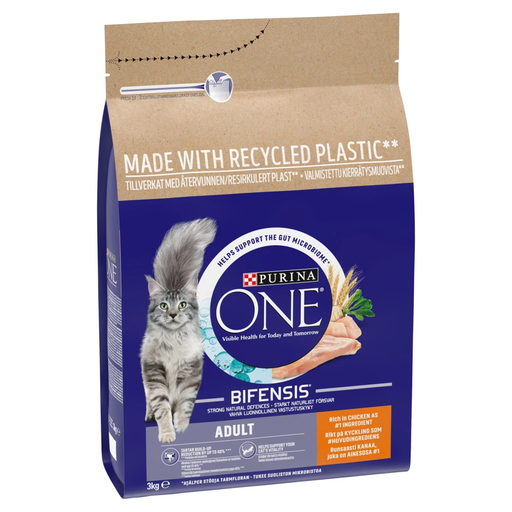
Why This Fits Their Persona: Suitable for shoppers seeking a larger dry-food pack with clearly stated protein, fibre and ingredient information.
Its listed composition and analytical constituents make it easier to assess the formula beyond the front-of-pack chicken wording.
Chicken is listed at 17%; the recipe provides 34% protein, 14% fat and 2.5% crude fibre in a 3 kg pack.

Why This Fits Their Persona: Designed for owners of indoor cats who want a recipe that includes fibre and an adapted protein-to-fat ratio.
The listing provides feeding quantities by bodyweight and activity, helping owners avoid treating an indoor formula as permission to overfeed.
Lists 36% protein, 13% fat and 5.5% crude fibre, with chicory and vegetable fibre in the composition.
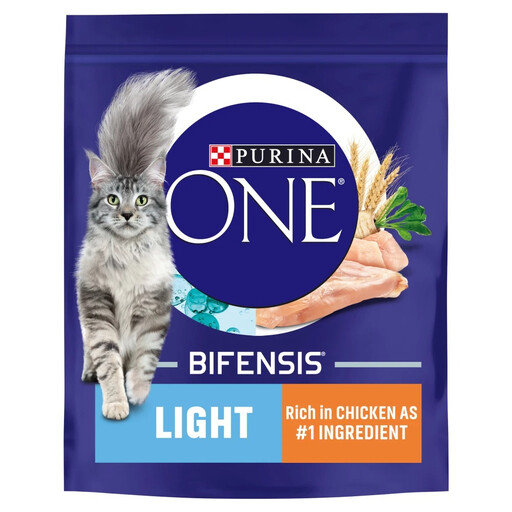
Why This Fits Their Persona: A targeted option for owners managing portions for an adult cat that needs a lower-fat daily recipe.
The lower-fat profile is visible in the analytical data, so shoppers can compare the recipe rather than relying only on the word “light”.
Lists 9.5% fat, 37% protein and 6% crude fibre; feeding should still be adjusted to weight and activity.
We have compiled a complete, real-time list of products that fully satisfy these strict selection criteria and UK safety regulations.
Wet food pouches are convenient for portion control and contain substantial moisture. Sheba Fine Flakes Adult Cat Food Pouch Poultry Selection provides 40 x 85g pouches, with flakes in jelly and listed guidance for a 4 kg adult cat. Refrigerate unused food according to the pack instructions and do not leave opened portions out for extended periods.
Dry cat food is generally simpler for bulk buying and storage. Measure each meal rather than continually topping up the bowl, particularly for indoor or overweight cats. Fresh water should always be available.
Mixed feeding can offer variety, but reduce the amount of each format to avoid unintentionally increasing daily calories. Introduce any new cat food gradually over several days and monitor appetite, stool consistency and body condition.
Cost depends on the recipe, pack size and amount your cat needs each day. Dry food often has a lower cost per serving because it contains little moisture and is sold in larger packs. Wet food may cost more per meal but can be useful for portioned feeding. Compare the recommended daily amount rather than only the shelf price.
Use the manufacturer’s feeding guide as a starting point, then adjust for weight, activity, age and body condition. A 4 kg cat may need a different amount from another 4 kg cat if one is active outdoors and the other is mostly indoors. Divide food into two or more meals where practical.
Many senior recipes are labelled for cats aged 7+, but age alone does not determine suitability. Consider appetite, activity, body condition and any veterinary advice. Change gradually and seek professional guidance if your older cat develops persistent changes in eating, drinking or toileting habits.