
24/7 Customer Support

Free returns

Same-day & Next-day Delivery

Quality Guaranteed

Unlock Your Welcome Offers: FREE Delivery | Up to 80% OFF | Free 30-day JoyPlus trial
Download the APP
Choosing cat food is not simply a matter of picking the most attractive packaging. UK shelves and online listings contain wet cat food, dry cat food, grain-free recipes, multipacks, treats and formulas for different life stages. The challenge is separating useful information from broad marketing language.
This guide from the Joybuy Product Recommendation Officer focuses on practical checks that can help you avoid unsuitable purchases and choose food that matches your cat’s age, preferences, routine and household budget.
Terms such as natural cat food, “grain-free” and “high meat” can describe useful preferences, but they do not automatically confirm that a product is nutritionally complete. A grain-free recipe may still be complementary, while a food containing grains may be suitable for many cats.
Look for the statutory description “complete pet food for cats” or equivalent wording. A complete cat food should be designed to provide the nutrients needed when fed according to its instructions. Products labelled complementary are intended to accompany a balanced main diet.
“Salmon cat food”, “chicken cat food” or “tuna cat food” on the front of a pouch does not necessarily mean that fish or chicken is the main ingredient. Check the composition list and percentages. For example, a recipe may contain a named meat alongside broth, cereals, oils or animal derivatives.
This matters if your cat has food preferences, suspected sensitivities or simply refuses unfamiliar flavours. A variety pack can provide choice, but it may also make it harder to identify which recipe agrees with your cat.
A 2kg bag of dry cat food may offer practical value for a multi-cat home, but it needs airtight storage after opening. Wet cat food pouches reduce serving preparation and food waste, yet opened portions generally need refrigeration and prompt use.
Before buying cat food multipacks, compare the recommended daily amount with your cat’s weight. A low-priced pack is not necessarily economical if your cat will not eat it or if opened food is regularly discarded.
Kitten food, adult cat food and senior formulas are not interchangeable by default. Check the stated age range carefully:
If your cat is pregnant, has a diagnosed condition, is losing weight or experiences ongoing digestive problems, seek advice from a veterinary professional before changing its diet.
A complete wet food can form the main diet when fed according to the label. A complementary pouch, topper or treat cannot normally replace all daily meals.
Check:
Wet food often contains around 80% or more moisture, while dry food generally contains considerably less. Cats eating dry food should always have access to fresh drinking water.
For cats with strong preferences, texture can be as important as flavour. Options include jelly, broth, shredded fillets, chunks and smooth pâté. A single-serve cat food pouch can be convenient for one meal, while a selection pack may help with flavour rotation.
Grain-free cat food can suit owners avoiding wheat, corn or soy, but grain-free does not automatically mean hypoallergenic. Read the full composition and introduce any new food gradually over approximately seven to ten days.
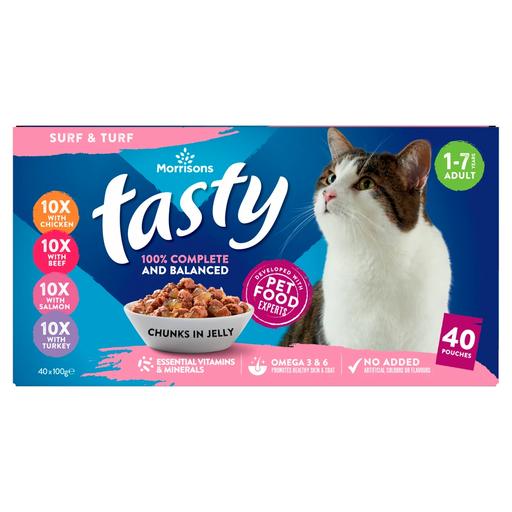
Why This Fits Their Persona: The 40 x 100g multipack suits households wanting a substantial supply of adult wet cat food with several familiar flavours.
The listing identifies it as complete and balanced adult food, rather than presenting it only as a treat or topper.
Four jelly recipes, 100g pouches and stated omega-3 and omega-6 content make portion planning straightforward.
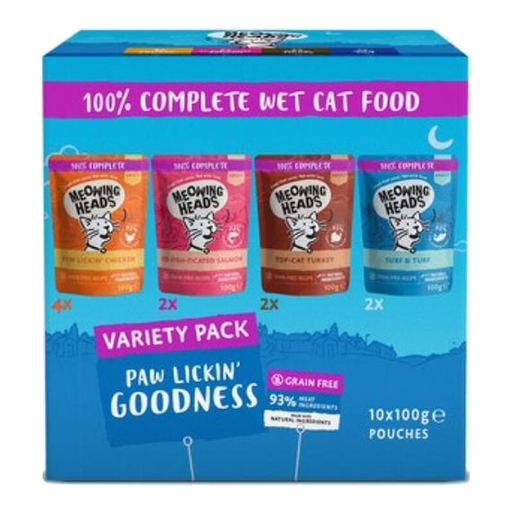
Why This Fits Their Persona: Owners who want flavour rotation can choose chicken, turkey, salmon and fish recipes in one 1kg pack.
The product details set out the recipe varieties and composition instead of relying only on front-of-pack flavour descriptions.
It contains ten 100g pouches and is listed as suitable for cats from eight weeks old through adulthood.
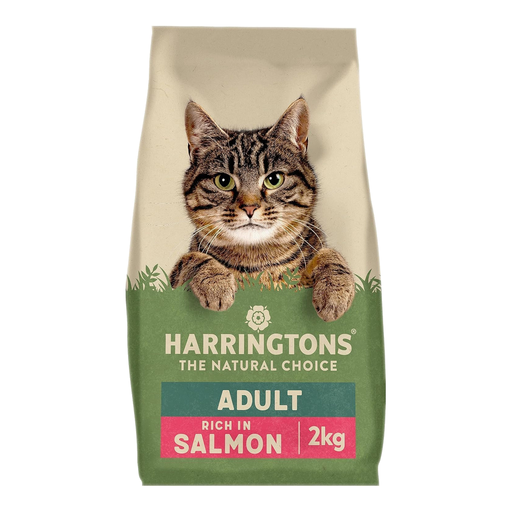
Why This Fits Their Persona: The 2kg format is practical for regular feeding in a single-cat or multi-cat home, provided it is sealed properly between meals.
It clearly states the intended adult age range of one to seven years, helping prevent use as kitten or senior food.
The grain-free recipe lists 28% salmon meal, at least 30% crude protein and added FOS prebiotic.
We have compiled a complete, real-time list of products that fully satisfy these strict selection criteria and UK safety regulations.
Neither format is automatically suitable for every cat. Wet food provides high moisture and comes in textures such as jelly, broth and pâté. Dry food is easy to portion and store. Some owners use one format exclusively, while others combine complete wet and dry food while adjusting total daily calories.
Use the feeding guide on the packaging as a starting point, then consider your cat’s weight, age, activity and whether treats are included. Monitor body condition rather than relying only on a fixed pouch or gram count. If your cat’s weight changes unexpectedly, consult a veterinary professional.
Generally, no. Products such as freeze-dried chicken treats or seafood toppers are usually complementary. They should be offered in moderation alongside a complete cat food, with the main diet adjusted to help manage total calorie intake.