
24/7 Customer Support

Free returns

Same-day & Next-day Delivery

Quality Guaranteed

Unlock Your Welcome Offers: FREE Delivery | Up to 80% OFF | Free 30-day JoyPlus trial
Download the APP
Choosing cat food can become confusing when shelves are filled with claims such as “natural”, “premium”, “grain-free” and “high protein”. These descriptions may sound persuasive, but they do not always tell you whether a product is suitable for your cat’s age, lifestyle or daily diet.
For UK cat owners, the practical choice usually comes down to three questions: is it a complete food, does the format suit your routine, and does the feeding guide match your cat’s needs? Checking these details can help prevent wasted money and unsuitable purchases.
Some wet cat food is designed to be served alongside another food rather than used as the sole diet. Encore Tuna Fillet in Broth, for example, is listed as complementary cat food. It contains tuna fillet, fish broth and rice, but the product guidance recommends feeding it alongside complete dry cat food.
A complementary pouch or tin can be useful as a topper or occasional meal, but feeding it exclusively may not provide the full nutritional profile your cat requires. Look for wording such as complete pet food for adult cats or complete and balanced cat food when shopping for everyday meals.
“Tuna cat food” or “salmon cat food” may contain a named fish ingredient at a relatively modest percentage. Whiskas 1+ Tuna, for instance, specifies 4% tuna in the brown kibbles, while several wet recipes specify 4% of the named meat or fish in the chunks.
This is not necessarily a flaw, but it shows why the composition should be read alongside the front-of-pack flavour description. A mixed recipe may suit cats that enjoy variety, while a simpler recipe can make ingredient checking easier.
Cat food multipacks can reduce the number of shopping trips, but a large box is poor value if your cat refuses the flavour or texture. Wet food pouches and trays also need sensible storage after opening. Most products advise refrigeration and use within 24–48 hours, while some kitten food products specify use within three days.
For a new recipe, start with a smaller pack where possible. Introduce it gradually over several days and monitor appetite, stool quality and body condition. If your cat has allergies, a diagnosed condition or persistent digestive problems, ask a veterinary professional for individual guidance.
Choose food labelled for the correct life stage:
Do not assume that a product with a kitten-themed name is suitable for kittens. Check the statutory product description and feeding instructions on the packaging, particularly where online product titles and descriptions appear inconsistent.
Wet cat food in gravy, jelly or broth has a high moisture content and comes in portion-controlled formats. For example, Sheba Fine Flakes in Jelly lists 85% moisture, while the Encore tuna recipes list 80%. These figures describe the product as sold and should not be compared directly with dry food without accounting for moisture.
Dry cat food is easier to store after opening and can be measured by weight. Whiskas 1+ Tuna Adult Dry Cat Food lists 30.8% protein and 12% fat, while the product feeding guide gives daily gram amounts for different cat weights.
Mixed feeding can provide flexibility, but portions must be adjusted rather than adding a full wet-food serving on top of a full dry-food allowance.
Compare:
A 40-pack of 85g cat food pouches contains 3.4kg, but the number of pouches alone does not determine value. Calculate the approximate daily cost using the feeding guide. Large cat food pouches multipacks may be convenient for multi-cat households, while 70g tins or pouches can help reduce leftovers for cats with smaller appetites.
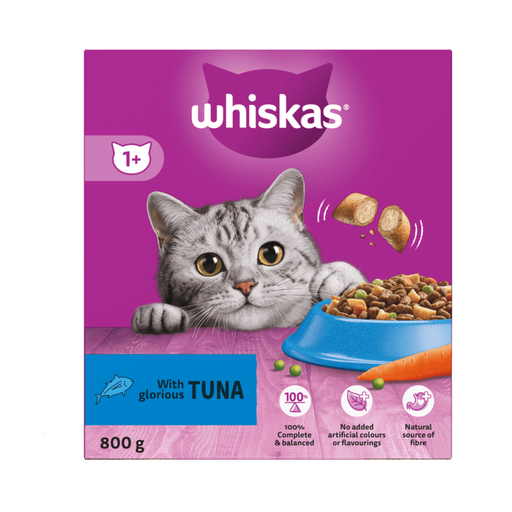
Why This Fits Their Persona: The 800g format gives new cat owners a manageable starting size, with a dry format that is straightforward to portion and store in a cool, dry place.
The listed composition and analytical constituents make it easier to distinguish the tuna flavour description from the actual ingredient percentages.
Adult 1+ formula; 30.8% protein and 12% fat listed; available in an 800g pack.
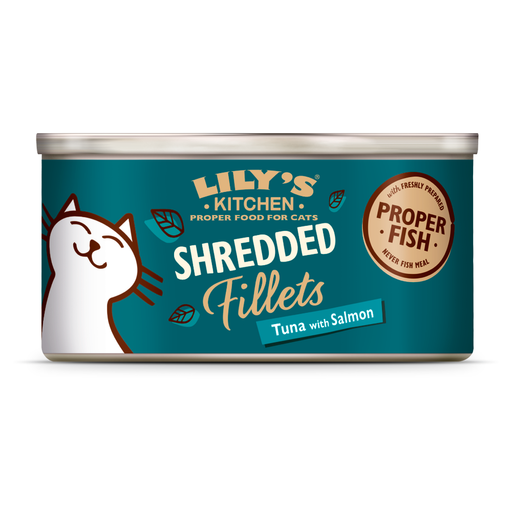
Why This Fits Their Persona: Suitable for shoppers seeking a shredded wet texture, broth-style serving and a recipe listed as complete and balanced for adult cats and kittens over six months.
The listing clearly identifies the product as complete and balanced rather than leaving shoppers to assume that a premium-looking pouch is a full diet.
47% tuna and 4% salmon listed; no added sugar or grains; 70g single pouch format.

Why This Fits Their Persona: A practical option for households that use several wet meals daily and want a multi-flavour fish selection in individually portioned cat food pouches.
The listing states that the recipes provide complete and balanced nutrition, while the 40-pouch pack makes the total quantity clear before purchase.
Four fish recipes; 40 × 85g pouches; listed feeding guidance of around three pouches daily for an average 4kg adult cat.

Why This Fits Their Persona: The mixed salmon, tuna, whitefish and cod selection suits owners whose adult cat loses interest when served the same flavour repeatedly.
The pack size, age suitability and feeding guidance are stated clearly, helping shoppers compare a variety pack with single-flavour alternatives.
40 × 85g pouches; four fish varieties; listed as a complete and balanced meal for adult cats.
We have compiled a complete, real-time list of products that fully satisfy these strict selection criteria and UK safety regulations.
It depends on the product, portion size and your cat’s daily allowance. Dry food is often simpler to store and measure, while wet food is sold in pre-portioned servings. Compare the cost per 100g and the daily feeding recommendation rather than pack price alone.
Introduce the new food gradually over several days, mixing increasing amounts of the new recipe with the old one. Follow the product label and ensure fresh drinking water is always available. If your cat stops eating or develops ongoing digestive symptoms, seek veterinary advice.
Kitten food is formulated for a different life stage, so choose food explicitly labelled for kittens. Check the age range carefully: the BLINK Kitten Mixed Pouch Selection is listed for kittens aged 2–12 months, whereas adult recipes such as Whiskas 1+ are intended for cats aged one year and above.