
24/7 Customer Support

Free returns

Same-day & Next-day Delivery

Quality Guaranteed

Unlock Your Welcome Offers: FREE Delivery | Up to 80% OFF | Free 30-day JoyPlus trial
Download the APP
Choosing cat food in the UK is rarely as simple as picking a flavour your cat likes. Packaging may highlight salmon, vitamins, natural ingredients or grain-free recipes, while the details that matter most can be less visible. The right choice depends on your cat’s age, lifestyle, preferred texture and any dietary sensitivities.
This guide explains the common buying traps, the label details worth checking and a selection of wet and dry cat food options for different households.
Some products are designed as treats, toppers or complementary food rather than a daily diet. Look for wording such as “complete pet food” or “100% complete and balanced”. This indicates that the product is intended to provide the required nutrients when fed according to its guidelines.
The products below are positioned as complete meals, but always check the current packaging before purchase, as recipes and labelling can change.
A flavour name such as “salmon” or “chicken” does not necessarily mean that the ingredient makes up most of the recipe. For example, several fish recipes list a specific fish at 4% within the chunks. Read the full composition rather than relying on the front-of-pack image.
This is particularly important when comparing fish cat food, chicken cat food, grain-free recipes and sensitive digestion cat food.
A cat food multipack can reduce the frequency of shopping and offer flavour variety, but a 40-pouch box is poor value if your cat refuses half the selection. Cats can also react differently when their diet changes quickly. If trying a new recipe, consider a smaller pack first or introduce it gradually over around seven days, following the product guidance.
Adult cat food is generally intended for cats aged around one year and over, but the exact age range varies. A senior formula may be labelled for cats aged 7+, while some dry recipes specify 8+.
Do not assume that a senior cat automatically needs a specialist diet for a diagnosed condition. If your cat has kidney disease, diabetes, urinary problems, allergies or persistent digestive symptoms, ask a vet for individual dietary guidance.
Wet cat food is available in pouches, trays or tins, often in jelly or gravy. Its high moisture content can be useful for cats that do not drink much, although fresh water should still be available at all times. Pouches are convenient for portion control, but opened food usually needs refrigeration and prompt use.
Dry cat food is easier to store, often sold in 1.9kg or 2kg bags, and can suit households that prefer measured portions. It has much lower moisture content than wet food, so water access is especially important. Reseal opened bags and keep them away from heat and humidity.
Compare the label’s protein, fat, fibre, ash and moisture figures, but do not assess a wet and dry product by percentages alone. Moisture significantly affects the numbers. Feeding instructions are also estimates: a 4kg indoor cat may need less than a highly active outdoor cat.
Treats count towards daily calories. Adjust portions to help maintain a lean body condition, and monitor your cat when changing food.

Why This Fits Their Persona: A large 40-pouch format suits households seeking straightforward portioning and flavour variety without buying several separate boxes.
The pack is labelled as complete pet food for adult cats, helping distinguish it from complementary treats or toppers.
Four varieties include white fish, salmon, chicken and lamb; each pouch contains 85g and the recipes contain no artificial colourants.
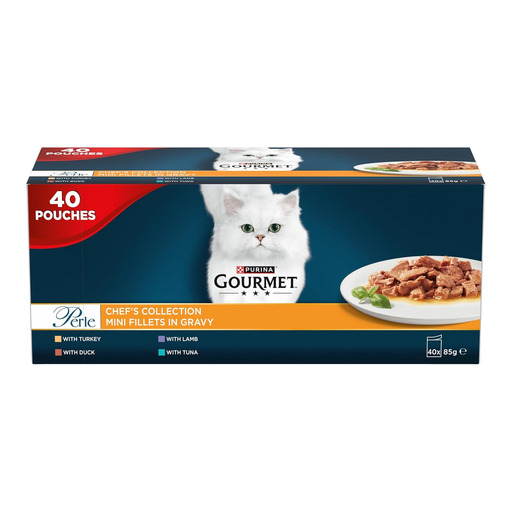
Why This Fits Their Persona: Suitable for owners who prioritise small, neatly portioned meals and a gravy texture for an adult cat that prefers sauce.
The product description specifies complete and balanced nutrition rather than presenting the gravy as the main nutritional feature.
Four flavours are included, with 13% protein and 80% moisture listed in the analytical information; opened pouches should be refrigerated.
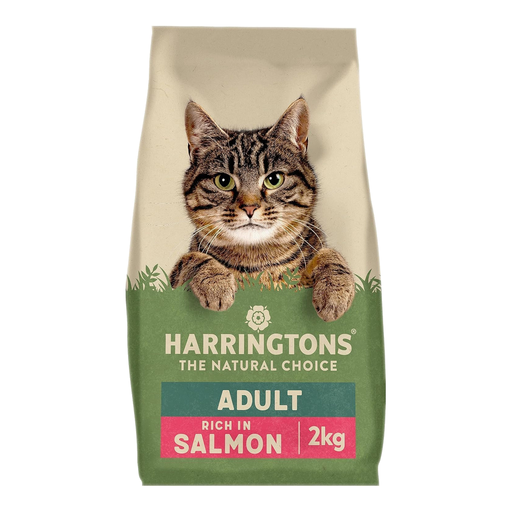
Why This Fits Their Persona: A practical option for owners feeding an adult cat dry food daily, including homes that value a larger resealable bag and grain-free ingredients.
The product is clearly specified for adult cats aged 1–7 years, so it is less likely to be used accidentally as kitten or senior cat food.
The formula lists 28% salmon meal, at least 30% crude protein, FOS prebiotic and 2kg net weight.

Why This Fits Their Persona: Designed for owners seeking a senior cat food multipack with soft wet texture and several familiar flavours.
Its stated 7+ life-stage positioning helps avoid giving an age-specific adult formula to an older cat without considering suitability.
The 40 x 85g pack includes white fish, salmon, lamb and chicken recipes and is described as complete and balanced.
We have compiled a complete, real-time list of products that fully satisfy these strict selection criteria and UK safety regulations.
Use the feeding guide on the pack as a starting point, then adjust for your cat’s weight, age, activity and treats. Wet and dry food have different calorie densities, so do not substitute them by volume. Monitor body condition rather than relying only on a standard portion.
Wet food contains substantially more moisture than dry food, and jelly or gravy may make a meal more appealing to some cats. It does not replace access to fresh drinking water. Refrigerate opened pouches as instructed and discard food that has passed the stated storage period.
Mix increasing amounts of the new food with the old food over approximately seven days, unless the packaging gives different instructions. A slower change can be sensible for cats with sensitive digestion. Stop and seek veterinary advice if your cat develops ongoing vomiting, diarrhoea or loss of appetite.