
24/7 Customer Support

Free returns

Same-day & Next-day Delivery

Quality Guaranteed

Unlock Your Welcome Offers: FREE Delivery | Up to 80% OFF | Free 30-day JoyPlus trial
Download the APP
Choosing cat food can become surprisingly complicated. Shelves are filled with adult cat food, kitten food, senior cat food, dry cat food, wet cat food and recipes labelled for sensitive digestion or hairball control. Attractive packaging can make one product appear suitable for every cat, but the details on the back of the pack matter more than the front.
The most common buying pitfalls are:
Start by matching the label to your cat’s age and condition:
For example, Go-Cat Kitten Dry Cat Food Chicken Milk & Vegetable is labelled for kittens up to 1 year old, while adult recipes such as Whiskas 1+ with Delicious Chicken are specifically marked for cats aged 1+ and are not suitable for kittens.
The statutory name should indicate whether the product is a complete pet food or a complementary food. For everyday feeding, a complete recipe is generally the more straightforward choice.
Next, inspect:
A “chicken cat food”, “salmon cat food” or “tuna cat food” can contain other animal derivatives, cereals, vegetable protein and fish derivatives. This is not automatically a problem, but it is important to understand what you are purchasing rather than relying only on the flavour name.
Dry cat food is easy to portion, store and use in automatic feeders. However, fresh drinking water should always be available. Reseal opened bags and store them somewhere cool and dry to preserve texture and freshness.
Wet cat food is often supplied in trays, cans or cat food pouches. Its high moisture content can be useful for cats that prefer softer meals, but opened portions should be refrigerated and used within the time stated on the packaging.
For multi-cat homes or regular feeding, cat food multipacks can reduce the need for frequent shopping. Before buying a large pack, confirm that your cat accepts the flavour and that you have suitable storage space. A smaller pack can be more practical when introducing sensitive digestion cat food or changing from one recipe to another.
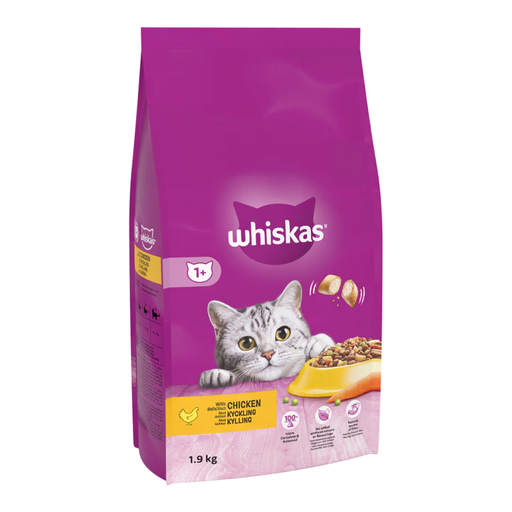
Why This Fits Their Persona: A practical dry cat food option for adult cats in households seeking a larger everyday pack with clear age guidance and portion recommendations.
The pack states that it is for adult cats aged 1+ and not for kittens, helping prevent a life-stage mismatch.
1.9kg pack; complete daily nutrition for adult cats; feeding guidance for 3kg, 4kg and 5kg cats.
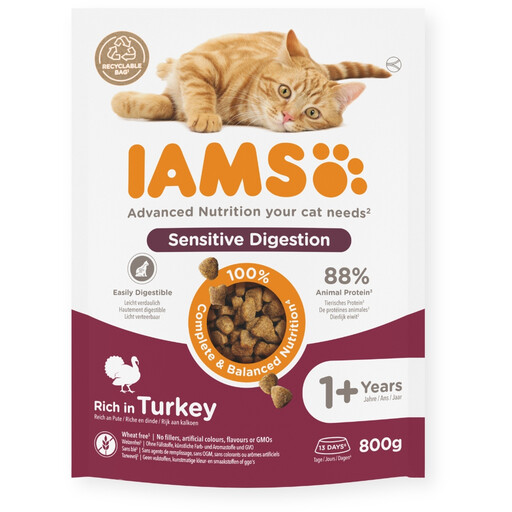
Why This Fits Their Persona: Suitable for adult cat owners who want to compare a turkey-based recipe with clearly listed protein, fat, fibre and mineral values.
The composition identifies turkey, chicken, rice and prebiotic ingredients instead of relying only on broad front-of-pack wording.
34% protein; 15% fat; includes turkey, rice, fish oil and prebiotic ingredients; formulated as complete and balanced adult nutrition.

Why This Fits Their Persona: A convenient cat food multipack for owners feeding an older cat regularly and wanting individual wet portions with several poultry varieties.
The packaging identifies the 7+ life stage and provides portion guidance, rather than presenting a general adult recipe as suitable for senior cats.
40 x 85g pouches; complete and balanced senior wet food; jelly texture; chicken, duck, poultry and turkey varieties.

Why This Fits Their Persona: A kitten food selection pack for owners introducing different wet flavours while following a recipe designed for kittens aged 2–12 months.
The product is clearly restricted to kittens aged 2–12 months, reducing the risk of substituting an adult recipe during growth.
8 x 85g pouches; four flavours; 14.5% crude protein; feeding guidance for mixed wet and dry feeding.
We have compiled a complete, real-time list of products that fully satisfy these strict selection criteria and UK safety regulations.
Change food gradually over around seven days, particularly when moving to sensitive digestion cat food. Follow the pack’s daily quantities, account for treats and adjust portions according to body condition, age and activity level.
Keep wet food at room temperature when serving, refrigerate unused portions as directed and discard food that has been left out beyond the stated period. Store dry food tightly sealed in a cool, dry place. If your cat has diagnosed health needs, recurring digestive problems or suspected allergies, seek guidance from a qualified veterinary professional before changing its diet.
Neither format is automatically suitable for every cat. Wet cat food provides a high-moisture meal and is available in trays and pouches, while dry cat food is convenient to measure and store. A complete product, appropriate life stage and suitable portion size are more important than format alone.
Follow the manufacturer’s guidance on the packaging. In general, keep the bag sealed, protect it from moisture and heat, and use it within the recommended period to maintain freshness. Buying a smaller pack may be sensible if your cat eats slowly or you have only one cat.
Senior recipes are labelled for older cats, commonly from age 7+. An adult cat should normally be fed a complete adult recipe unless a veterinary professional advises otherwise. Always check the age range and feeding guide before purchasing.