
24/7 Customer Support

Free returns

Same-day & Next-day Delivery

Quality Guaranteed

Unlock Your Welcome Offers: FREE Delivery | Up to 80% OFF | Free 30-day JoyPlus trial
Download the APP
Choosing cat food in the UK can feel simple until you compare ingredient lists, life-stage labels, pack sizes and specialist claims. A colourful pouch may not suit a senior cat, while a large bag of dry cat food can lose freshness before it is finished.
This guide explains the practical checks that help you avoid wasted money and choose food that matches your cat’s age, lifestyle and dietary needs.
Terms such as “with salmon”, “grain-free” or “high protein” describe particular features, but they do not automatically mean the food meets all nutritional needs. Check for a clear statement such as complete pet food for adult cats or complete dry pet food for cats of all life stages.
A complementary food is designed to be fed alongside other foods, rather than as your cat’s sole diet. If you want one product to provide daily nutrition, look for complete and balanced cat food wording on the label.
Adult cat food is not necessarily suitable for kittens or older cats. Kittens need food designed for growth, while senior cat food may have a different nutrient profile and texture. Indoor cats can also have lower activity levels, making portion control important.
The product’s stated life stage matters more than broad front-of-pack phrases. For example, some recipes are intended for cats aged 1 year and above, while others are labelled for senior cats aged 11+.
Grain-free cat food excludes ingredients such as wheat or maize, but it does not guarantee that a recipe will suit a cat with a specific intolerance. A food can still contain other potential triggers, including poultry, fish, soya or particular animal proteins.
For recurring vomiting, diarrhoea, appetite changes or suspected allergies, consult a vet before making major dietary changes. Marketing language should not replace professional advice.
Start with the legal description on the packaging. Look for:
A product labelled for all life stages may offer flexibility, while an adult-only recipe should not be used for kittens unless the packaging specifically permits it.
Dry cat food is convenient, easy to portion and generally simpler to store after opening. Its low moisture content means fresh drinking water should always be available. Seal opened bags tightly and store them in a cool, dry place.
Wet cat food has a high moisture content and is often sold in cat food pouches or trays. It can be useful for cats that prefer softer textures or for owners who want to add moisture to meals. Opened pouches should be refrigerated and used within the period stated on the label, commonly 48 to 72 hours.
Do not compare protein percentages between wet and dry food without considering moisture. A wet recipe containing 80% moisture will naturally show a lower protein percentage on the label than a dry recipe.
Ingredients are listed in descending order by weight. Look for clearly identified animal ingredients and check whether the recipe contains anything your cat should avoid.
The analytical constituents provide useful comparison points, including:
A named ingredient does not automatically make a food suitable for sensitive digestion. For example, a turkey recipe may still contain rice, maize or soya. Always read the full composition.

Why This Fits Their Persona: The 12 × 85g pouch format offers portioned wet meals for adult cats and makes it easier to rotate flavours without opening a large tin.
The label identifies it as complete pet food for adult cats aged 1+ years, rather than relying only on flavour or texture claims.
Four flavour options; 84.8% moisture; taurine listed at 620mg/kg.

Why This Fits Their Persona: Owners who value recipe variety can offer chicken, turkey, salmon and fish-based meals in convenient 100g pouches.
The pack states that the recipes are complete wet meals and gives the composition for each variety, allowing a more informed comparison than a generic “premium” label.
93% stated meat and fish content in each recipe; suitable from 8 weeks old according to the product information.
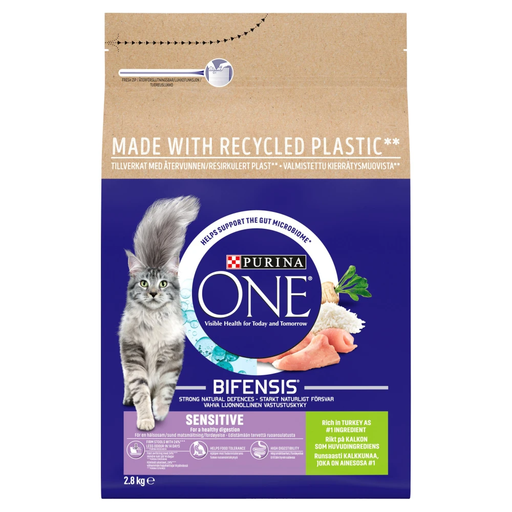
Why This Fits Their Persona: The larger bag suits multi-cat homes or owners looking for a longer-lasting dry food format for cats with delicate digestion.
The composition lists turkey at 18%, rice at 15% and no added wheat, so owners can check the recipe against known sensitivities.
36% protein; chicory root listed at 2%; taurine at 700mg/kg.
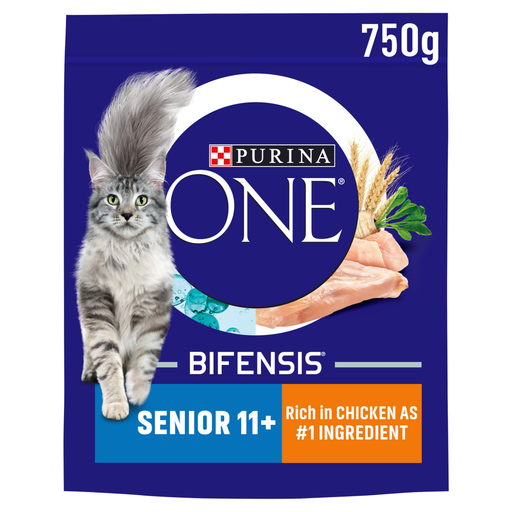
Why This Fits Their Persona: It is labelled for cats aged 11 years and over, giving owners a clearly age-matched dry food option.
The senior life-stage statement is explicit, helping avoid using a general adult formula for an older cat.
38% protein; taurine at 700mg/kg; feeding guidance is provided for different body-weight ranges.
We have compiled a complete, real-time list of products that fully satisfy these strict selection criteria and UK safety regulations.
Neither format suits every cat. Wet food has high moisture and may appeal to cats that prefer soft textures, while dry food is convenient to portion and store. A complete product in either format can form part of a suitable diet. Some owners combine both, while monitoring total daily calories.
Follow the packaging guidance. In practice, keep the bag tightly sealed in a cool, dry place and use it within the stated period. A smaller bag may be more practical for one cat if a large pack cannot stay fresh.
You can select a recipe labelled for sensitive digestion, but persistent digestive symptoms need veterinary attention. Introduce any new food slowly and check the complete ingredient list for proteins or grains that may not suit your cat.