
24/7 Customer Support

Free returns

Same-day & Next-day Delivery

Quality Guaranteed

Unlock Your Welcome Offers: FREE Delivery | Up to 80% OFF | Free 30-day JoyPlus trial
Download the APP
Choosing cat food in the UK can feel straightforward until you compare labels, pouch sizes, life stages and claims about nutrition. A colourful pack may appeal to you, but your cat’s age, activity level and eating habits should guide the decision.
The most useful approach is to look beyond front-of-pack language and check the product information that affects everyday feeding.
Terms such as “natural”, “gourmet” and “high quality” can describe presentation or ingredients without telling you whether the food is appropriate as a complete daily diet. Look for the statutory description “complete pet food” and confirm the intended life stage.
A food labelled for adult cats may not suit kittens or senior cats. Similarly, a product designed for cats aged 1–7 should not automatically be used for a cat aged over seven.
“Salmon cat food” or “chicken cat food” does not necessarily mean the recipe consists mainly of salmon or chicken. Check the composition and the stated percentage. For example, some recipes specify 4% of the named meat or fish in the relevant pieces, while others list a higher percentage of a main protein ingredient.
This matters if your cat has known sensitivities or simply refuses certain flavours.
A 40-pouch box can offer convenient storage and a lower cost per pouch, but it is wasteful if your cat dislikes the texture or flavour. Jelly cat food, gravy cat food and pâté have noticeably different consistencies. If you are changing formats, consider trying a smaller pack first.
Once opened, wet food should be handled according to the pack instructions. Refrigerate unused portions where advised and discard food that appears spoiled, damaged or has been left out beyond the recommended period.
Start with the age statement:
A product described as complete and balanced cat food is intended to provide daily nutrition when fed as directed. A complementary food, topper or treat should not replace a complete meal unless advised otherwise on the label.
Wet cat food usually has high moisture content, with the products listed here ranging from approximately 77.5% to 85%. Pouches can be useful for portion control and may suit cats that prefer soft textures.
Dry cat food is easier to store, measure and leave for scheduled feeding. Its lower moisture content means fresh drinking water should always be available. Dry food is also more energy-dense by weight, so compare the feeding guide rather than matching wet and dry grams directly.
Mixed feeding can work well, but portions must be adjusted. For instance, one senior dry-food guide indicates that 15g of dry food can be replaced by one 85g pouch of wet food. Treat this as product-specific guidance, not a universal conversion.
Review:
“Grain-free cat food” is not automatically necessary for every cat. It can be a useful filter for a specific ingredient preference, but it does not by itself establish that a food is more nutritious or more suitable. For suspected allergies or ongoing digestive problems, ask your vet for tailored advice rather than repeatedly changing foods.
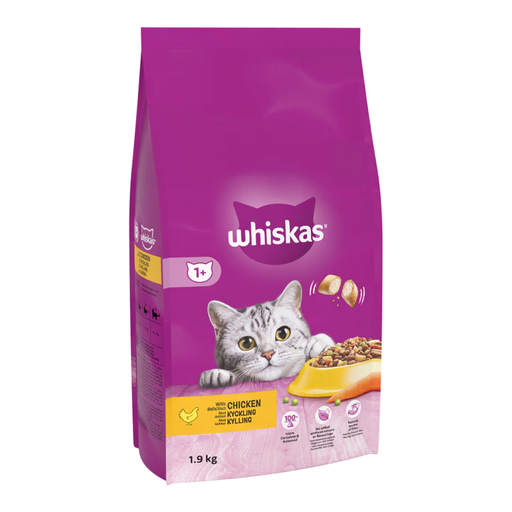
Why This Fits Their Persona: The 1.9kg dry format suits an adult cat household seeking a straightforward everyday meal with fewer frequent purchases.
The listing states that it is for cats aged 1+ and provides a full ingredient, additive and analytical breakdown rather than relying only on front-of-pack wording.
Complete daily nutrition; natural fibre and balanced minerals are listed among the product features.

Why This Fits Their Persona: Suitable for shoppers prioritising a grain-free wet recipe with a clearly stated meat composition and 100g individual servings.
The product page identifies it as grain-free and lists chicken, beef and chicken broth percentages, helping you assess the recipe before committing to a larger order.
93% stated chicken and beef ingredients; 1kg total quantity across 10 pouches.
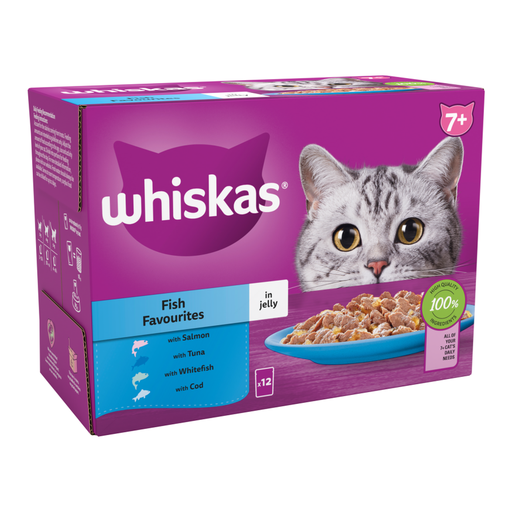
Why This Fits Their Persona: A practical match for multi-cat homes or owners seeking senior cat food in portioned fish flavours.
The pack clearly states suitability for cats aged 7+ and offers four fish varieties, reducing the risk of buying an unsuitable adult-only formula.
12 x 85g pouches; product information describes the food as 100% complete and balanced for senior cats.
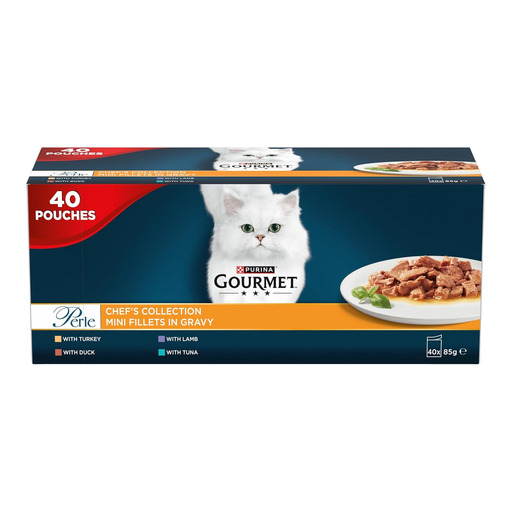
Why This Fits Their Persona: The 40-pouch cat food multipack is convenient for households feeding several adult cats or rotating flavours across the week.
The collection states its adult life-stage suitability, complete nutritional status and four flavour options, so the pack size is supported by useful variety.
40 x 85g individual pouches; turkey, duck, lamb and tuna varieties in gravy.
Dry food such as tuna or chicken kibble is convenient and straightforward to portion. Larger bags can reduce shopping frequency, while 300g packs, such as Whiskas 1+ Tuna Adult Dry Cat Food 300g, can be useful when introducing a new flavour.
Wet food in jelly or gravy may suit cats that prefer soft textures. Fish selections can include salmon, cod, plaice or white fish, but named fish percentages vary. Always check the composition if a particular protein is important.
For cats with sensitive digestion, compare the complete ingredient list rather than relying on the phrase sensitive cat food alone. Products such as Purina ONE Sensitive Rich Turkey and Rice 2.8kg identify turkey as a main ingredient and contain no added wheat according to the supplied product information. Introduce any new food gradually over around seven days and monitor appetite, stools and body condition.
Calculate the cost per 100g or per pouch, then estimate daily usage from the feeding guide. A large multipack is not necessarily economical if your cat eats less than the suggested average or if food is wasted after opening.
For dry food, also consider storage: reseal the bag tightly and keep it cool and dry. For wet food, smaller pouches can help reduce leftovers, although a 40-pack may offer greater convenience for regular users.
We have compiled a complete, real-time list of products that fully satisfy these strict selection criteria and UK safety regulations.
Neither format is universally suitable for every cat. Wet food has a high moisture content and comes in convenient portions, while dry food is easy to measure and store. Many owners use mixed feeding, provided total portions are adjusted and the food is complete for the cat’s life stage.
Follow the product label. Wet food should generally be covered and refrigerated after opening, then used within the stated period. Dry food should remain sealed in a cool, dry place. Do not feed food from damaged packaging or food that smells, looks or feels spoiled.
Mix increasing amounts of the new food with the old food over approximately seven days. Go more slowly if your cat is selective or has a sensitive stomach. If your cat develops persistent digestive symptoms, stops eating or shows a marked change in behaviour, contact a veterinary professional.