
24/7 Customer Support

Free returns

Same-day & Next-day Delivery

Quality Guaranteed

Unlock Your Welcome Offers: FREE Delivery | Up to 80% OFF | Free 30-day JoyPlus trial
Download the APP
Choosing cat food can become surprisingly complicated. Shelves and online listings are filled with claims about flavour, ingredients and added nutrients, yet the most important information is often less prominent. UK cat owners may also waste money by buying large multipacks their cat refuses, selecting complementary treats as though they were meals, or overlooking age and feeding guidance.
This guide explains the practical details to check before buying, then matches several cat food options to different household needs.
A selection of fish flavours may keep mealtimes interesting, but flavour alone does not indicate whether a product is suitable as a main meal. Look for wording such as “complete pet food” or “100% complete and balanced” on the product description and packaging.
By contrast, cat treats and tasty sticks are generally complementary pet food. They should not replace a complete diet, even when they contain protein, vitamins or an appealing fish flavour.
Wet cat food contains considerably more moisture than dry cat food, so feeding quantities and calorie density differ. A pouch may look small but still form part of a complete daily ration. Dry food is more concentrated and can be easier to store, but portions should be measured rather than repeatedly topped up.
When combining formats, reduce the amount of each according to the feeding guide. Treat calories also need to be included in the daily total.
Cat food multipacks can offer convenience and reduce the need for frequent shopping, but a large box is poor value if your cat rejects half the flavours. Consider trying a smaller pack first, particularly when changing from meat to fish cat food, switching texture or introducing cat food in jelly.
For an older cat, appetite, chewing ability and individual dietary requirements can change. If your cat has a diagnosed condition, allergy or persistent appetite change, ask your vet about suitable food.
This is the first filter. Complete and balanced cat food is formulated to provide the nutrients required for the intended life stage when fed according to the instructions. Products labelled complementary, including many cat treats, are designed to supplement meals.
Check whether the food is intended for adult cats, kittens or senior cats. An adult cat food labelled for maintenance may not be the right choice for a young kitten or an older cat with specific dietary needs.
Wet food pouches commonly contain around 80% moisture, although exact values vary. Jelly and gravy can make food more appealing to cats that prefer soft textures, while the moisture content contributes to overall fluid intake. Serve wet food at room temperature where the instructions recommend it, and refrigerate unused portions as directed.
Dry food offers a crunchy texture and convenient storage. Look for a resealable bag or transfer the food to an airtight container after opening. Always provide fresh drinking water.
The ingredients list shows the recipe components in descending order by weight, while analytical constituents typically include protein, fat, crude fibre, crude ash and moisture. These figures help you compare products, but they do not tell the whole story independently of your cat’s age, weight and activity.
Pack size matters for both price and freshness. A 12 x 85g pouch box provides individually portioned meals, while a 2kg dry food bag may suit households that prefer fewer shopping trips. Check the feeding guide for your cat’s weight rather than judging portions by eye.
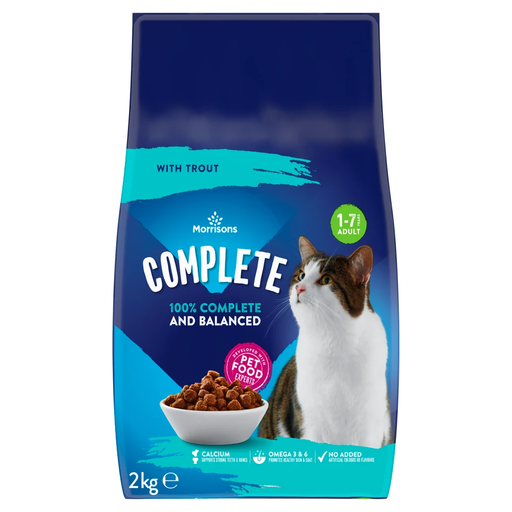
Why This Fits Their Persona: A practical choice for adult-cat households seeking a larger dry-food format, simple storage and a trout recipe for everyday feeding.
It is listed as complete dry cat food for adult cats, rather than a treat or complementary snack. The 2kg pack also makes the quantity clear before purchase.
30% crude protein, 12% crude fat and stated Omega 3 and 6 content; no added artificial colours or flavours according to the listing.
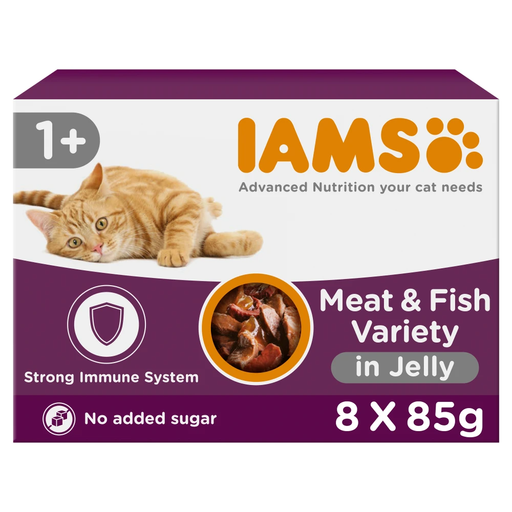
Why This Fits Their Persona: Suitable for owners who want individually portioned wet meals with both meat and fish recipes for an adult cat aged one year or over.
The listing identifies it as complete and balanced wet cat food and provides analytical values, helping shoppers look beyond flavour-led wording.
Contains 9.2% protein, 4.8% fat and 79.3% moisture, with taurine and vitamin E listed among the additives.
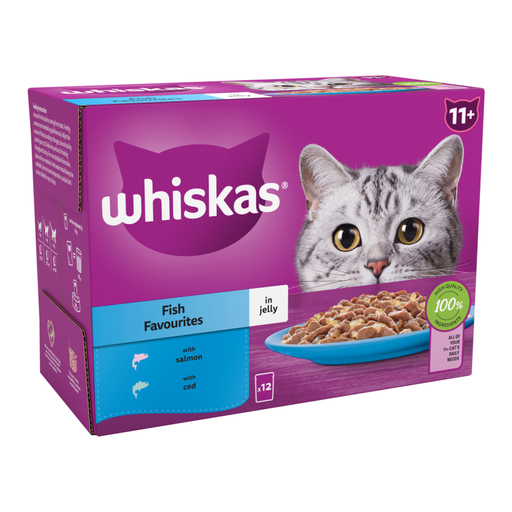
Why This Fits Their Persona: Designed for owners feeding a cat aged 11 or over who prefers soft, fish-based meals in individually portioned pouches.
The life-stage suitability is clearly stated, and the product is described as a complete senior meal rather than a general fish-flavoured snack.
The jelly recipe contains 84.5% moisture, with salmon and cod varieties and feeding guidance for 3kg, 4kg and 5kg cats.
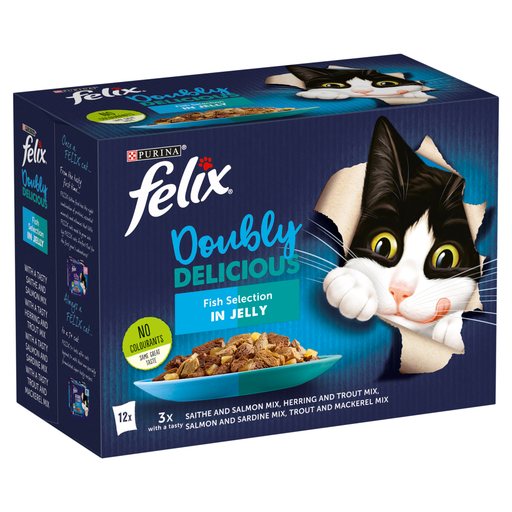
Why This Fits Their Persona: A larger wet cat food multipack for adult cats that enjoy rotating fish combinations and individually sealed pouches.
The product details identify complete and balanced nutrition, while the 12-pouch quantity and 85g serving size make it easier to assess before committing.
Four fish pairings, 82% moisture and 75 kcal per 100g are listed; the recipe also includes taurine and vitamins A, D3 and E.
We have compiled a complete, real-time list of products that fully satisfy these strict selection criteria and UK safety regulations.
Neither format is automatically suitable for every cat. Wet cat food has a high moisture content and is available in textures such as jelly and gravy. Dry food is convenient to store and measure. The deciding factors are whether the product is complete for your cat’s life stage, whether your cat accepts the texture and how the daily portion fits their needs.
The correct amount depends on the product’s calorie content, your cat’s weight, age, activity and body condition. Use the feeding guide on the packaging as a starting point, then adjust carefully. If treats are given, reduce the main meal as appropriate.
Some senior cats can continue with a suitable complete adult recipe, but products specifically labelled senior may offer a more relevant life-stage formulation. For cats aged 11 and over, compare the senior cat food label, texture and feeding guidance. Seek veterinary advice if your cat loses weight, struggles to eat or develops a noticeable change in appetite.