
24/7 Customer Support

Free returns

Same-day & Next-day Delivery

Quality Guaranteed

Unlock Your Welcome Offers: FREE Delivery | Up to 80% OFF | Free 30-day JoyPlus trial
Download the APP
Choosing cat food in the UK is not simply a matter of picking the flavour your cat likes. Packaging often highlights words such as “natural”, “premium” or “with vitamins”, while the more important details—life stage, feeding status, ingredients and portion guidance—can be easy to overlook.
The following guide explains the main buying pitfalls and compares practical options for adult and senior cats, including wet food pouches, dry cat food, multipacks and complementary cat milk.
Not every product labelled as cat food can provide a cat’s entire daily diet. Look for the wording “complete pet food” or “complete and balanced cat food” when selecting a main meal. Complementary products, including cat milk, should only be offered alongside a suitable complete diet.
Fish cat food, chicken cat food and mixed flavour cat food can help with variety, but flavour does not determine whether a product suits your cat’s age or lifestyle. A food designed for adult cats may not be suitable for kittens, while senior cats may benefit from a recipe labelled for cats aged 7+.
Also check the ingredient detail. A flavour name may refer to a specific percentage within the chunks rather than the whole recipe. For example, the label may state a percentage of chicken, salmon or cod in the visible pieces.
Large cat food multipacks can offer convenient cupboard storage, but buying in bulk is wasteful if your cat dislikes the recipe. Wet pouches also need sensible storage: unused portions generally require refrigeration and should be used within the period stated on the packaging.
Feeding guides are starting points rather than fixed rules. Adjust the quantity according to your cat’s weight, activity and body condition, and keep fresh drinking water available.
For cats aged 1+, choose an adult cat food labelled for maintenance. Senior cat food 7+ is formulated for older cats and may include adjusted vitamin, mineral and taurine levels.
Age guidance should be treated as a useful starting point rather than a substitute for veterinary advice. If your cat has a diagnosed condition, food allergy or unusual appetite, speak to a vet before changing its diet.
A complete wet or dry food should state that it meets the cat’s daily nutritional requirements. This is particularly important when comparing wet cat food pouches with treats or milk products.
A product such as complementary cat milk can be used as an occasional treat, but it should not replace a complete meal. The Morrisons milk product, for example, is intended for adult cats and recommends limiting treats to no more than 10% of daily calorie intake.
For specific nutritional features, check the analytical constituents and additives. Fibre from natural sources may be relevant when comparing cat food for healthy digestion. Essential fatty acids and zinc are commonly highlighted in recipes for healthy skin and coat, while taurine is a routine nutritional additive in many complete cat foods.

Why This Fits Their Persona: A practical dry cat food option for adult cats, with a 750g pack size that is manageable for households trying a new recipe without committing to a very large bag.
It is identified as a complete and balanced adult meal, rather than a treat or complementary product. The feeding guide gives portions for 3kg, 4kg and 5kg cats.
Contains 30% protein, 3% crude fibre and taurine at 870mg/kg. The recipe contains fibres from natural sources and no artificial colours or flavourings.

Why This Fits Their Persona: A senior-focused multipack for owners who want individually portioned wet food with several flavours, including white fish, salmon, lamb and chicken.
The product is specifically labelled for cats aged 7+ and states that it is 100% complete and balanced, helping avoid an unsuitable adult-only or complementary purchase.
Each 85g pouch contains 83% moisture, and the listed recipes provide taurine at 421mg/kg. The 40-pack is convenient for regular feeding.

Why This Fits Their Persona: Suitable for owners feeding an older cat wet food regularly and wanting poultry variety across a substantial 40-pouch pack.
The senior 7+ label makes the intended life stage clear, while the feeding guide provides portions for cats weighing 3kg, 4kg and 5kg.
The listed recipes contain 84.5% moisture, 7.8% protein and taurine at 1,101mg/kg. Flavours include chicken, duck, poultry and turkey.
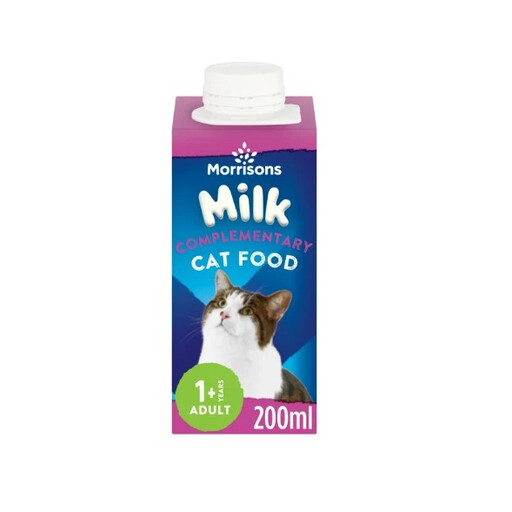
Why This Fits Their Persona: A small, occasional addition for adult cats whose owners want a liquid treat rather than another complete meal.
It is clearly described as complementary cat milk, so it should not be mistaken for a nutritionally complete main diet. The suggested serving is approximately 50ml.
The lactose-reduced formula contains taurine at 450mg/kg and 88% moisture. Refrigerate after opening and follow the label’s use-by guidance.
We have compiled a complete, real-time list of products that fully satisfy these strict selection criteria and UK safety regulations.
Both formats can form part of a suitable diet when labelled as complete food and fed according to the guide. Wet food pouches have high moisture content and offer individual portions, while dry food is convenient to measure and store. Some owners use a combination, reducing each portion to avoid overfeeding.
There is no single portion for every cat. Start with the manufacturer’s guide based on body weight, then consider activity, age and body condition. A 4kg cat may require a different amount from another 4kg cat with a different activity level. Monitor weight regularly and ask a vet for advice if weight changes unexpectedly.
Some senior cats can continue with an adult recipe, but food labelled senior cat food 7+ provides a more targeted option for older cats. Check the complete nutritional statement, feeding instructions and your cat’s individual needs before switching. Introduce any new food gradually to reduce the chance of digestive upset.