
24/7 Customer Support

Free returns

Same-day & Next-day Delivery

Quality Guaranteed

Unlock Your Welcome Offers: FREE Delivery | Up to 80% OFF | Free 30-day JoyPlus trial
Download the APP
Choosing cat food and treats can look simple until you compare age ranges, nutritional claims, portion sizes and feeding formats. A colourful pouch or “natural” label does not automatically mean the product suits your cat’s daily diet.
For UK households, the most useful starting point is to separate complete food, complementary treats and feeding accessories. Then check the label, serving guidance and practical fit for your cat’s age, appetite and routine.
A lickable snack may be convenient, appealing and easy to use as a topper, but it is not necessarily nutritionally complete. Products such as cat lickable treats are generally intended to supplement a normal diet. Feeding too many can also add calories without providing the balanced nutrition your cat needs each day.
Look for wording such as “complete pet food” when shopping for a main meal. “Complementary pet food” means the item should be used alongside a complete diet, following the pack’s feeding guidance.
Fish selection in jelly can offer variety, but a kitten’s age and nutritional requirements matter more than whether it prefers tuna, salmon or another flavour. Similarly, grain-free cat treats are not automatically more suitable for every cat. Ingredient sensitivities and veterinary dietary advice should take priority over broad marketing terms.
Bulk packs can reduce the number of shopping trips, but only if the food is accepted and can be stored properly. Individual wet cat food pouches are useful for freshness and measured portions, especially in homes with kittens or several cats. Once opened, follow the packaging instructions for refrigeration and use.
For a kitten’s main diet, select food clearly labelled for the correct life stage. Complete kitten food is formulated to provide the nutrients required as part of a daily diet, while treats and toppers are not intended to replace it.
Kitten wet food should state a suitable age range. For example, the Felix kitten food listed below is marked for kittens aged 2–12 months. After 12 months, gradually transition to an adult formula unless your veterinary practice advises otherwise.
Check the recommended age, protein and fat levels, moisture content and ingredient list. The listed Felix fish recipes contain 13.5% protein and 77.5% moisture, while the Felix Original Kitten fish selection lists 9% protein and 82% moisture. These figures are useful for comparing products, but they should be interpreted alongside the complete feeding guide rather than in isolation.
If your cat has a known intolerance, inspect every recipe in a multipack. “Fish flavour” does not necessarily mean fish is the only animal ingredient, and recipes may contain meat and animal derivatives, vegetable protein extracts or other ingredients.
Small pouches can make portioning easier and reduce leftovers. A 12 x 85g pack is practical for several meals, but the correct daily amount depends on age, body condition and activity.
For treats, check calories per sachet and the recommended frequency. Webbox Lick-E-Lix products provide 15g sachets, with the catnip version listed at 8.5 kcal per sachet. Use these as a reward or food topper rather than a replacement for complete food.
If your cat eats quickly, a cat slow feeder can make meals last longer. Choose a design that is easy to clean, suitable for the food texture you use and safe under supervision.

Why This Fits Their Persona: A straightforward multipack for new kitten owners who want portioned wet meals with several fish recipes rather than buying individual flavours.
The product is identified as a complete kitten meal, helping distinguish it from complementary treats and toppers.
12 x 85g pouches, four fish recipes and feeding guidance for kittens, pregnant cats and lactating queens.
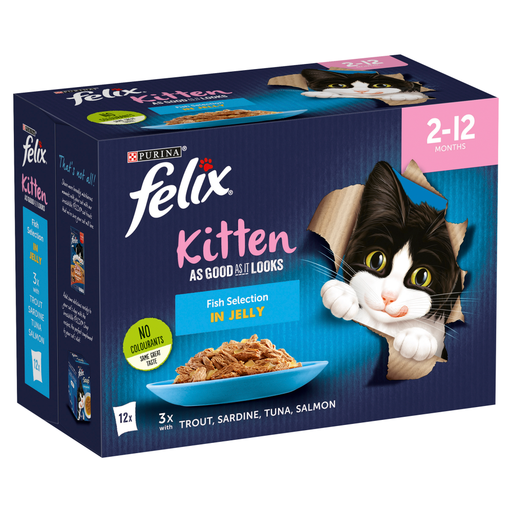
Why This Fits Their Persona: Suitable for owners who value a clearly stated kitten life stage, portion control and flavour variety during the first year.
The 2–12 month suitability is prominent, reducing the risk of buying adult maintenance food for a growing kitten.
Complete wet food with trout, sardine, tuna and salmon varieties; individual pouches support flexible serving.
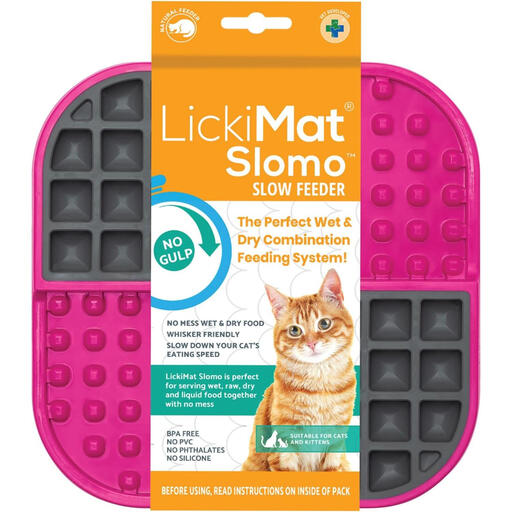
Why This Fits Their Persona: Designed for households managing fast eating, food enrichment or mixed wet, dry and liquid feeding routines.
Its low-profile, textured layout is designed for licking and slower access, rather than relying on a deep bowl that may be awkward for some cats.
Separate textured areas accommodate wet, dry and liquid foods; supervision is required because it is not a chew toy.
We have compiled a complete, real-time list of products that fully satisfy these strict selection criteria and UK safety regulations.
For adult cats, Webbox Lick-E-Lix with real catnip is a low-calorie, wheat- and grain-free complementary treat listed at 8.5 kcal per 15g sachet. It can be served directly or used as a cat food topper. The product is suitable from three months, so it is not appropriate for younger kittens.
The liver sausage and cat grass version is another 15g sachet option, also listed at 8.5 kcal. Keep both products as additions to a complete diet, adjust other food if necessary and discard unused portions according to the label.
In multi-cat homes, feed cats separately where possible. This makes it easier to see who has eaten, prevents one cat from taking another’s portion and helps you monitor changes in appetite.
Wet food is not automatically better for every kitten. The important points are that the food is complete, suitable for the kitten’s age and fed according to the label. Wet food pouches provide moisture and portion control, while some owners choose a mixed feeding routine. Introduce changes gradually and provide fresh drinking water.
There is no single amount for every cat. Follow the product label, consider the treat’s calorie content and keep complementary treats as a small part of the overall diet. Low-calorie treats can still contribute to daily intake when offered frequently.
A slow feeder may suit cats that eat rapidly or benefit from more interactive feeding, but introduce it gradually. Spread a familiar wet food or lickable treat over the surface, supervise use and inspect the mat regularly for damage. Never use a feeding mat as a substitute for veterinary advice about eating or digestive problems.