
24/7 Customer Support

Free returns

Same-day & Next-day Delivery

Quality Guaranteed

Unlock Your Welcome Offers: FREE Delivery | Up to 80% OFF | Free 30-day JoyPlus trial
Download the APP
Choosing cat food and treats can be surprisingly difficult. Supermarket shelves and online listings are filled with attractive packaging, flavour claims and “functional” recipes, but the most visible feature is not always the most useful one for your cat.
The right choice depends on age, lifestyle, feeding format, ingredients, portion guidance and whether the product is a complete meal or an occasional extra. This guide explains the details worth checking before you buy, with practical options for adult, senior and treat-focused households.
Cat treats, including soft sticks and kitten treats, are usually complementary pet food. They are intended to supplement a main diet rather than replace it. Feeding too many can also add extra calories, particularly for indoor or less active cats.
Check the statutory name and feeding instructions. A product described as a complete food should be suitable as the main diet when served according to its label. Treats should be offered in moderation and included when considering your cat’s daily intake.
Terms such as “chicken”, “salmon” or “tuna” may refer to a specific percentage within the recipe. For example, a fish selection may list several fish varieties at 4% each, alongside meat and animal derivatives. This does not automatically make it a single-protein or fish-only food.
Read the full composition if your cat has a known sensitivity or you are trying to avoid a particular ingredient. “With chicken” and “chicken recipe” are not necessarily interchangeable descriptions.
Hairball control cat food may contain added fibre, while coat and skin recipes may include oils, zinc or B vitamins. These features can be useful considerations, but they do not replace veterinary advice for a diagnosed condition.
Look for measurable information such as crude protein, fat, fibre, moisture and feeding amounts. Avoid choosing a food solely because its front-of-pack wording sounds more advanced.
For everyday meals, look for wording such as complete pet food for adult cats, or a clear life-stage statement. A complete diet should provide the nutrients required by that cat category when fed as directed.
Complementary products, including many cat treats and tasty sticks, should be used alongside a suitable main meal. Webbox Tasty Sticks with Salmon & Trout, for example, are intended for cats over three months and contain two sticks per foil sachet. They can be broken into smaller pieces for kittens or smaller cats, but they are not a replacement for kitten food.
Age guidance matters. Kitten food is designed for growing cats, while adult cat food is intended for cats from around one year, depending on the product label. Senior recipes commonly begin at seven years.
Always check the age range before buying. Some adult wet food pouches specifically state that they are not suitable for kittens under 12 months. A senior food may be appropriate for a mature cat, but it should not be selected simply because it contains a health-related claim.
Wet cat food pouches generally contain a high proportion of moisture and are served in measured portions. Dry cat food is easier to store and measure, but fresh water should always be available.
Compare the pack size with the recommended daily amount. A 40-pack of 85g pouches may suit multi-cat homes or shoppers wanting fewer frequent purchases, while smaller selection packs can be more practical when introducing new flavours. Store opened wet food as instructed, usually refrigerated and used within the stated period.
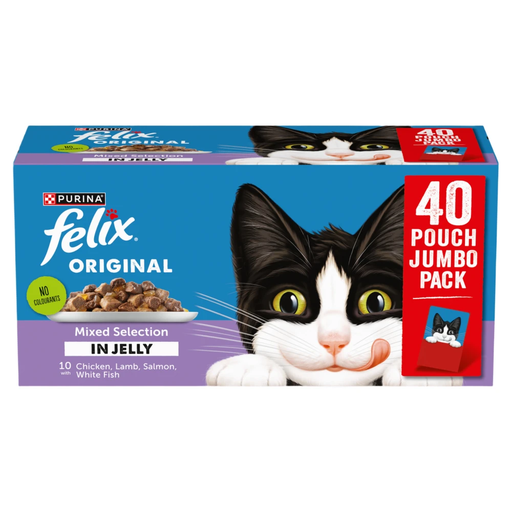
Why This Fits Their Persona: A 40 x 85g pack offers four flavours for households seeking convenient everyday meals and variety without buying several separate products.
It is identified as complete pet food for adult cats, helping separate a daily meal from a complementary snack.
Four varieties include white fish, salmon, chicken and lamb; each pouch contains 85g and the food is served in jelly.
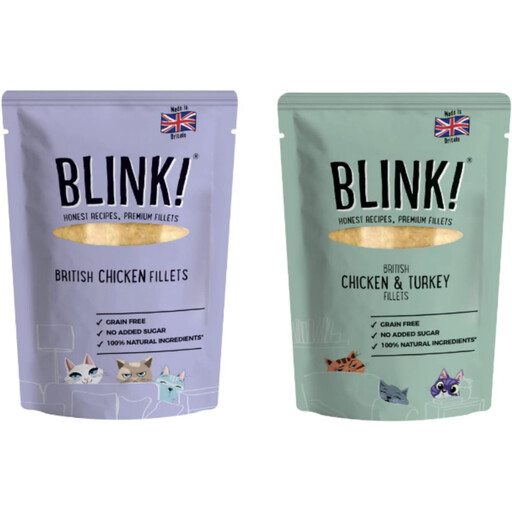
Why This Fits Their Persona: Suitable for adult cats aged one year and above, this smaller selection pack suits owners who want clearly specified ingredients and two chicken-based recipes.
The pack states its age suitability, ingredient proportions and storage guidance, making it easier to compare beyond front-of-pack language.
Contains four Chicken Fillets and four Chicken & Turkey pouches; each pouch is 85g with 82% moisture.
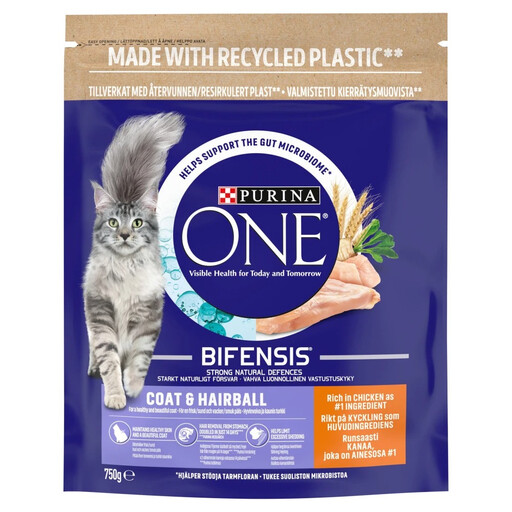
Why This Fits Their Persona: A dry formula for owners specifically comparing hairball control cat food with everyday feeding guidance.
The composition identifies fibre sources, chicory root and declared analytical constituents rather than relying only on a hairball-related title.
Lists 34% crude protein, 14% fat and 6% crude fibre; the feeding guide gives a 40–60g daily range for an adult cat.
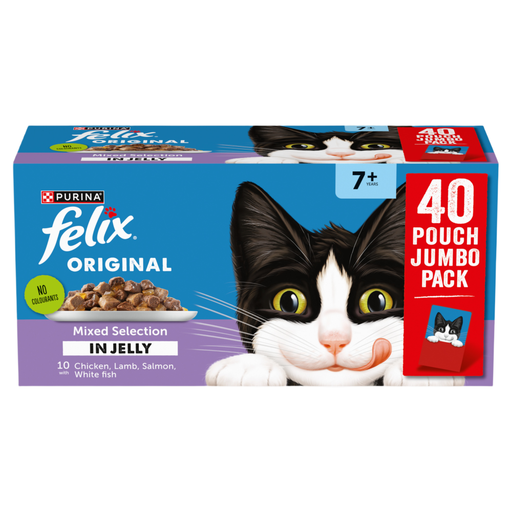
Why This Fits Their Persona: This selection is labelled for adult and senior cats aged seven and over, making the life-stage guidance clear for mature-cat owners.
It avoids vague age positioning by stating the intended 7+ stage and providing a daily portion reference for a 4kg cat.
Includes white fish, salmon, lamb and chicken recipes; the product is described as complete and balanced and served in jelly.
Soft cat treats can be useful for bonding or reward-based routines. Webbox Salmon & Trout Tasty Sticks contain 36.4 kcal per stick and are suitable for cats over three months, while the Chicken & Liver sticks are complementary treats with 16.5 kcal per stick. Supervise feeding and break sticks into smaller pieces where appropriate.
For wet food, serve at room temperature where instructed. Refrigerate opened pouches and follow the label’s use-by guidance. Introduce a new recipe gradually, particularly if your cat has a sensitive stomach. If your cat has a diagnosed condition, allergy or persistent digestive issue, ask a veterinary professional before changing its diet.
We have compiled a complete, real-time list of products that fully satisfy these strict selection criteria and UK safety regulations.
Both formats can form part of a suitable diet when the product is complete for your cat’s life stage and fed according to its instructions. Wet food has a high moisture content, while dry food is convenient to measure and store. Some owners use a mixed feeding routine, but portions should be adjusted rather than simply adding both full daily allowances.
There is no single amount for every cat. Check the treat’s calorie information and feeding guidance, then reduce the main meal if necessary. Treats should remain a small part of the overall diet, especially for indoor, neutered or less active cats.
Make the change gradually over several days by mixing increasing amounts of the new food with the existing recipe. Monitor appetite, stools and body condition. Stop and seek veterinary advice if your cat refuses food or develops ongoing digestive symptoms.