
24/7 Customer Support

Free returns

Same-day & Next-day Delivery

Quality Guaranteed

Unlock Your Welcome Offers: FREE Delivery | Up to 80% OFF | Free 30-day JoyPlus trial
Download the APP
Choosing the right cat food can feel like navigating a minefield of marketing claims and confusing labels. As a cat owner in the UK, you want to provide nutritious meals without falling for common purchasing traps that cost you money and may not suit your pet. Many products make bold promises, but understanding a few key fundamentals can help you see past the hype and make a confident choice for your feline companion.
As the Joybuy Product Recommendation Officer, my role is to help you identify what truly matters. Let's break down the common pitfalls and the essential factors to consider when selecting your next bag or multipack of cat food.
Before you add anything to your basket, be aware of these frequent marketing tactics that can lead to poor choices:
To make an informed decision, focus on these three non-negotiable parameters.
The format of the food impacts everything from hydration to convenience.
This distinction, required by UK and EU regulations, is crucial for your cat's health.
Cats are obligate carnivores, meaning their diet must contain nutrients found only in animal products.
Based on these practical criteria, here are a few options from our catalogue matched to different owner needs.
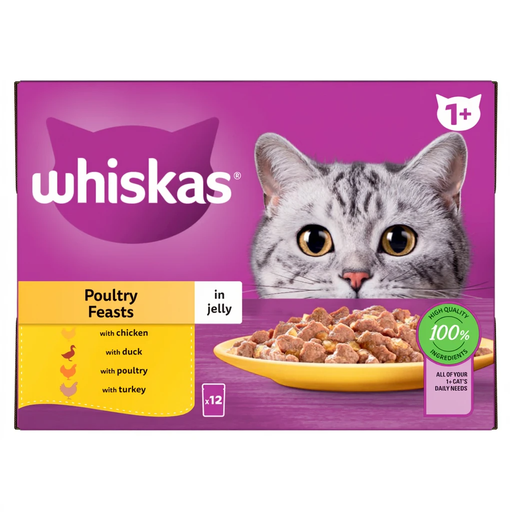
Why This Fits Their Persona: This cat food multipack offers a straightforward, reliable and affordable way to feed an adult cat. It's a household name in the UK, providing a complete and balanced meal without a premium price tag, perfect for everyday feeding.
It is clearly labelled as a "complete" food for adult cats, ensuring you are not accidentally under-nourishing your pet. It avoids the "one-size-fits-all" trap by being specifically for the "1+" adult life stage.
Provides 100% of an adult cat's daily nutritional needs in convenient, single-serve cat food pouches. The high moisture content also helps with hydration.
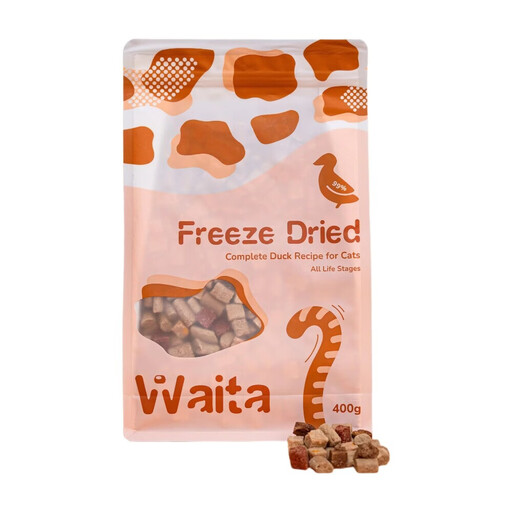
Why This Fits Their Persona: For the owner prioritising high meat content and minimal processing. This food is ideal for those with cats sensitive to common proteins like chicken or for anyone wanting to provide a diet closer to raw with the convenience of kibble.
This product directly counters the "vague meat content" trap. The label clearly states it contains 99.2% whole-animal ingredients, with duck listed as the primary component, leaving no ambiguity about its composition.
A single-protein (duck) formula, making it suitable for cats with chicken allergies. The freeze-drying process preserves a high level of nutrients and flavour.

Why This Fits Their Persona: This large cat food multipack is designed for owners of older cats who need a reliable, age-appropriate diet. The wet food format is gentle on older teeth and aids hydration, a common concern for senior felines.
This is the perfect antidote to the "one-size-fits-all" trap. It is a dedicated senior cat food, formulated with balanced mineral levels to support urinary tract health and a nutritional profile tailored to the needs of less active, older cats.
Specifically formulated for cats aged 7 and over. The jelly consistency provides essential moisture, and the large 40-pouch pack offers great value and convenience.
If you're interested in novel protein options for sensitive cats, we have compiled a complete, real-time list of products that fully satisfy these strict selection criteria and UK safety regulations.
Here are answers to a few common questions UK cat owners have.
The correct amount depends on your cat's age, weight, breed, activity level and whether you are feeding wet, dry or mixed food. Every package of complete cat food includes a feeding guide. Use this as your starting point. Monitor your cat’s body condition—you should be able to feel their ribs with a light touch but not see them—and adjust the portion size up or down as needed.
Switching your cat's food abruptly can cause digestive upset like vomiting or diarrhoea. It is always recommended to transition them gradually over a period of 7 to 10 days. Start by mixing a small amount of the new food (around 25%) with their old food (75%), and slowly increase the proportion of the new food each day until you have fully switched over.
Picky eating can be due to several factors. Cats are often sensitive to texture (preferring jelly over gravy or p?té over chunks), temperature (most prefer food at room temperature) and freshness. If your cat suddenly becomes picky, first ensure the food isn't spoiled. You can also try offering a variety pack with different flavours or textures to discover their preference. If the behaviour is new and persistent, it is always a good idea to consult a vet to rule out any underlying health issues.