
24/7 Customer Support

Free returns

Same-day & Next-day Delivery

Quality Guaranteed

Unlock Your Welcome Offers: FREE Delivery | Up to 80% OFF | Free 30-day JoyPlus trial
Download the APP
Navigating the cat food aisle can feel overwhelming. With countless brands, formulations and enticing packaging, it is difficult to know if you are making the right choice for your feline companion. As the Joybuy Product Recommendation Officer, my role is to help you see past the marketing jargon and focus on what truly matters. Many owners find themselves caught out by common purchasing traps that lead to wasted money and food their cat will not even touch.
Let's look at a few frequent pitfalls:
To make an informed decision, you need to understand a few key parameters. These are the non-negotiable details to check on the packaging before you commit to a purchase.
This is the single most important distinction in pet food.
The ingredients are listed by weight, so the first few items make up the bulk of the food. Look for a specific named meat or fish (e.g., "Chicken," "Salmon") as one of the first ingredients.
There are benefits to both, and many owners choose to feed a mix.
Instead of a generic list, we have matched some popular options to the specific needs of UK cat owners.

Why This Fits Their Persona: For households with one or more adult cats, buying in bulk is the most economical approach. This 40-pouch mega pack from a trusted brand like Sheba offers great value without compromising on providing a complete and balanced daily diet.
This avoids the "gourmet illusion" by being a straightforward, reliable choice. While it uses derivatives, it is from a reputable manufacturer and provides a complete nutritional profile, offering practicality over boutique ingredients.
Excellent cost-per-meal with the 40-pouch pack. The poultry selection in jelly is a widely accepted flavour profile for many adult cats.
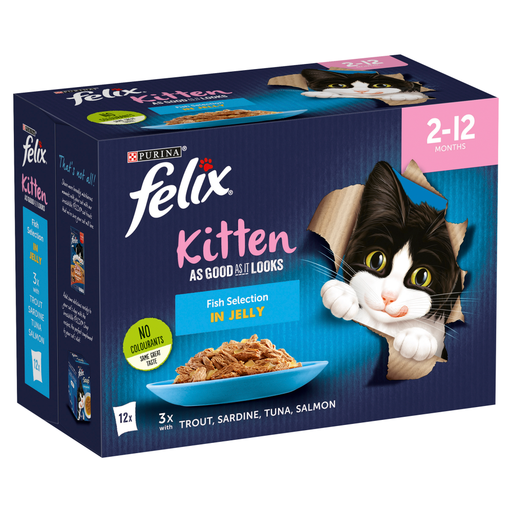
Why This Fits Their Persona: A kitten's first year is critical for development. This food is specifically formulated for kittens aged 2-12 months, providing peace of mind that their unique nutritional needs for growth are being met.
This directly avoids the "one-size-fits-all" trap. It is not an adult food. The formulation is higher in protein (13.5%) and enriched with essential vitamins (A, D3, E) to support a kitten's rapid growth and immune system development.
Specifically formulated for the growth phase. The tender pieces in jelly are easy for small mouths to manage, and the fish selection offers variety.
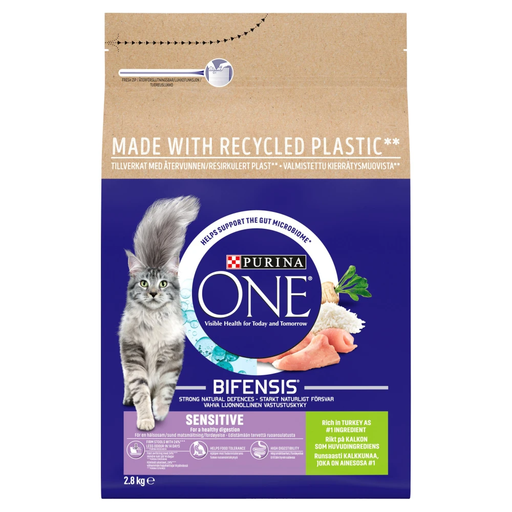
Why This Fits Their Persona: If your cat has a delicate stomach or skin, a targeted diet is crucial. This sensitive cat food is formulated with high-quality turkey and rice for high digestibility and includes specific ingredients to support gut health.
It sidesteps the "grain-free bandwagon" by focusing on what actually helps sensitivity: highly digestible ingredients and gut support. It contains prebiotic chicory to improve gut microbiome balance, a more targeted approach than simply removing grains.
Specifically designed for sensitive digestion. Contains Omega 3 & 6 fatty acids to also support healthy skin and a glossy coat, which often go hand-in-hand with digestive health.
We have compiled a complete, real-time list of products that fully satisfy these strict selection criteria and UK safety regulations.
The correct amount varies based on your cat's age, weight, activity level and whether they are neutered. Always check the feeding guide on the packaging of the specific cat food you are using as a starting point. Adjust the portion as needed to maintain a lean, healthy body weight. If you are unsure, a quick chat with your vet can provide a more tailored recommendation.
Yes, mixed feeding is a popular and beneficial approach. It combines the dental and cost benefits of dry cat food with the hydration and palatability of wet cat food. The key is to manage portions carefully. For example, you might reduce the dry food portion if you are adding a wet food pouch to their daily diet to prevent overfeeding and weight gain.
Cats can have sensitive digestive systems, so a sudden change in diet can cause upset. It is important to introduce any new food gradually over a period of 7 to 10 days. Start by mixing a small amount of the new food with their old food and slowly increase the proportion of the new food each day until the transition is complete.