
24/7 Customer Support

Free returns

Same-day & Next-day Delivery

Quality Guaranteed

Unlock Your Welcome Offers: FREE Delivery | Up to 80% OFF | Free 30-day JoyPlus trial
Download the APP
As a cat owner in the UK, you know that finding the right toilet setup for your feline friend is crucial for a happy, hygienic home. Yet, the market is flooded with options, from simple trays to complex smart litter box systems. It’s easy to end up with a product that creates more problems than it solves. As the Joybuy Product Recommendation Officer, my role is to help you navigate the choices and identify what truly matters, steering you clear of common purchasing mistakes.
Many cat owners find themselves frustrated by three common pitfalls:
hooded cat litter tray without proper ventilation can trap ammonia fumes, creating an environment so unpleasant that your cat may refuse to use it. Effective odour control comes from a combination of good design, regular cleaning and the right litter.large cat litter box.automatic cat litter box can seem like the ultimate solution to daily scooping. However, some models are noisy, require proprietary and expensive refills or have complex cleaning mechanisms that are difficult to maintain, leading to higher long-term costs and hassle.To avoid these issues, focus on a few key parameters that determine a cat litter box's real-world performance.
The material of the litter tray is fundamental to long-term hygiene. Look for trays made from high-quality, non-porous plastic. Cheaper, more porous plastics can absorb urine and odours over time, developing a permanent smell that no amount of cleaning can remove. Additionally, a design with smooth, rounded interior corners, free from deep crevices, will make scooping and deep-cleaning significantly easier and more effective.
The ideal design depends on your cat's personality, your home environment and your tolerance for daily maintenance.
hooded cat litter tray provides privacy for your cat and does an excellent job of containing litter scatter and odours. For optimal performance, look for one with a carbon filter to help neutralise smells rather than just trapping them.self-cleaning cat litter box offers unparalleled convenience, automatically sifting waste after each use. When considering one, check its compatibility with different types of clumping cat litter, its noise level during operation and the size of its waste compartment.Your choice of litter box is intrinsically linked to your choice of cat litter.
automatic cat litter box systems and sifting trays. Products like the Ochama 4-in-1 Mixed Cat Litter combine bentonite and tofu for fast clumping.Instead of a one-size-fits-all approach, we've matched a few standout options to different UK cat owner profiles.

Why This Fits Their Persona: This is an ideal starting point. It's an affordable, no-fuss solution that prioritises function over features. The generous size suits most cats, and the low entry point is perfect for kittens or older cats with reduced mobility.
It avoids the "too small" pitfall with its large 50-litre capacity. The removable rim provides effective litter scatter control without the potential downsides of a fully enclosed hood, making it a safe bet for fussy cats.
The durable, non-porous plastic is easy to clean and resists odours. The optional rim offers flexibility as your cat grows or their habits change.
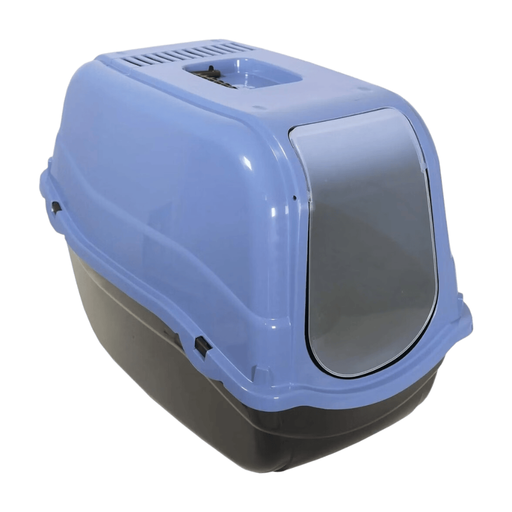
Why This Fits Their Persona: This user wants a tidy home with minimal odour and mess, but also prioritises sustainable choices. This hooded tray contains scatter effectively, while its charcoal filter actively manages odours. Its eco-credentials are a significant bonus.
It tackles the "odour-proof myth" with a practical, two-part system: a physical barrier (the hood) and an active filter. The removable door also helps prevent "toilet aversion" by allowing cats to adapt at their own pace.
Made from 64% post-consumer recycled plastic, it's a more sustainable choice. The combination of a deep tray, leak-proof rim and charcoal filter provides a robust solution for cleanliness.
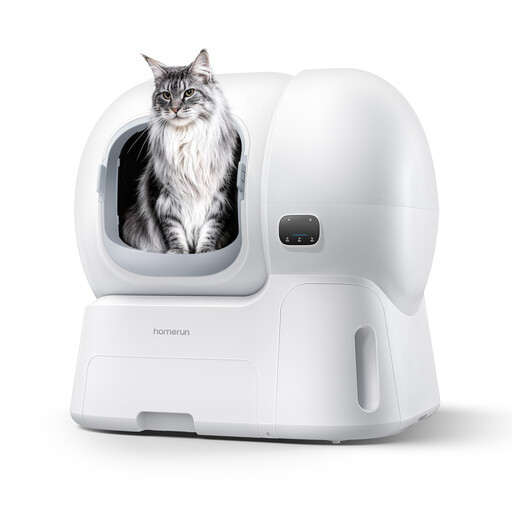
Why This Fits Their Persona: For those with multiple cats, large breeds or a busy lifestyle where daily scooping is a chore, this automatic solution is a game-changer. It's built to handle high traffic and large cats, offering true hands-off convenience.
It directly addresses the hidden costs and hassles of automation. Its extra-large capacity and automatic litter refill system mean less frequent intervention. It is explicitly designed as a large cat litter box, solving the size issue for breeds like Ragdolls.
Features a massive 8L waste compartment and an automatic litter replenishment system. It is suitable for cats up to 11.3kg and multi-cat households, providing significant convenience.
We have compiled a complete, real-time list of products that fully satisfy these strict selection criteria and UK safety regulations.
This depends on the type of litter and the number of cats using the box. For non-clumping litter, a full change is typically recommended at least once a week. For clumping litter, after you've scooped out waste daily, a complete replacement of all litter is usually only needed every 2-4 weeks. Always follow the manufacturer's guidance.
This is a common issue as some cats feel trapped. The best approach is a gradual introduction. Start by using the new litter box without the hood. Once your cat is using it consistently, add the hood but remove the swinging door. Finally, once they are comfortable with the hood, you can add the door. Placing a small amount of their used litter in the new box can also help them recognise it as their own.
For many, the convenience is well worth the investment, especially in multi-cat homes or for owners with busy schedules or mobility issues. However, it's important to weigh the high initial cost against the time saved. Also, consider ongoing expenses, such as the need for specific cat litter tray liners or proprietary litter types and ensure the model you choose has a reputation for reliability and quiet operation.