
24/7 Customer Support

Free returns

Same-day & Next-day Delivery

Quality Guaranteed

Unlock Your Welcome Offers: FREE Delivery | Up to 80% OFF | Free 30-day JoyPlus trial
Download the APP
A cat litter box can quickly become one of the most noticeable items in a home. Odour, litter scattered across the floor, difficult cleaning and a cat refusing to use the tray are common frustrations. The right design can make daily care easier, but product listings often focus on attractive features without explaining the practical limitations.
Before buying, watch for three common traps:
A suitable cat litter box should match your cat’s size, habits, the available space and how much daily maintenance you can realistically manage.
Do not judge capacity by the external footprint alone. Check the internal space, entrance height and whether your cat can turn around comfortably. Adult and large-breed cats, including Maine Coons, generally need more room than kittens.
A large cat litter box or spacious enclosure should allow your cat to enter, squat, turn and leave without brushing against the sides. If you are placing a tray inside a cabinet, compare the litter box dimensions with the cabinet’s internal measurements rather than its outside dimensions.
For cats that dislike enclosed spaces, an open-ended or hooded tray with a removable swing door may be easier to introduce gradually.
An enclosed litter box can reduce visible mess and help contain odours, but ventilation remains important. Look for a design that allows easy access to the tray and does not trap dampness.
An odour-control cat litter tray may use a charcoal filter or sealed waste compartment. These features are useful additions, but filters require replacement and waste must still be removed regularly. Choose smooth surfaces, removable components and wide openings if simple cleaning is a priority.
For a covered cat litter box, check whether the hood clips securely into place and whether the door can be removed during the adjustment period.
A litter box should sit securely on a level, dry surface. This is especially important in homes with dogs, energetic cats or children. A cat litter box enclosure made from furniture board can also provide a more discreet appearance, but it must be protected from excessive moisture and checked periodically for loose joints.
A recycled plastic cat litter tray may be practical for households seeking a lighter, wipe-clean option. If selecting an automatic cat litter box, check the required Wi-Fi band, power connection, compatible litter and safety sensors. Look for features such as infrared detection and anti-pinch protection, while still following the supplied instructions and keeping pets away during maintenance.
The following recommendations cover different needs, from furniture-style concealment to app-controlled cleaning and recycled materials.
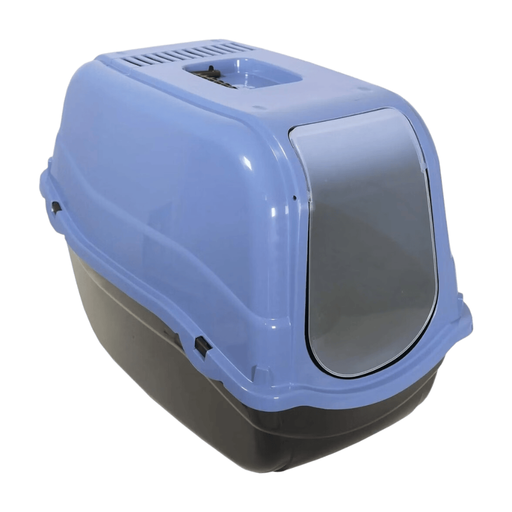
Why This Fits Their Persona: A practical choice for first-time cat owners or households wanting a straightforward covered tray without powered components. Its compact format suits many standard UK homes.
The removable swing door helps cautious cats adapt, while the deep tray and leak-proof rim address spills that can be missed in shallow designs.
Made from 64% post-consumer recycled plastic; includes a charcoal filter, carry handle and secure clips.

Why This Fits Their Persona: Suitable for owners who want to integrate the litter area into a living room, hallway or utility space while providing privacy for an adult or large-breed cat.
The 85 x 49 x 50 cm enclosure offers a defined space for a compatible tray, helping reduce litter track-out and limiting access by dogs.
Particleboard construction; top supports up to 75 kg; labelled parts and instructions support assembly in approximately 20 minutes.
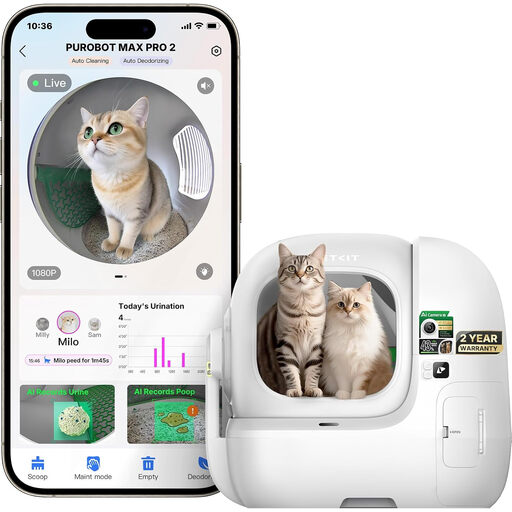
Why This Fits Their Persona: Designed for busy professionals, multi-cat households and technology-focused owners who want remote monitoring and less frequent manual scooping.
Automatic cleaning is paired with infrared sensing and anti-pinch protection. It also specifies clumping litter compatibility, reducing uncertainty about set-up.
App control, camera monitoring, activated carbon filtration and a sealed waste bin with an indicated storage period of approximately 7–10 days, depending on usage.
We have compiled a complete, real-time list of products that fully satisfy these strict selection criteria and UK safety regulations.
Remove clumps and solid waste at least daily, with frequency adjusted for the number of cats using it. Empty and wash a standard tray regularly, using mild soap and water. Automatic models reduce scooping but still require waste-bin emptying and internal cleaning.
They can be, provided the entrance and interior allow comfortable movement. Always check internal measurements, not just the external dimensions. A spacious enclosure can work with a compatible large cat litter box, but a narrow hood may not suit every adult cat.
They require electricity and may involve replacement waste bags, filters or other consumables. App-connected models also need a suitable Wi-Fi connection. Compare these ongoing requirements with the time saved and confirm that your preferred clumping litter is compatible before purchasing.