
24/7 Customer Support

Free returns

Same-day & Next-day Delivery

Quality Guaranteed

Unlock Your Welcome Offers: FREE Delivery | Up to 80% OFF | Free 30-day JoyPlus trial
Download the APP
A suitable cat litter box can make daily cleaning easier, reduce scattered litter and give your cat a private place to go. However, product pages often focus on attractive features while leaving practical limitations unclear. The right choice depends on your cat’s size, habits, access needs and the space available in your home.
A covered cat litter tray can help contain litter and provide privacy, but a swinging door or tall entrance may discourage kittens, older cats or nervous pets. A low-entry cat litter box is easier to access, although it may offer less protection against litter scatter.
Check whether the door can be removed, how high the entrance is and whether your cat can comfortably turn around inside.
An odour-control litter box may include a charcoal filter, sealed waste compartment or enclosed design. These features can help contain smells, but they do not replace regular scooping and washing. Filters also need replacing, while waste compartments must be emptied before they become full.
Avoid paying extra for odour features without checking the replacement filter cost, cleaning access and availability of compatible consumables.
An automatic self-cleaning cat litter box can reduce the frequency of manual scooping, but it requires a power supply, suitable litter and ongoing cleaning. An app-controlled cat litter box may also need a 2.4 GHz Wi-Fi connection rather than relying on every home network configuration.
Look at the entrance dimensions, minimum cat weight, waste-bin capacity and sensor arrangements before buying. Automation is useful only if your cat can enter comfortably and you are happy to maintain the mechanism.
External measurements show how much floor space the unit occupies, but internal dimensions determine whether your cat can turn, dig and adopt a natural position. Large breeds may need a spacious enclosure, while kittens may benefit from a lower step-in height.
For a cat litter box for large cats, compare the internal length and width rather than relying on labels such as “extra large”. For kittens or less mobile cats, consider a low entrance and avoid designs that require climbing.
A deep tray with a raised or leak-proof rim can reduce spills when cats dig or spray. Check how the hood connects to the base, whether clips are secure and whether the tray can be lifted without separating unexpectedly.
A leak-proof cat litter tray still needs to sit on a stable, level surface. A washable mat beneath the box can provide an additional layer of protection for flooring and help collect tracking litter.
Plastic trays are generally straightforward to wipe, while recycled plastic options may appeal to shoppers looking to reduce reliance on newly manufactured material. Check the stated material composition rather than assuming that “eco” means fully recycled or recyclable.
Glossy, removable components can simplify cleaning. For electrical models, inspect the waste drawer, rotating chamber and seals regularly, and follow the manufacturer’s instructions for disconnecting power before washing any parts.
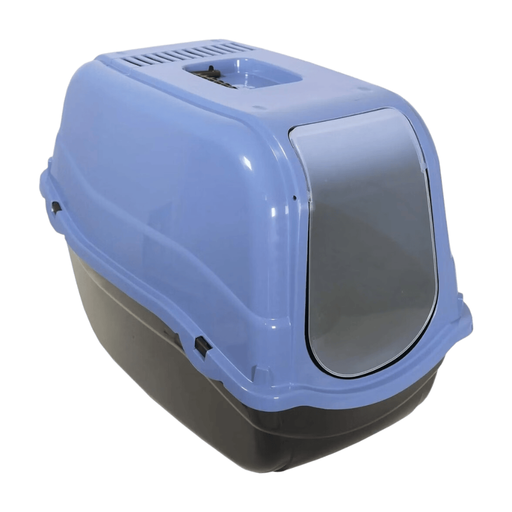
Why This Fits Their Persona: This covered tray offers a practical starting point for households wanting more privacy and containment without moving straight to an electronic system. Its internal dimensions are 51cm x 35cm, with a 14cm step-in height.
The removable swinging door allows cautious cats and kittens to begin with an open entrance. The deep base and raised rim are designed to help contain litter and spills.
Made from 64% post-consumer recycled plastic; includes a charcoal filter, carry handle and secure clips.
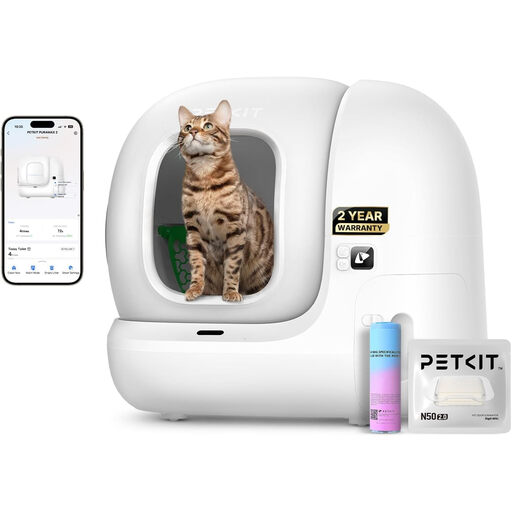
Why This Fits Their Persona: Suitable for technology-focused owners who want remote operation and usage information. It is listed for cats over 1.5kg and older than six months, with a 25.5cm x 20cm entrance.
The product listing specifies infrared and weight sensors, automatic stopping when a cat approaches and a sealed waste compartment. It still requires access to power and routine cleaning.
Offers app control through 2.4 GHz Wi-Fi, three cleaning modes, a 7-litre waste bin and listed weight and usage monitoring.

Why This Fits Their Persona: This enclosed cat litter box furniture is intended for homes where appearance, privacy and dog access are concerns. The 85cm-wide cabinet can accommodate many litter boxes, including options used by larger adult cats.
It is a cabinet rather than a replacement tray, so owners can select a litter box that suits their cat. The enclosed entry is designed to help keep dogs out and reduce litter track-out.
The particleboard top supports up to 75kg; the cabinet can also function as a cat house or display surface.
We have compiled a complete, real-time list of products that fully satisfy these strict selection criteria and UK safety regulations.
Remove waste at least once daily and wash the tray regularly, adjusting the schedule for the number of cats and the type of litter used. Automatic systems reduce scooping but still need the chamber, waste bin and seals cleaned according to the instructions.
No. Some cats prefer an open tray, particularly during a gradual transition. A removable door or open-entry setup can help a kitten or nervous cat adjust. Always prioritise comfortable access and sufficient internal space over privacy alone.
Lifespan depends on material, cleaning products, frequency of use and moving parts. Replace a tray if it develops cracks, persistent odour, damaged clips or leaks. For an automatic model, also check the condition of sensors, seals, cables and waste-drawer components.