
24/7 Customer Support

Free returns

Same-day & Next-day Delivery

Quality Guaranteed

Unlock Your Welcome Offers: FREE Delivery | Up to 80% OFF | Free 30-day JoyPlus trial
Download the APP
Choosing between covered cat litter trays, furniture-style enclosures and automatic systems can be confusing. Product listings often highlight smart features, odour filters or large capacities, but the details that affect everyday use are sometimes less prominent.
A suitable litter box should fit your cat, your available space and the amount of cleaning you are prepared to do. Before buying, consider these common pitfalls.
A litter box may look spacious externally but offer limited internal room. Your cat needs enough space to enter, turn around and adopt a comfortable position without touching the sides. Large breeds and heavier cats generally need more room than a small kitten.
Always check internal dimensions, entrance size and step-in height rather than relying on labels such as “large” or “extra spacious”.
A covered cat litter tray can help contain scattered litter and reduce the direct spread of smells, but it does not replace regular cleaning. Odour control depends on litter type, waste removal, ventilation and the condition of any charcoal filter.
A sealed waste chamber in an automatic self-cleaning cat litter box may reduce how often you handle waste, but consumables such as bags and filters add to running costs.
App control, cameras and usage reports can be convenient, but connected litter boxes usually require a stable power supply and compatible Wi-Fi. Some models only support 2.4GHz Wi-Fi, and automatic systems may require clumping litter.
Also check whether your cat meets the stated age and weight requirements. A low-entry litter box may suit kittens or cats with limited mobility, while a taller automatic design may not be appropriate for every pet.
Measure the area where the box will sit, then compare it with the internal dimensions. An enclosed cat litter box should have a clear, comfortable entrance and enough turning space.
For kittens or cautious cats, a removable door can make the transition easier. A higher step-in edge may contain litter more effectively, but it can be inconvenient for young, older or less agile cats.
Manual trays are straightforward and do not need electricity, software or replacement mechanical parts. Automatic models can reduce daily scooping, but they need correct assembly, suitable clumping litter and regular maintenance.
Look for practical details such as:
Do not use non-clumping litter in a machine that specifically requires clumping litter. Incorrect litter can affect collection performance and make cleaning more difficult.
Plastic trays should have smooth, washable surfaces and a rim that helps prevent leaks. Furniture-style cabinets should sit on a level surface and be checked periodically for loose fittings.
For an odour control litter box, charcoal or activated carbon filters can help manage smells, but they need replacing according to the instructions. Keep the litter area well ventilated and remove waste regularly, even when using a covered design.
For electrical products, check the supplied adapter, operating instructions, warranty information and applicable UK product markings before use. Keep cables away from chewing pets and disconnect the unit before maintenance.
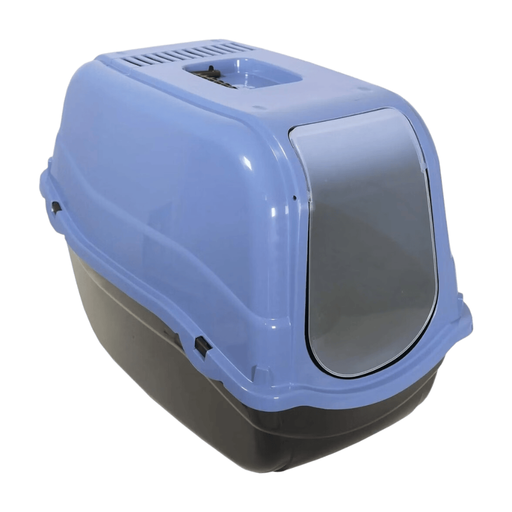
Why This Fits Their Persona: A practical covered tray for households seeking privacy, a washable design and straightforward daily maintenance without electrical components.
Its internal dimensions are listed as 51cm x 35cm, while the removable swing door allows gradual introduction for kittens or hesitant cats.
Extra-deep tray, leak-proof rim, swing door and replaceable charcoal filter. Made with 64% post-consumer recycled plastic.
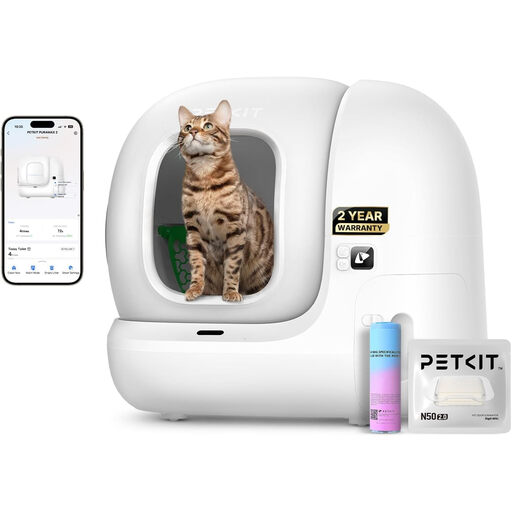
Why This Fits Their Persona: Suitable for owners who prioritise automated cleaning, remote operation and structured monitoring in a busy UK household.
The listing specifies a 7-litre waste bin, safety sensors and compatibility with 2.4GHz Wi-Fi. Check your cat’s weight and age before purchase.
App control, three cleaning modes, infrared and weight sensors, a low entrance and an OLED display with night light.

Why This Fits Their Persona: A furniture-style solution for multi-pet homes, large breeds or owners wanting to reduce visible litter scatter without using an automated mechanism.
The cabinet provides a defined enclosure and dog-proof design, while its listed 85cm width offers room for many standard and larger litter trays.
Particleboard cabinet, reduced litter track-out design and a top surface rated to support up to 75kg when correctly assembled.
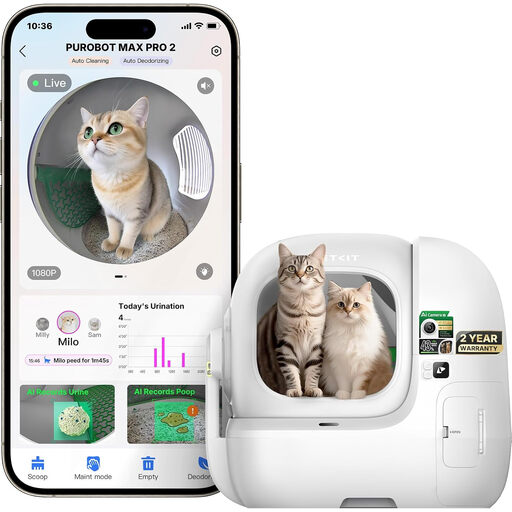
Why This Fits Their Persona: Designed for owners who want a cat litter box with camera access, app controls and usage information for a multi-cat or frequently unattended home.
The listed 210-degree wide-angle camera, infrared sensing and anti-pinch protection address monitoring and operational safety concerns, subject to correct setup.
App monitoring, sealed waste collection, activated carbon filtration, a wide entrance and stated 2.4GHz Wi-Fi connectivity.
We have compiled a complete, real-time list of products that fully satisfy these strict selection criteria and UK safety regulations.
Remove solid waste at least once daily and wash the tray regularly with mild, pet-safe cleaning products. Automatic models still need the waste bin emptied, sensors checked and internal parts cleaned according to the instructions.
No. Some cats prefer an open tray, particularly when first introduced to a new litter area. Start with the door removed or leave the entrance open, then add the cover gradually if your cat uses it comfortably.
They can. In addition to electricity, you may need replacement bags, filters and compatible clumping litter. Compare these ongoing costs with the time saved from reduced daily scooping before choosing an automatic system.