
24/7 Customer Support

Free returns

Same-day & Next-day Delivery

Quality Guaranteed

Unlock Your Welcome Offers: FREE Delivery | Up to 80% OFF | Free 30-day JoyPlus trial
Download the APP
Choosing cat litter involves more than comparing bag sizes and price tags. The right option affects tray maintenance, odour control, tracking and how comfortable your cat feels using the litter tray. UK households also need to consider disposal instructions, dust levels and whether a product suits kittens or multiple cats.
A strong fragrance may cover unpleasant smells temporarily without improving moisture management. Scented products can also be unsuitable for cats or households that prefer fragrance-free options. Look for details about absorbency, moisture locking and mineral or natural odour-control ingredients, rather than relying only on phrases such as “fresh scent”.
“Low dust”, “dust-free” and “99% dust-free” are product descriptions, not a universal industry standard. Dust levels can vary during pouring, scooping and tray changes. Similarly, some plant-based products may be marketed as flushable, but plumbing systems differ. Follow the product label and avoid flushing unless the instructions specifically allow it. Even then, small quantities may be advised.
A 20L bag may appear economical, but non-clumping cat litter normally requires more frequent full changes than clumping cat litter. Plant-based pellets can also vary in weight and volume. Before buying in bulk, check the recommended tray depth, changing routine and whether your cat accepts the texture.
Non-clumping cat litter absorbs liquid throughout the tray, so solid waste should be removed regularly and the full contents changed according to the instructions. Mineral granules, wood pellets and paper pellets are common examples.
Clumping cat litter forms a removable mass around urine, allowing daily scooping and topping up. Clay, cassava, tofu and tapioca products can all be made in clumping formats. Firm clumps may reduce waste, but only if the litter absorbs quickly and does not crumble during scooping.
For households concerned about mess, compare the stated dust level and pellet design. Fine granules may feel natural under a cat’s paws but can travel more easily around the home. Larger wood or paper pellets may offer low-tracking cat litter performance, although some cats need time to adjust.
If a family member or pet is sensitive to dust, consider a product labelled dust-free or low dust, introduce it gradually and maintain ventilation while changing the tray. No litter should be treated as completely risk-free for every individual.
Odour control depends on more than the litter material. A suitable tray, adequate depth and daily removal of solid waste are equally important. Many products recommend around 5cm of litter, while paper pellets may specify a shallower layer.
A multi-cat household may need several trays, more frequent cleaning or a higher-capacity pack. Do not use fragrance or antibacterial features as a substitute for regular tray hygiene. Products containing biocidal ingredients should be handled according to their packaging instructions.
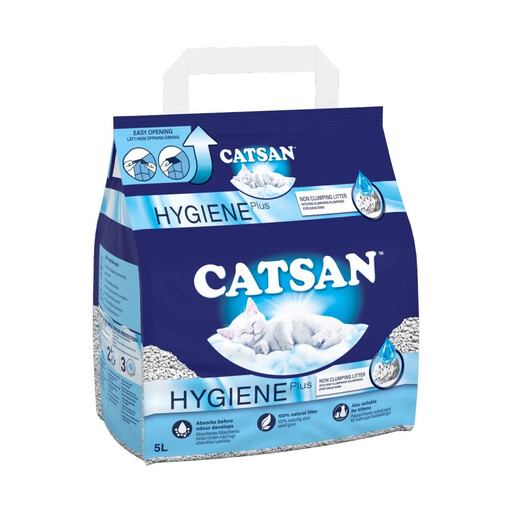
Why This Fits Their Persona: The 5L pack provides a manageable way to try non-clumping mineral litter in a small or medium household without committing to a larger bag.
It uses unscented mineral granules made from quartz and limestone, so odour management is not dependent on added fragrance.
Non-clumping moisture absorption; suitable for adult cats and kittens according to the product description.
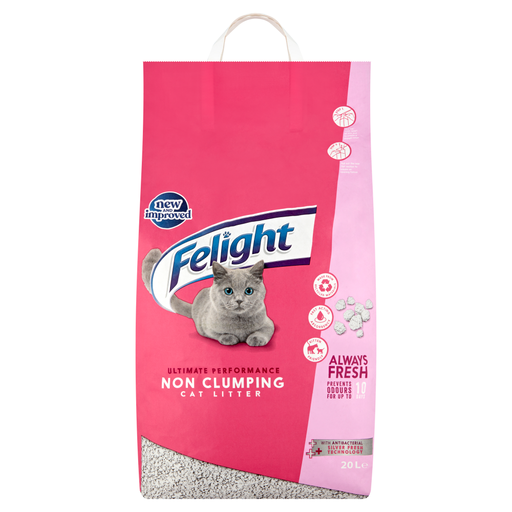
Why This Fits Their Persona: The larger pack suits owners who want a low-dust, non-clumping routine and prefer to reduce the frequency of carrying home replacement bags.
Its listed low-dust and reduced-tracking features address common household mess concerns, while the instructions still require regular waste removal and full changes.
Natural mineral granules; SilverFresh+ technology and a 20L format are listed in the product information.

Why This Fits Their Persona: Clumping performance and compatibility with automatic litter trays make this a practical option for multi-cat homes or owners who scoop frequently.
The cassava and corn formula is unscented, while the instructions clearly state that it is not flushable, avoiding an ambiguous disposal decision.
Plant-based ingredients; listed dust content below 0.5% and firm clumping for scooping.
We have compiled a complete, real-time list of products that fully satisfy these strict selection criteria and UK safety regulations.
The answer depends on tray size, cat numbers and cleaning habits. Clumping litter can allow you to remove soiled sections while retaining clean litter, whereas non-clumping litter generally needs more frequent full replacement. Compare the recommended depth and replacement schedule rather than pack price alone.
Look for kitten-friendly cat litter with clear material and safety information. Unscented paper, mineral or plant-based options may be considered, but individual preferences differ. Introduce a new litter gradually by mixing it with the existing product and monitor whether the kitten uses the tray comfortably.
Use a low-tracking litter matched to your cat’s preference, place a washable mat outside the tray and avoid overfilling. Larger pellets, paper pellets and some plant-based formulas may reduce scattered particles, but no litter eliminates tracking completely. Remove stray granules regularly and keep the tray in an accessible, well-ventilated location.