
24/7 Customer Support

Free returns

Same-day & Next-day Delivery

Quality Guaranteed

Unlock Your Welcome Offers: FREE Delivery | Up to 80% OFF | Free 30-day JoyPlus trial
Download the APP
Choosing cat litter is not simply a matter of picking the largest bag or the product with the boldest odour-control claim. The right option depends on your cat’s preferences, your cleaning routine, ventilation, disposal arrangements and whether you have one cat or several.
UK households also need to consider plumbing guidance, waste disposal and dust levels. Below, the Joybuy Product Recommendation Officer breaks down the key buying decisions and highlights suitable options for different households.
Plant-based, wood and paper products can offer useful alternatives to mineral litter, but “natural” does not guarantee strong clumping, low tracking or easy disposal. A wood pellet litter, for example, behaves very differently from tofu cat litter. It may absorb moisture without forming scoopable clumps, so the cleaning routine changes.
Check the material, pellet size, clumping behaviour and disposal instructions rather than relying on an eco-friendly label alone.
Odour control cat litter can absorb liquid or help contain smells, but no litter removes the need for regular scooping and tray changes. Fragranced products may also be unsuitable for cats or households that prefer an unscented environment.
For multi-cat homes, look for an appropriate tray-to-cat ratio, sufficient litter depth and a product that matches how frequently you can clean the trays.
Some tofu and plant-based products are marketed as flushable, while others must go into household waste. Even when a product permits flushing, UK plumbing systems may not cope well with large quantities or repeated disposal.
Only flush small amounts when the packaging allows it, allow clumps to break down fully and follow local wastewater guidance. Never flush mineral, paper or wood litter unless the product instructions specifically permit it.
Clumping cat litter binds liquid into removable clumps. This can reduce the amount of clean litter discarded during daily scooping and is often convenient for owners who want to clean only soiled areas.
Non-clumping cat litter absorbs moisture throughout the tray without forming solid clumps. It may be straightforward for kittens or owners who prefer a simple pellet system, but the full tray usually needs replacing more regularly.
For automatic litter boxes, check the manufacturer’s compatibility requirements. Fine plant-based granules may work in some systems, while larger wood or paper pellets may not pass through the mechanism correctly.
A low-dust cat litter can make pouring and cleaning more comfortable, particularly in smaller rooms or homes where the tray is close to living areas. However, product descriptions use terms such as “low dust”, “virtually dust-free” and “99% dust-free” differently.
Also consider tracking. Fine sand-like granules can feel comfortable under paws but may travel further around the home. Larger pellets can reduce scattering, although some cats may take longer to accept them.
Place a litter mat outside the tray and introduce a new product gradually by mixing it with the existing litter.
Compare the recommended litter depth, pack weight and replacement schedule rather than volume alone. A 10-litre bag of mineral granules and a 10-litre bag of lightweight plant fibres may not last the same length of time.
For odour management, decide whether you prefer:
Biodegradable cat litter may be made from paper, wood, cassava, corn, pea fibre or other plant materials, but disposal claims still need checking on the packaging.
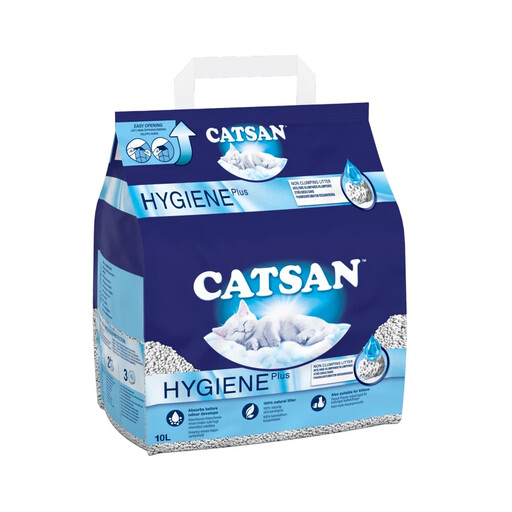
Why This Fits Their Persona: A mineral-based starting point for owners who want a familiar, non-clumping system and a manageable 10-litre pack.
The product description clearly identifies it as non-clumping, uses quartz and limestone and instructs owners to remove solid waste daily and replace the litter regularly.
Quartz and limestone granules; no added fragrance listed; absorbs moisture without forming clumps.
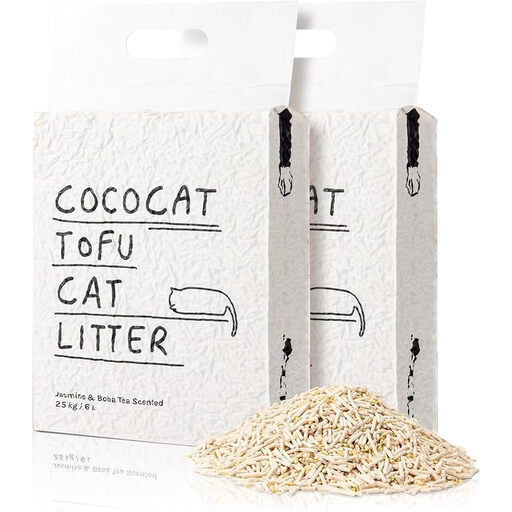
Why This Fits Their Persona: Suitable for owners seeking a lightweight, plant-based option with fast clumping and a scented formula.
The stated composition is 80% pea fibre and 20% millet, with a listed low-dust pellet format. It also provides gradual transition instructions rather than assuming every cat will accept an immediate change.
Plant-based pea fibre and millet; two 2.5kg bags; fast clumping; jasmine-milk-tea scent.

Why This Fits Their Persona: Designed for owners prioritising firm clumps and automatic litter box compatibility, particularly where frequent scooping is inconvenient.
The listing identifies the product as suitable for automatic litter boxes, but also clearly states that it is not flushable. That distinction helps prevent plumbing mistakes.
Cassava and corn materials; unscented; listed dust content below 0.5%; supplied as two 2.5kg bags.
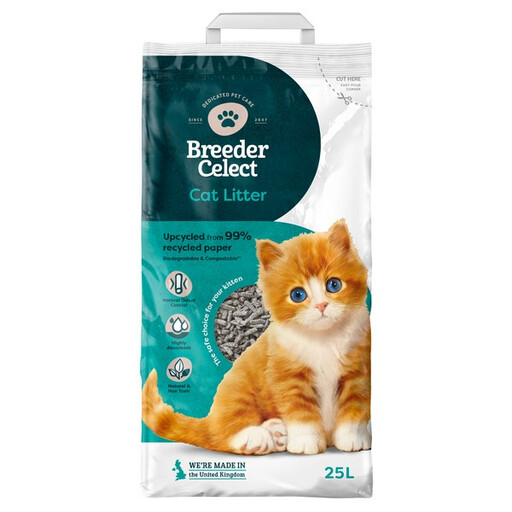
Why This Fits Their Persona: A paper pellet option for owners who value recycled materials, lightweight handling and a larger household supply.
The product specifies 100% recycled newspapers and gives a clear 2–4cm depth, weekly replacement and gradual transition routine. It is not presented as a clumping litter.
100% recycled paper pellets; 25-litre pack; listed as 99% dust-free; biodegradable material.
We have compiled a complete, real-time list of products that fully satisfy these strict selection criteria and UK safety regulations.
Remove solid waste daily. Clumping litter usually allows you to remove wet clumps and top up the tray, while non-clumping litter requires more frequent full replacement. Follow the product instructions and change the tray sooner if it becomes damp or develops a persistent smell.
Many tofu cat litter products are listed for kittens and adult cats, but kittens may investigate or ingest litter. Introduce it gradually, supervise early use and follow the packaging warnings. If a kitten consumes a significant amount, contact a vet.
A larger pack of clumping or plant-based litter may reduce refill frequency, while non-clumping litter can be practical where owners prefer complete tray changes. Whatever the material, provide enough trays, scoop each day and compare the cost per litre with the expected replacement rate.