
24/7 Customer Support

Free returns

Same-day & Next-day Delivery

Quality Guaranteed

Unlock Your Welcome Offers: FREE Delivery | Up to 80% OFF | Free 30-day JoyPlus trial
Download the APP
By Joybuy Product Recommendation Officer
Choosing cat litter involves more than comparing bag sizes and prices. The wrong formula can create dust around the tray, unpleasant odours, difficult cleaning and resistance from your cat. Whether you need clumping cat litter, plant-based cat litter, a kitten-friendly option or a low-maintenance solution for several cats, the key is matching the material and maintenance routine to your household.
A scented litter may make the room smell different without addressing moisture and waste effectively. Strong fragrances can also put off cats with sensitive noses. Look for details about absorbency, moisture locking, deodorising ingredients and cleaning frequency, rather than relying only on phrases such as “fresh scent” or “long-lasting freshness”.
Unscented products can be a practical choice for sensitive cats and owners. If you do choose a scented formula, introduce it gradually and monitor whether your cat continues using the tray normally.
A product may form clumps but still crumble, stick to the tray or spread damp granules through the box. Check whether the description explains how quickly the litter sets and whether the clumps are designed to remain intact during scooping. Fine grains can feel comfortable under paws, but they may also track outside the tray.
Some plant-based and tofu cat litter products are marketed as flushable. However, used litter can contribute to blockages and may not be suitable for every UK plumbing or wastewater system. Unless your local water authority and the product label specifically allow it, dispose of used litter in household waste. The supplied instructions for several products in this guide state do not flush used litter or clumps.
For clumping litter, check the recommended depth, usually around 5–8 cm, and remove urine clumps and solid waste daily. Tight, non-stick clumps can reduce the amount of clean litter removed during scooping.
Non-clumping cat litter absorbs liquid into the granules rather than forming a scoopable urine ball. It may suit owners who prefer a simple top-up routine, but the full tray normally needs replacing more frequently. Follow the product directions instead of relying on a general replacement schedule.
A low-dust cat litter can make pouring and tray cleaning more comfortable, while anti-tracking pellets may reduce granules around the home. “Dust-free” and “99% dust-free” are product descriptions, not guarantees that no particles will ever be released. Pour slowly, keep the tray on a washable mat and clean the surrounding area regularly.
Pack weight also matters. A 2.5 kg plant-based bag may be easier to carry upstairs or pour into a covered tray than a large mineral pack. Larger 10–20 litre bags can offer a more practical supply for multi-cat households, but storage space and lifting requirements should be considered.
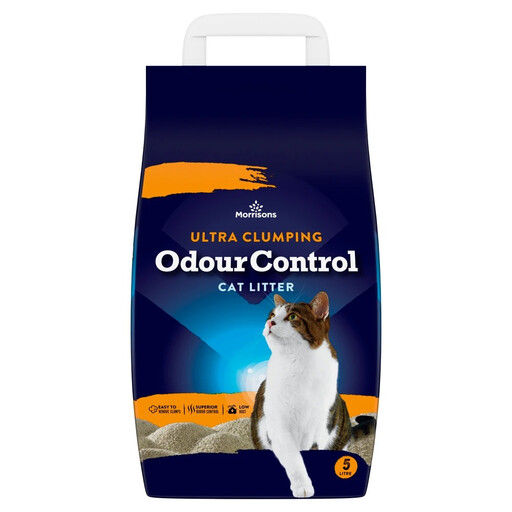
Why This Fits Their Persona: A 5-litre pack provides a manageable starting quantity for a single-cat home or owners changing from non-clumping litter.
Its product details specify easy-to-remove clumps, odour control and low dust, giving shoppers more useful information than fragrance claims alone.
Natural clay composition; recommended 5–7 cm tray depth and daily removal routine.
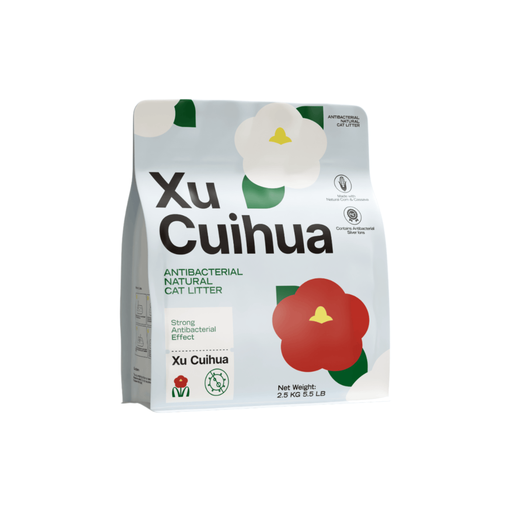
Why This Fits Their Persona: Suitable for owners prioritising renewable plant fibres, lightweight handling, low dust and an antibacterial cat litter format.
The listing identifies plant fibres, silver ions, clumping instructions and a no-flushing warning, making the main usage limitations visible.
2.5 kg lightweight pack; recommended 5–8 cm depth and daily scooping.
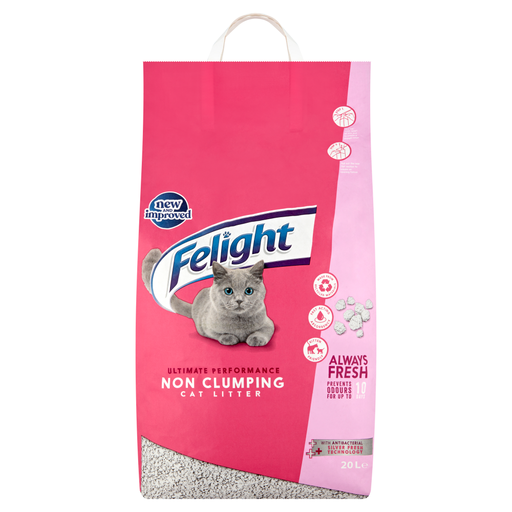
Why This Fits Their Persona: The 20-litre format is suited to households needing a larger supply, while the listing identifies use for adult cats and kittens.
As a non-clumping formula, it does not promise scoopable urine clumps. Instead, its directions state daily solid-waste removal, topping up and a full change at least weekly.
20-litre pack; lightweight, low-dust and less-tracking product description.
Place the tray in a quiet, accessible area away from food and water. For a new kitten, use a shallow entry tray and avoid sudden changes in texture or scent. With any new kitten-friendly cat litter, transition by mixing a small amount with the existing product, increasing it gradually if your cat accepts it.
For multi-cat households, provide more than one tray where possible and scoop at least daily. Keep unused litter sealed in a cool, dry place, particularly plant-based products that can absorb moisture. Wash the tray during complete changes using mild soap and water, then dry it thoroughly before refilling.
We have compiled a complete, real-time list of products that fully satisfy these strict selection criteria and UK safety regulations.
Scoop solid waste and urine clumps daily. For clumping products, completely empty and wash the tray regularly according to odour, moisture and usage levels. Non-clumping litter often requires a complete change at least weekly, although multi-cat homes may need a more frequent routine.
Tofu and cassava formulas can be suitable once a kitten is litter-trained, provided the product label allows use for that life stage. Avoid encouraging ingestion, supervise during a transition and contact a vet if a kitten eats a significant amount of litter.
Cost depends on the purchase price, pack size, waste and replacement frequency. Clumping litter can reduce disposal of clean granules when firm clumps are removed carefully. Non-clumping litter may be straightforward to manage but can require more frequent full changes. Compare the cost per usable litre and your cat’s actual daily consumption rather than the bag price alone.