
24/7 Customer Support

Free returns

Same-day & Next-day Delivery

Quality Guaranteed

Unlock Your Welcome Offers: FREE Delivery | Up to 80% OFF | Free 30-day JoyPlus trial
Download the APP
Choosing cat litter is not simply a case of picking the largest bag or the product with the boldest odour-control claim. The right option depends on your cat’s habits, your litter tray, available storage and how often you can clean it. UK homes also need practical consideration around disposal, dust and indoor ventilation.
Clumping cat litter can make daily scooping convenient, but weak or crumbly clumps may break apart and leave wet patches at the bottom of the tray. Fine-grain litter can also track across floors, particularly if your cat digs energetically.
Non-clumping cat litter absorbs moisture without forming a solid clump. This can work well for owners who prefer lightweight granules and straightforward top-ups, but the whole tray generally needs emptying more frequently because soiled material cannot be removed selectively.
Low-dust cat litter can help reduce visible airborne particles when pouring, but no loose litter should be assumed to be completely dust-free in every home. Pour slowly, keep the bag close to the tray and clean scattered granules regularly. If anyone in the household is sensitive to dust, consider paper pellets or a product specifically described as low dust.
A scented cat litter freshener may make the surrounding area smell fresher, but it does not replace daily waste removal or regular tray washing. Some cats may also avoid heavily scented trays. Unscented or lightly scented options are worth considering for cats that are selective about their environment.
For busy households, clumping litter is often practical because urine can be removed as a firm clump while the remaining litter stays in the tray. Check the recommended depth, usually around 5–8cm, and use a slotted scoop suited to the granule size.
Non-clumping options may be useful for owners who prefer absorbent mineral or paper materials. They can also be suitable for kittens when the manufacturer confirms kitten use. Always supervise a new kitten during the transition and discourage ingestion.
Common materials include:
Texture matters because cats may reject unfamiliar pellets or scented products. Introduce a new litter gradually by mixing a small amount with the existing type, then increase the proportion over several days.
A litter tray should give your cat enough room to turn, dig and position themselves comfortably. Check the internal space rather than relying only on the external dimensions. A high-back cat litter tray can help contain spills, but the entrance must remain easy for kittens, older cats or cats with limited mobility.
For homes with several cats, using more than one tray can reduce queueing and help keep individual trays cleaner. An automatic cat litter box may reduce routine scooping, but it still needs suitable litter, regular emptying and manual cleaning. Check compatibility before buying.
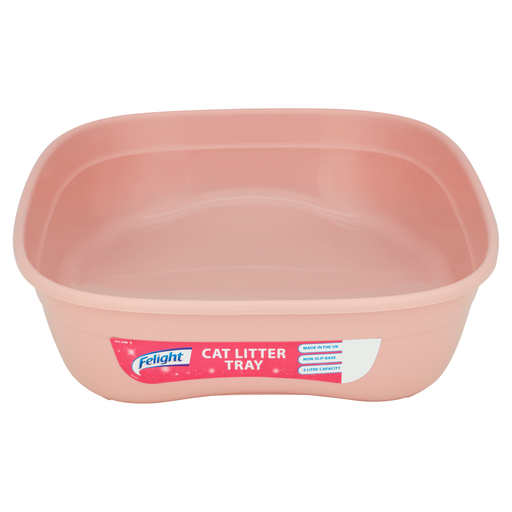
Why This Fits Their Persona: A straightforward tray for a first-time cat owner, a spare room or a kitten that needs an accessible toilet area.
Its stated 4-litre capacity and high-back design address common spill and cleaning concerns without adding an automatic mechanism to maintain.
Durable lightweight plastic; high-back shape helps contain litter; listed dimensions are H8.1cm × W30.3cm × D41.5cm.
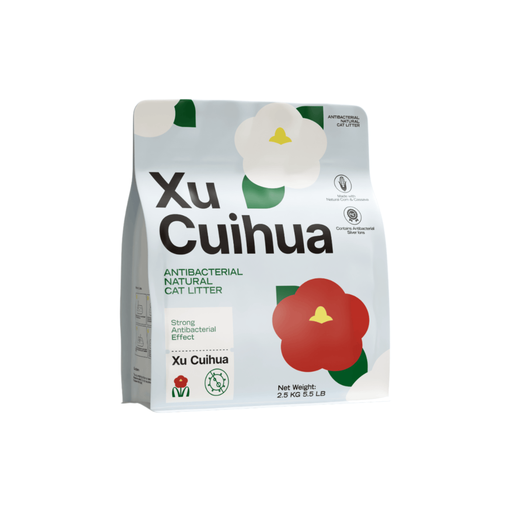
Why This Fits Their Persona: A practical choice for shoppers seeking plant-based materials, firm clumping and a smaller bag that is easier to store in a flat or terraced home.
The product description specifies low dust and fast, firm clumping, helping address the common problems of crumbling waste and excessive particles during pouring.
Plant-fibre formula; 2.5kg pack; clumps intended for daily scooping; silver-ion antibacterial feature stated on the product listing.
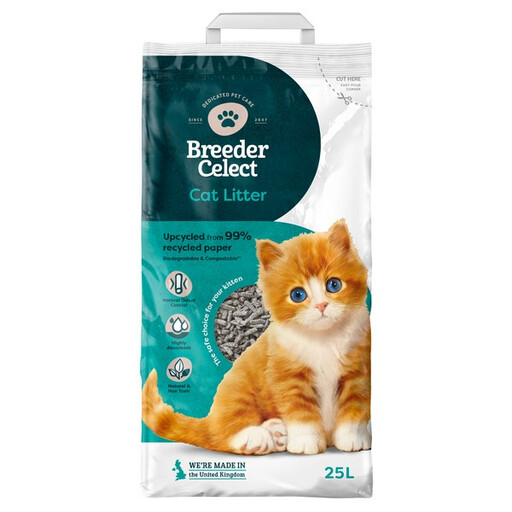
Why This Fits Their Persona: Suitable for owners prioritising a large supply, recycled materials and reduced dust around a busy multi-cat household.
Paper pellets avoid the expectation of clay-style clumping, while the specified 2–4cm fill depth makes the set-up requirement clear.
25-litre volume; made from recycled newspapers; paper pellet format; product information states 99% dust-free.
We have compiled a complete, real-time list of products that fully satisfy these strict selection criteria and UK safety regulations.
A cat litter freshener can be sprinkled lightly over compatible litter, but introduce fragranced products carefully. If your cat avoids the tray after a change, return to the previous litter and transition more gradually.
The schedule depends on the material, tray size and number of cats. Clumping litter can be topped up after daily scooping, with a full change commonly needed every two to four weeks. Non-clumping litter may require more frequent replacement. Follow the product instructions and replace it sooner if the tray remains damp or smells unpleasant after cleaning.
Some paper pellet products are listed as suitable for kittens, but check the packaging and supervise use. Pellets have a different texture from sand-like litter, so a gradual transition may help. Avoid products your kitten attempts to eat and seek veterinary advice if ingestion continues.
No litter can guarantee a completely track-free home. Larger paper pellets may reduce fine particles carried on paws, while fine clumping litter can be more easily scattered. A high-sided cat litter tray, a mat outside the entrance and regular sweeping can help control tracking.