
24/7 Customer Support

Free returns

Same-day & Next-day Delivery

Quality Guaranteed

Unlock Your Welcome Offers: FREE Delivery | Up to 80% OFF | Free 30-day JoyPlus trial
Download the APP
Choosing cat litter is not simply a matter of picking the largest bag or the product with the strongest-sounding odour claim. The wrong texture can cause a cat to avoid the tray, while poor absorption may leave you replacing litter more often than expected. For UK households, storage space, indoor ventilation, waste disposal and the number of cats using the tray all affect the practical choice.
This guide explains the main buying pitfalls, the specifications worth checking and a selection of cat litter options for different household needs.
A heavily scented litter may cover smells temporarily without removing wet material efficiently. Fragrance can also be unpopular with cats or owners who prefer an unscented tray. Look for information about absorbency, moisture retention, clumping or mineral odour barriers, rather than relying on scent alone.
Dust levels can vary according to the material, grain size and how the bag is poured. Fine plant-based granules may be comfortable under paws but can scatter around the tray. Mineral granules may pour differently and require careful ventilation. Product descriptions such as “low dust” or “99% dust-free” should be treated as product specifications, not a guarantee that no particles will be released.
A cat litter 2.5kg plant-based bag and a cat litter 20L mineral pack are not directly comparable by weight. Different materials have different densities, so consider the recommended tray depth, how often the litter needs replacing and how easily the packaging can be stored. A larger pack may suit a multi-cat household, but only if you have a dry storage area.
Clumping cat litter binds around wet areas, allowing daily removal with a slotted scoop. This can reduce the amount of clean litter removed during cleaning and is useful for owners who prefer frequent spot cleaning. Plant-based, tofu and cassava products commonly use natural binders to create clumps.
Non-clumping cat litter absorbs moisture throughout the tray rather than forming a removable urine clump. It requires regular stirring, removal of solid waste and complete replacement according to the label. This style can be practical for owners who prefer simple pouring and do not want to manage clumps.
Texture matters. Cats may prefer a fine, sand-like feel, while paper pellets are larger and softer underfoot. If changing material, mix a small amount of the new litter with the old one and increase it gradually.
For sensitive households, prioritise a low-dust cat litter and pour it slowly near the tray. An odour-control cat litter may use baking soda, mineral barriers, absorbent granules or an added fragrance. An antibacterial cat litter may contain a named antibacterial treatment, such as silver-based technology. These features do not replace daily waste removal or regular tray washing.
For kittens, check the age guidance and avoid allowing ingestion. A kitten-friendly cat litter should be easy for the kitten to walk on and should be used with supervision during the transition. Do not flush used litter unless the packaging specifically permits it and local wastewater guidance supports this; disposing of litter in household waste is the safer general approach.
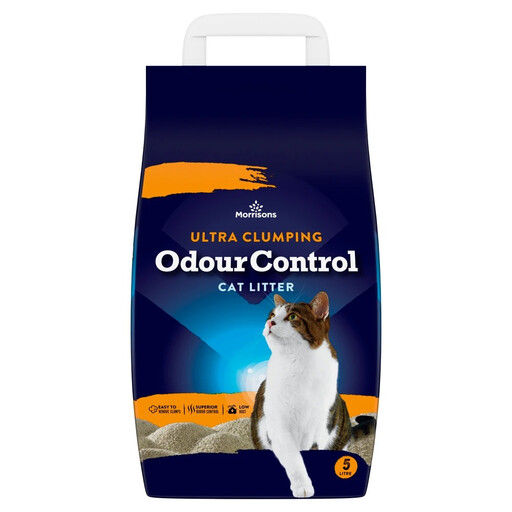
Why This Fits Their Persona: A manageable 5-litre format suits first-time cat owners or smaller UK homes where storage space is limited.
Clumping allows wet areas to be removed separately instead of replacing the entire tray after every soiling.
Natural clay formulation, easy clumping, low-dust positioning and odour-control features listed by the product.
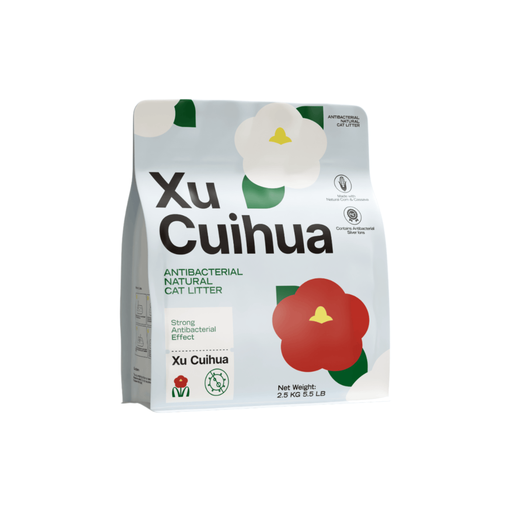
Why This Fits Their Persona: Suitable for shoppers prioritising renewable plant fibres, a compact pack and a formulation with silver ion antibacterial technology.
Its listed low-dust, fast-clumping specification addresses the common problems of airborne particles and broken clumps.
Plant fibres, firm clumping, 2.5kg handling format and a cool, dry storage requirement.
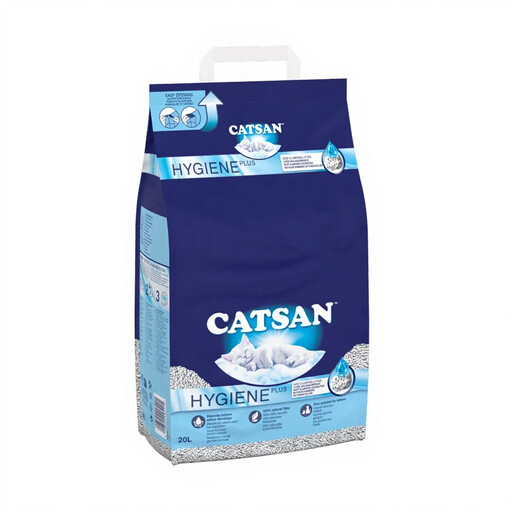
Why This Fits Their Persona: The 20-litre format is practical for multi-cat homes that need a larger supply and prefer non-clumping mineral granules.
It uses a non-clumping format with sponge-like granules and a mineral odour barrier, so buyers are not relying solely on added fragrance.
Quartz and limestone materials, no added scent listed, daily solid-waste removal and a large 20L pack.
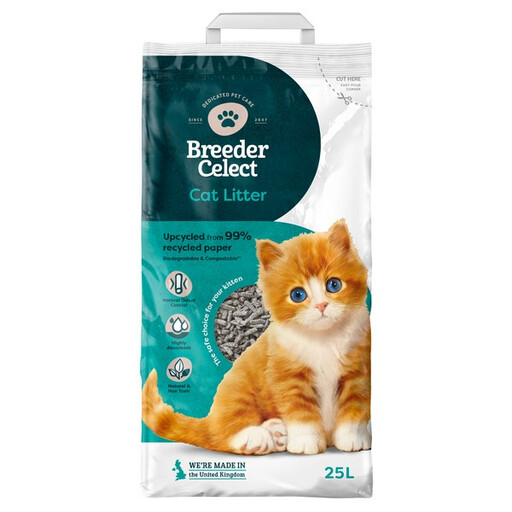
Why This Fits Their Persona: Paper pellets and a generous 25-litre pack suit homes seeking a recycled-material option with reduced tracking.
The pellet format avoids fine sand-like granules, while the listed 99% dust-free specification helps address dust concerns.
Made from 100% recycled newspapers, absorbent paper pellets, a 25L pack and a recommended 2–4cm tray depth.
We have compiled a complete, real-time list of products that fully satisfy these strict selection criteria and UK safety regulations.
The schedule depends on the material, tray size and number of cats. Non-clumping litter commonly needs a full change at least weekly, while clumping litter may last longer when clumps are removed daily and the tray is topped up. Always follow the product label and change sooner if the tray smells, remains damp or your cat avoids it.
Some products are labelled suitable for kittens, but check the specific packaging and supervise use. Avoid allowing kittens to eat litter, particularly during early training. A gradual transition and an easily accessible tray can help with acceptance.
A cat litter 10L, 20L or 25L pack may reduce the frequency of shopping trips, but value depends on waste, absorption and replacement intervals. Compare the usable tray coverage and recommended replacement routine rather than pack size alone. Keep larger bags dry and easy to lift safely.