
24/7 Customer Support

Free returns

Same-day & Next-day Delivery

Quality Guaranteed

Unlock Your Welcome Offers: FREE Delivery | Up to 80% OFF | Free 30-day JoyPlus trial
Download the APP
Choosing cat litter involves more than comparing prices and pack sizes. The right option needs to suit your cat’s habits, your cleaning routine, the location of the tray and the number of cats using it. Whether you are considering clumping cat litter, tofu cat litter or traditional mineral granules, understanding the practical differences can prevent wasted money and rejected litter trays.
A scented litter may make the tray smell more pleasant to people, but fragrance does not necessarily mean that moisture and odours are being contained effectively. Some cats may also avoid strongly scented products. If your cat is sensitive to smells, consider an unscented or naturally low-fragrance formula and focus on absorption, daily scooping and complete tray changes.
Some plant-based products are marketed as flushable cat litter, but plumbing systems vary. Even where the product instructions allow flushing, only small quantities should be disposed of at a time. Mineral, bentonite and mixed litters should not be flushed because they may swell or contribute to blockages. Always follow the product label and local water and plumbing guidance.
A large pack can reduce repurchasing, but not every litter is used in the same way. Clumping cat litter allows wet patches to be removed while leaving clean granules in place. Non-clumping cat litter absorbs liquid throughout the tray and normally requires more frequent full replacement. A cheaper bag may therefore cost more if it needs replacing sooner or creates additional waste.
Clumping litter should form a reasonably firm mass around urine so it can be lifted with a scoop. Bentonite clay is commonly used for this purpose, while tofu, cassava and other plant-based cat litter materials can also form clumps.
Check the recommended fill depth. Many products advise around 5–8cm, although some formulas specify a different level. Too little litter may allow clumps to stick to the tray base; too much can increase tracking and waste.
For a household using more than one tray, or a home with several cats, look for clear instructions on daily scooping and top-ups. A multi-cat litter may offer larger pack sizes or additional odour-control ingredients, but it still requires frequent removal of waste.
Common materials include:
If dust is a concern, compare products described as low-dust cat litter or virtually dust-free, while remembering that pouring and scooping can still release some particles. Store bags in a dry place because moisture can affect granule performance and clumping.
An odour-control cat litter may use mineral absorption, activated carbon, plant materials or fragrance. Fragrance should be treated as a preference rather than proof of stronger performance. An unscented formula may be more appropriate for cats that avoid perfumed trays.
Never assume that “natural cat litter” is automatically biodegradable, compostable or flushable. Check the disposal instructions for the exact product. Used litter should normally be sealed in household waste unless the manufacturer specifically provides different guidance.
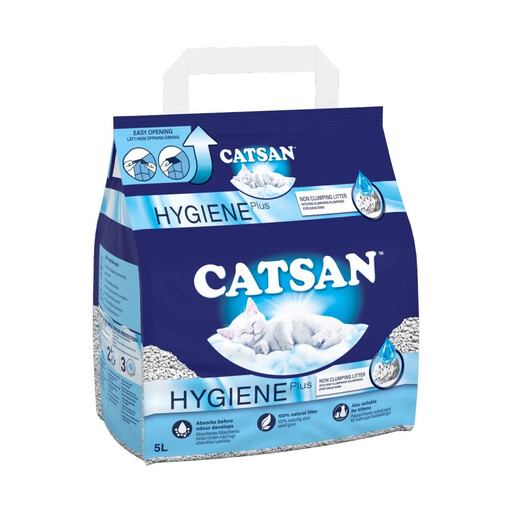
Why This Fits Their Persona: A straightforward choice for first-time owners who prefer a simple absorbent litter and a manageable 5L pack for one tray.
It does not rely on added fragrance; the product is a non-clumping formula made from quartz and limestone with mineral odour protection.
Natural mineral materials, no artificial additives listed and quick moisture absorption.

Why This Fits Their Persona: The 12kg format suits owners who want clumping performance and fewer repeat purchases for a busy household.
Its instructions specify daily scooping and a complete change every 2–3 weeks, making the maintenance expectations clear.
Natural bentonite clay, fast clumping, low-dust positioning and a large 12kg pack.
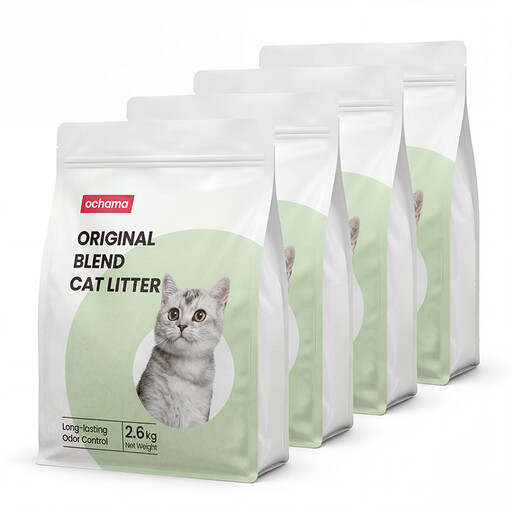
Why This Fits Their Persona: The 10.4kg total pack is practical for multi-cat homes or owners managing several litter trays.
The product clearly states its mixed composition, 5–8cm fill depth and “do not flush” disposal instruction.
A blend of 70% soybean, 27% calcium bentonite and 3% deodorant, with an unscented formula and low-dust positioning.
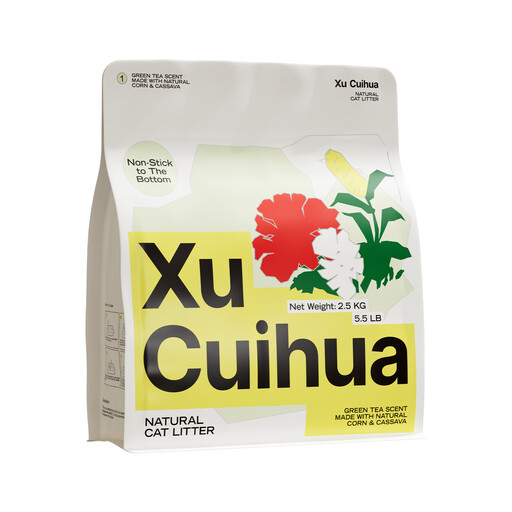
Why This Fits Their Persona: This compact plant-based option may suit owners who want cassava and corn materials with a fine texture and low-dust pouring description.
The instructions explicitly say not to flush used litter, avoiding confusion around plant-based disposal.
Cassava, corn and baking soda ingredients, firm clumping design and a 2.5kg size for trialling a new material.
We have compiled a complete, real-time list of products that fully satisfy these strict selection criteria and UK safety regulations.
Clumping litter usually needs daily scooping and periodic complete replacement. Non-clumping litter normally requires more frequent full changes because liquid spreads through the tray. The correct interval depends on the number of cats, tray size, litter depth and odour levels.
Some tofu products are labelled for cats of all life stages, but kittens may investigate or ingest litter. Introduce any new formula gradually, supervise use and follow the product warnings. Unscented, low-dust options may be preferable if your kitten reacts to fragrance or fine particles.
Compare the cost per kilogram, not only the bag price. Firm clumping can reduce the amount removed during cleaning, while a larger pack may lower repeat delivery costs. However, storage conditions matter: keep unused litter sealed and dry so moisture does not reduce its performance.