
24/7 Customer Support

Free returns

Same-day & Next-day Delivery

Quality Guaranteed

Unlock Your Welcome Offers: FREE Delivery | Up to 80% OFF | Free 30-day JoyPlus trial
Download the APP
Choosing cat litter is rarely as simple as picking the largest bag or the product with the strongest odour-control claim. The wrong material can create dust, track through the house, break apart during scooping or leave you paying more because the tray needs frequent full changes.
This guide explains the practical differences between clumping cat litter, non-clumping cat litter and plant-based alternatives, so you can compare products by material, maintenance and household needs rather than packaging language.
A creamy, green tea or other scent may make a product smell pleasant when first poured, but fragrance does not automatically mean that urine odours are being managed. Some cats may also avoid strongly scented trays. Check whether the product uses absorption, clumping, baking soda or another stated odour-control feature, and consider an unscented option if your cat is sensitive to smells.
Low-dust cat litter can reduce visible powder when pouring, but no loose granular product should be treated as entirely mess-free. Fine particles may still be carried on paws, while mineral granules can create some dust during tray emptying. Pour slowly, avoid dropping the bag into the tray and clean the surrounding floor regularly.
Cat litter is sold in kilograms, litres and sometimes by volume-based packaging. A large bag is not automatically better value: absorbency, clumping efficiency, the number of cats using the tray and how often the litter is changed all affect running costs. Compare the recommended tray depth and cleaning routine, not just the headline quantity.
Clumping cat litter forms a solid mass around urine, allowing you to remove the soiled area while leaving the surrounding litter in place. This can reduce unnecessary waste when the clumps remain firm. Look for wording such as “fast clumping”, “tight clumping” or “non-stick clumps”, but remember that actual performance can vary with tray depth, moisture levels and scooping technique.
Non-clumping cat litter absorbs liquid throughout the tray rather than forming separate urine clumps. It can be a straightforward choice for owners who prefer a simple absorb-and-replace routine, but it generally requires more frequent checking and complete changes.
Follow the product instructions carefully. Many products recommend a litter depth of approximately 5–7cm, while some specify a minimum of 5cm. Remove solid waste daily and use a scoop suited to the granule size.
Mineral or clay litter is widely available and can offer absorbency and, in clumping versions, firm waste removal. Plant-based options use materials such as tofu, cassava, corn or other starch-based ingredients. These may appeal to owners prioritising a plant-based cat litter, but “eco-friendly” should not be assumed solely from the material. Check the packaging, disposal guidance and manufacturing information.
Tofu and cassava litter often use small pellets or fine grains. Fine textures may feel comfortable under paws, while larger pellets can help reduce tracking. Your cat’s existing litter preference matters: sudden changes may lead to tray avoidance, so transition gradually by mixing the new product with the old one.
If dust is a priority, compare products labelled low-dust cat litter or dust-free, while checking the detailed instructions for any handling precautions. For homes with several trays or multiple cats, odour-control cat litter may be useful, especially where ventilation is limited. Products described as antibacterial cat litter may include antibacterial agents or technologies; treat these as product features rather than guarantees of a sterile tray.
Never flush used litter unless the product label explicitly permits it and local wastewater guidance supports this. Several products in this range specifically state not to flush used litter or clumps. Bag soiled litter securely and follow local household-waste arrangements.
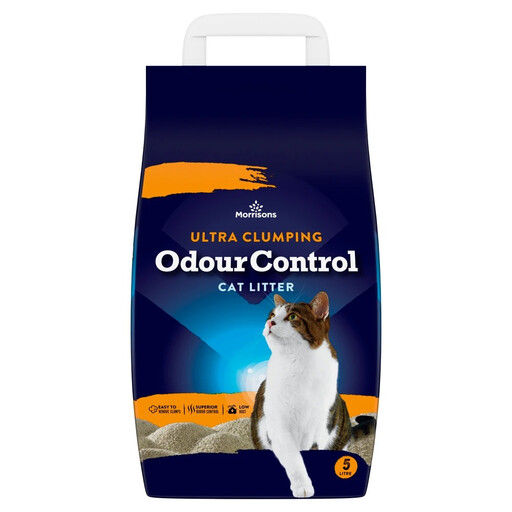
Why This Fits Their Persona: A practical starting point for one-cat households comparing straightforward tray maintenance and a smaller 5-litre pack.
Its listed easy-to-remove clumps make the cleaning method clear, while the low-dust description avoids relying only on a fragrance claim.
Natural clay material; easy clumping and stated odour control.
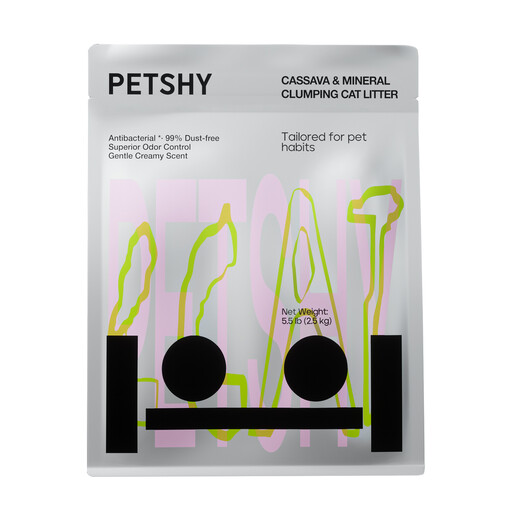
Why This Fits Their Persona: Suits owners seeking a cassava and mineral blend with fast clumping and compatibility with smart litter boxes.
The description identifies cassava starch, sodium bentonite and antibacterial granules rather than presenting odour control as an unexplained benefit.
Fast-clumping formula; designed for smart litter boxes; gentle creamy scent.
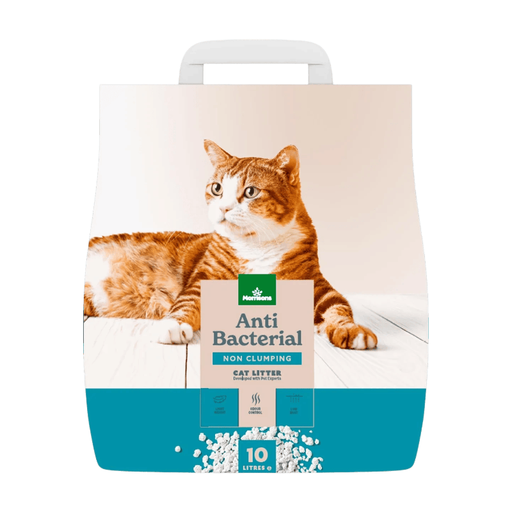
Why This Fits Their Persona: The 10-litre format and lightweight description are useful for multi-tray homes or owners who prefer easier carrying and pouring.
It addresses the hidden handling problem with an ultra-lightweight format and states a low-dust composition alongside odour control.
10-litre quantity; natural clay material; listed antibacterial formula and superior odour control.
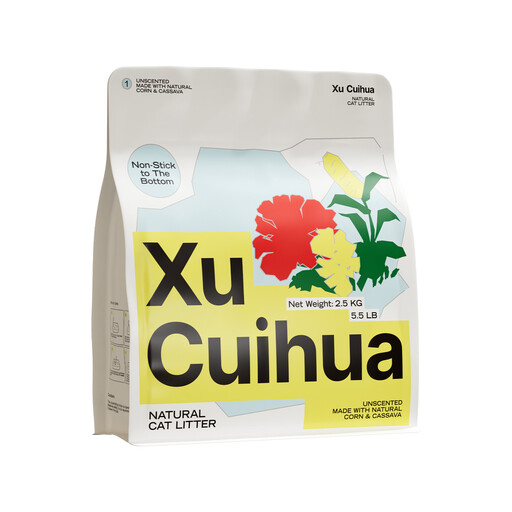
Why This Fits Their Persona: A suitable comparison for owners looking for cassava and corn ingredients, firm clumps and low dust when pouring.
Its description distinguishes low dust when pouring from broader environmental claims and clearly states that used litter must not be flushed.
Cassava and corn materials; fast, firm clumping; additive-free and unscented formulation.
We have compiled a complete, real-time list of products that fully satisfy these strict selection criteria and UK safety regulations.
It can be, because only soiled clumps are removed rather than the entire tray contents. However, the real cost depends on clump strength, wastage, tray size and the number of cats. A product that breaks apart during scooping may use more litter over time.
There is no universal lifespan. A 2.5kg pack may suit a short trial or a single small tray, while 10-litre and 20-litre formats may be more practical for multiple trays. Daily scooping, regular top-ups and complete changes according to the label are more useful measures than a fixed number of days.
Do not assume that plant-based cat litter is flushable. Follow the specific product instructions and local guidance. Several plant-based products state that used litter and clumps should not be flushed, even when the ingredients are biodegradable or starch-based.