
24/7 Customer Support

Free returns

Same-day & Next-day Delivery

Quality Guaranteed

Unlock Your Welcome Offers: FREE Delivery | Up to 80% OFF | Free 30-day JoyPlus trial
Download the APP
Choosing cat litter is not simply a matter of picking the largest bag or the product with the most impressive wording. The right option depends on your cat’s habits, your litter tray, ventilation, cleaning routine and tolerance for dust, scent and tracking.
Marketing can also make comparison difficult. A litter may describe itself as “natural”, “antibacterial” or “long-lasting” without making clear how it should be used or disposed of. This guide explains the practical details to check before buying, followed by suitable options for different households.
Clumping cat litter forms a solid mass around urine, allowing you to remove the soiled area while leaving the remaining litter in the tray. This can reduce the amount discarded during daily cleaning, but only when the litter forms firm clumps and the tray is filled to the recommended depth.
Non-clumping cat litter absorbs liquid into the granules instead. It can be simple to use, particularly in a kitten’s tray or a multi-tray home, but the whole tray generally needs more frequent replacement.
Terms such as “odour-control cat litter” or “antibacterial cat litter” describe features, not a promise that a tray will remain fresh indefinitely. Daily removal of solid waste, suitable litter depth and regular full changes remain essential. Strong fragrance can also discourage some cats from using the tray.
Natural cat litter can be made from paper, plant fibres, cassava, corn, tofu or minerals. Materials behave differently when wet, and fine granules may track around the home. A cat that dislikes a sudden texture or scent change may avoid the tray, so transition gradually where possible.
For households prioritising low-dust cat litter, check whether the product description provides a specific dust-related statement. Paper pellets can be a practical choice for reducing airborne particles, while fine plant-based granules may feel more familiar to cats but can scatter beyond the tray.
A covered tray may reduce visible tracking, although it can retain smells if it is not cleaned regularly. A large mat around the tray can also catch granules before they reach carpets and floors.
Follow the instructions on the packaging rather than filling the tray by eye. Typical guidance in the products below ranges from approximately 2–4cm for paper pellets to 5–8cm for many clumping formulas.
Pack size affects carrying, storage and running cost. A cat litter 5L bag may suit a smaller tray or trial purchase; cat litter 10L and cat litter 20L options can reduce how often you shop. A cat litter 25L pack may suit households with several trays, provided you have a dry storage area.
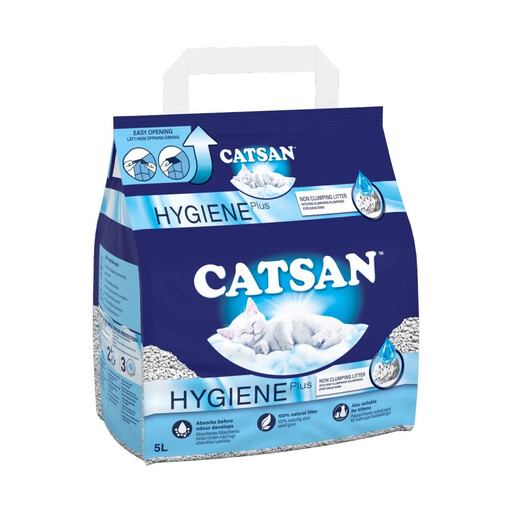
Why This Fits Their Persona: A practical 5L starting size for a new cat owner comparing non-clumping litter without committing to a large pack.
The product clearly identifies itself as non-clumping and gives a minimum 5cm fill depth, helping buyers plan for a different cleaning routine.
Made from quartz and limestone, with no added fragrance or bleach, and designed to absorb moisture before odours develop.
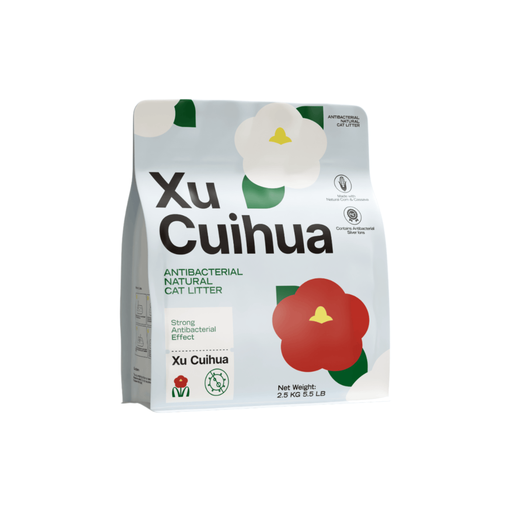
Why This Fits Their Persona: Suitable for owners seeking a plant-based formula, low-dust handling and firm clumps in a compact, easy-to-store bag.
Its description specifies plant fibres, low dust and daily clump removal, rather than relying only on broad eco-friendly wording.
Fast clumping and a stated 5–8cm fill depth; the formula includes plant fibres, natural binders and a silver ion antibacterial agent.
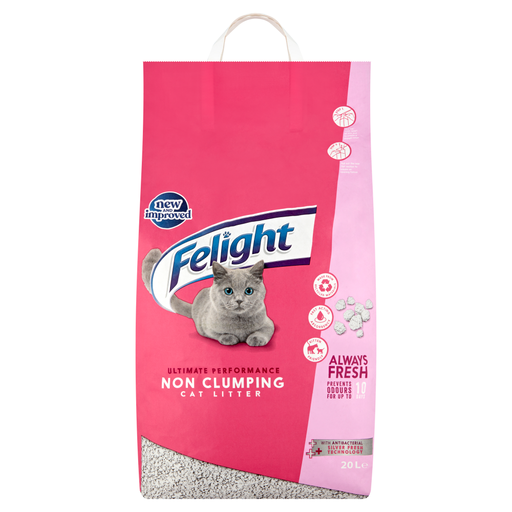
Why This Fits Their Persona: The 20L format is convenient for owners managing frequent tray use or more than one litter tray and wanting fewer shopping trips.
It is clearly labelled non-clumping, with instructions to remove solid waste and replace the tray at least weekly, avoiding unrealistic maintenance expectations.
The product description specifies natural mineral granules, low dust, lightweight handling and suitability for adult cats and kittens.
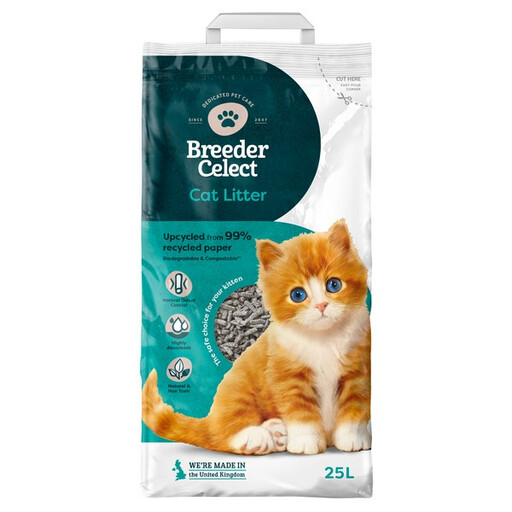
Why This Fits Their Persona: A large-volume paper pellet option for households prioritising reduced dust, recycled materials and a lighter bag.
The instructions state a 2–4cm depth and weekly full replacement, making the paper-pellet maintenance routine clear.
Made from 100% recycled newspapers, with soft pellets and a stated 99% dust-free formulation. Do not flush used litter.
We have compiled a complete, real-time list of products that fully satisfy these strict selection criteria and UK safety regulations.
It depends on the type, number of cats and tray size. Non-clumping products commonly require a full change at least weekly, while clumping litter can be topped up after daily scooping and changed regularly according to odour, moisture and product instructions.
Some products are labelled suitable for kittens, while others are intended for trained cats or specific age ranges. Choose a kitten-friendly cat litter with clear suitability information, monitor acceptance and prevent ingestion. If a kitten eats litter or shows unusual behaviour, contact a vet.
Look for a low-dust, unscented formula with a texture your cat accepts. Paper pellets may suit households wanting reduced dust, while unscented plant-based or mineral options can provide a finer texture. Introduce any change gradually and stop using a product if your cat avoids the tray or develops an unusual reaction.