
24/7 Customer Support

Free returns

Same-day & Next-day Delivery

Quality Guaranteed

Unlock Your Welcome Offers: FREE Delivery | Up to 80% OFF | Free 30-day JoyPlus trial
Download the APP
As a cat owner in the UK, choosing the right cat litter can feel surprisingly complex. The shelves are filled with options, each promising a perfectly clean and odour-free home. Yet, many of us have been disappointed by products that don’t live up to their claims, leading to wasted money and a less-than-fresh litter tray. Before you make your next purchase, it’s worth understanding a few common pitfalls that can catch even the most experienced cat owner off guard.
One of the most frequent traps is the "flushable" promise. While the idea of a flushable cat litter is appealing, many UK homes, particularly older properties, have plumbing systems that are not equipped to handle the solid clumps formed by these litters. Flushing them can lead to serious and costly blockages. Another common issue is the claim of being "100% dust-free." In reality, almost all litters produce some level of dust. A more realistic and important quality to look for is a dust-free cat litter or "low-dust" formulation, which is crucial for the respiratory health of both you and your cat. Finally, be wary of litters that rely on heavy perfumes for odour control cat litter. These often just mask smells temporarily and can be off-putting to a cat's sensitive nose, sometimes leading to litter box avoidance.
To navigate the market effectively, focus on a few core parameters that determine a litter's performance. Understanding these will help you match a product to your specific needs, your cat's preferences and your home environment.
This is the most fundamental choice you will make. Neither is inherently better; they simply offer different approaches to maintenance.
The material of the litter affects everything from its weight and texture to its environmental footprint and dust levels.
To help you find a suitable match, we've filtered through the options based on common UK household needs. Here are a few recommendations tailored to different priorities.
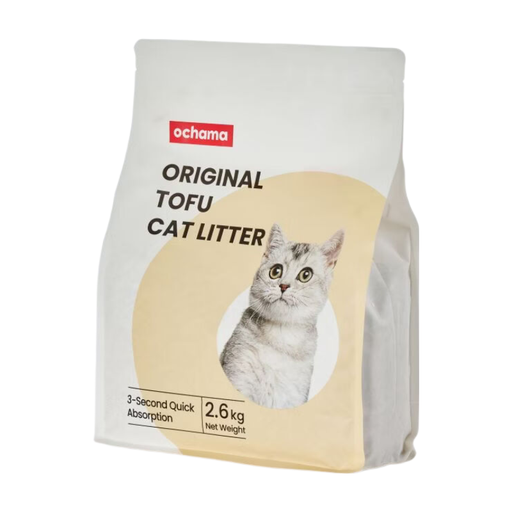
Why This Fits Their Persona: This user prioritises sustainability and a clean home. A plant-based tofu litter is biodegradable and comes from a renewable source. Its low-dust nature helps maintain better air quality and the option to flush small clumps (where plumbing allows) adds a layer of convenience.
It is genuinely low-dust due to its pellet form, avoiding the "dust-free" exaggeration. It is also unscented, relying on the material's natural absorbency for odour control rather than heavy perfumes.
Made from food-grade plant materials, making it a natural choice. The 2mm granules are designed to be gentle on paws and reduce tracking. It is highly water-soluble for easier disposal (in small batches).
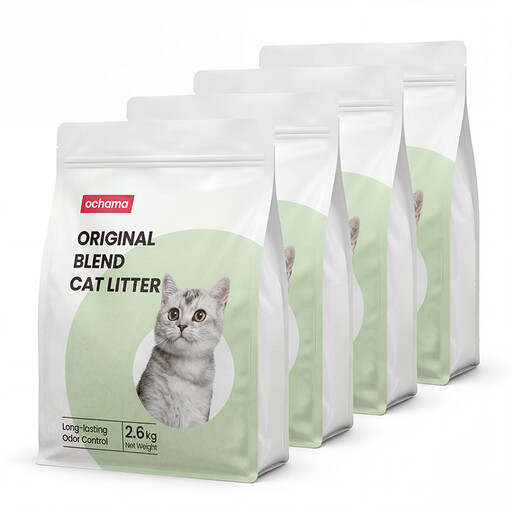
Why This Fits Their Persona: For multi-cat households or owners who prioritise performance, a hybrid litter is an excellent solution. This blend of tofu and bentonite offers the firm clumping and odour absorption of clay with the low-dust and lighter weight of tofu.
It uses a triple deodorant system with minerals like sepiolite and diatomite to trap and break down odours at the source, rather than masking them with artificial scents. It is also not marketed as flushable, avoiding plumbing risks.
The scientific blend (70% soybean, 27% bentonite) is optimised for rapid, hard clumping. The granules are designed to be hard and resist breaking, which reduces dust and extends the litter's usable life.
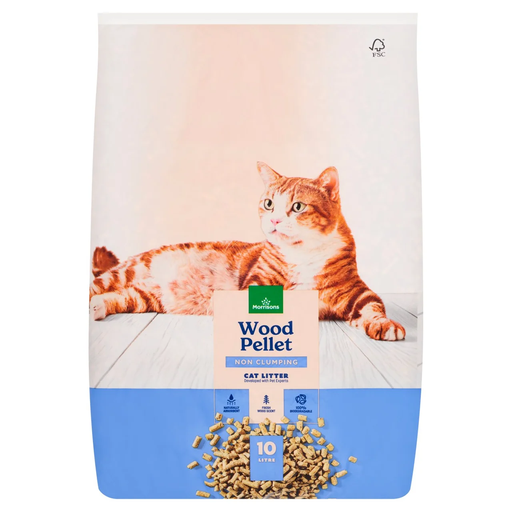
Why This Fits Their Persona: This user wants a straightforward, effective and affordable solution. Wood pellets are a classic non-clumping option that offers excellent value. They are highly absorbent and provide natural odour control without complex features or a high price tag.
This product makes no misleading claims. It is an honest, non-clumping litter that relies on the natural properties of wood for odour control, not perfumes. Its purpose is simple and it delivers on its core function.
Made from natural wood materials sourced and manufactured in the UK. The pellets are highly absorbent and break down when wet, effectively controlling moisture. The fresh wood scent is natural, not artificial.
We have compiled a complete, real-time list of products that fully satisfy these strict selection criteria and UK safety regulations.
1. How often should I completely change the cat litter? This depends on the type of litter and the number of cats you have. For non-clumping cat litter, you should aim to completely empty, clean and refill the tray at least once a week for a single cat. For clumping cat litter, you can often go longer—up to two to four weeks—as long as you are scooping out clumps and solid waste daily and topping up the level.
2. Is flushable cat litter really safe for UK pipes? It is best to be cautious. While some tofu cat litter and other plant-based litters are designed to dissolve in water, the UK's plumbing infrastructure varies greatly. Older homes, in particular, may have narrower pipes that are prone to blockages. To be safe, it is recommended to dispose of used litter in your household waste. If you do choose to flush, do so in very small amounts and check your local water authority's guidelines.
3. My cat is refusing to use their new litter. What should I do? Cats are creatures of habit and can be sensitive to changes in their environment. If you are switching to a new litter, do it gradually. Start by mixing a small amount of the new litter with the old one (e.g., a 25/75 split). Over a week or two, gradually increase the proportion of the new litter until you have fully transitioned. This gives your cat time to adjust to the new texture and scent.