Is your sofa looking a little worse for wear? Are the corners of your wallpaper starting to peel? If you share your home with a feline friend, you’re likely familiar with their instinct to scratch. While it can be frustrating to see your furniture targeted, scratching is a natural and essential behaviour for cats. It helps them sharpen their claws, stretch their muscles, mark their territory and relieve stress.
The key isn't to stop the scratching, but to redirect it. Providing a dedicated and appealing cat scratcher is the most effective way to protect your belongings while supporting your pet's well-being. This guide will walk you through what to look for in a scratcher and offer some practical recommendations to help you find the right fit for your cat and your home.
Choosing the Right Cat Scratcher: What to Consider
With so many options available, selecting the right one can feel overwhelming. Focusing on a few key factors will simplify your decision and increase the chances of your cat actually using it.
1. Material and Texture
The surface of a scratcher is its most important feature. Cats have preferences, so observing what they currently scratch can offer clues.
- Sisal Fabric: This is a durable, rope-like material that many cats love. A sisal scratching post is a classic choice because its rough texture is highly effective for claw sharpening and can withstand heavy use. It mimics the feel of tree bark, satisfying a cat's natural instincts.
- Corrugated Cardboard: A cardboard cat scratcher is an affordable and lightweight option. Many cats are drawn to the shreddable texture. They often come in various shapes, like flat pads or contoured loungers, which can double as a place for your cat to rest. The main drawback is that they wear out faster and can create some mess.
2. Style and Stability
The shape and orientation of a scratcher influence how your cat will use it.
- Vertical Posts: A tall cat scratching post or a cat tree with a scratcher encourages a full-body stretch, which is an important part of the scratching process. Ensure any vertical post has a wide, heavy base to prevent it from wobbling or tipping over. An unstable scratcher will be ignored by most cats.
- Horizontal and Angled Pads: Some cats prefer scratching on a flat or angled surface. A cat scratch pad is perfect for this and can be placed on the floor in an area your cat frequents.
- Hanging Scratchers: A hanging cat scratcher is a great space-saving solution. It can be hung from a doorknob, allowing your cat to stretch upwards and engage different muscles.
To make a new scratcher more appealing, look for models that include features to attract your cat. A cat scratcher with catnip is a popular choice, as a sprinkle of this herb can make the new item irresistible. Integrated toys, such as dangling balls or feathers, can also pique your cat's curiosity and encourage them to interact with the scratcher.
Recommended Cat Scratchers to Consider
Based on features, materials and design, here are a few options that cater to different feline preferences and household needs.
Pawise My Love Fish Scratcher
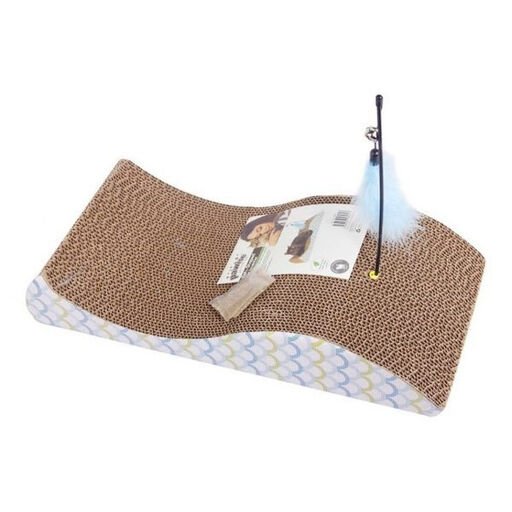
- Why It Stands Out: This scratcher combines a fun design with an ergonomic shape. The wave-like curve supports a cat's body, making it a comfortable spot for both scratching and lounging. It’s more than just a flat pad; it’s an activity centre.
- Pros:
- Ergonomic Design: The 47cm x 21cm x 8.5cm wave shape encourages natural stretching and flexing.
- Engaging Features: Comes with a dangling fluffy toy and bell for interactive play.
- Includes Catnip: A pouch of catnip is included to help attract your cat to the scratcher.
- Durable Cardboard: Made from thick corrugated cardboard to satisfy scratching instincts.
- Who is it for? This is an excellent choice for cats who prefer to scratch horizontally or on an incline. It's also ideal for owners looking for an affordable, multi-functional item that serves as both a scratcher and a resting spot.
Ochama 71 cm Cat Scratching Post
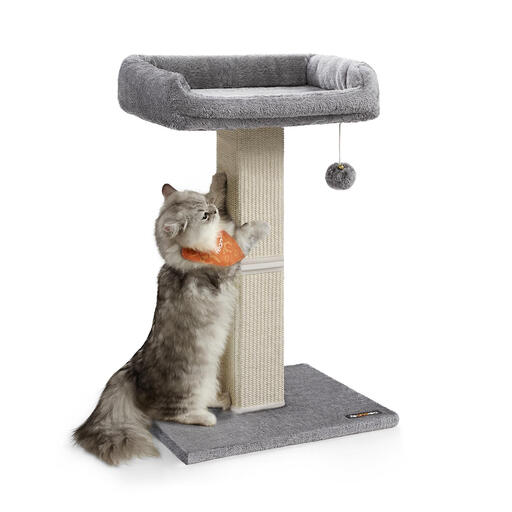
- Why It Stands Out: This model focuses on the two things that matter most in a vertical post: stability and a satisfying scratching surface. The entire post is wrapped in tough woven sisal, and the wide base ensures it stays upright during even the most enthusiastic scratching sessions.
- Pros:
- Tough-Wearing Sisal: The post is fully wrapped in durable woven sisal, providing ample vertical scratching space.
- Stable and Safe: Features a sturdy 45 x 40 cm base and includes an anti-tip kit for extra security.
- Elevated Perch: The 62 cm tall post is topped with a spacious plush perch, perfect for cats who like to survey their surroundings.
- Easy to Clean: The cover on the top perch is removable and machine-washable.
- Who is it for? A great fit for cats that love to stretch vertically and climb. It’s a solid cat scratcher for furniture protection, as it provides a superior alternative. Its stability makes it suitable for small to medium cats (up to 7 kg).
GiGwi Owl Cat Scratcher
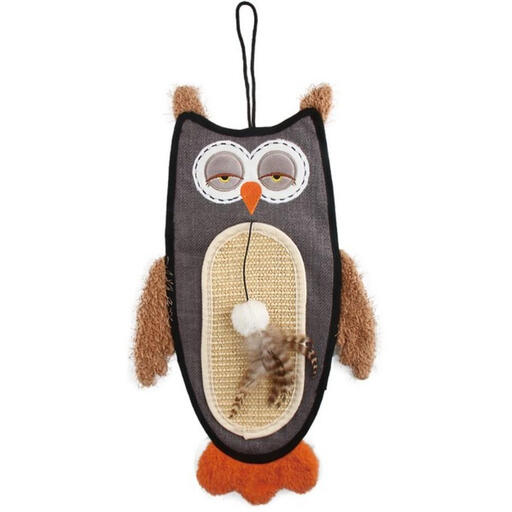
- Why It Stands Out: Versatility is the key feature of this charming owl-shaped scratcher. It can be used as a flat floor pad or hung from a doorknob, catering to different play styles and saving space.
- Pros:
- Dual-Use Design: Functions as both a floor scratcher and a hanging cat scratcher.
- Multi-Sensory: The durable sisal belly is paired with hidden crinkle paper and catnip for extra stimulation.
- Encourages Play: The hanging option encourages cats to stretch, jump and play, providing good exercise.
- Durable Surface: The textured sisal belly is designed for effective claw sharpening.
- Who is it for? This is perfect for playful cats that get bored easily and appreciate variety. It’s also a fantastic solution for smaller homes where a large cat tree isn't practical.
Looking for More Options?
Every cat has a unique personality and preference. If the recommendations above don't seem like the perfect match, or if you'd like to explore different materials and designs, there are many other styles available.
To find the ideal solution for your feline companion, feel free to browse our full collection of scratch pads.
Frequently Asked Questions
Why is my cat scratching the furniture instead of the new scratcher?
Location is often the deciding factor. Place the new scratcher directly in front of the furniture your cat is targeting. You can also place it in a socially significant area, like the living room. Use the included catnip to make it more attractive. Once your cat regularly uses the scratcher, you can slowly move it to a more convenient location.
The general advice is to have at least one scratcher per cat, plus one extra. It's also beneficial to offer different types (e.g., one vertical sisal scratching post and one horizontal cardboard cat scratcher) in different rooms. This provides choice and ensures your cat always has an appropriate scratching outlet nearby.
When should I replace a cat scratcher?
A scratcher needs to be replaced when it no longer provides a satisfying surface. For a cardboard scratcher, this is when it becomes heavily shredded and soft. For a sisal post, it's time for a replacement when the rope is completely frayed or has come loose, as this can pose a safety hazard. A worn-out scratcher will quickly be abandoned in favour of your sofa.


