
24/7 Customer Support

Free returns

Same-day & Next-day Delivery

Quality Guaranteed

Unlock Your Welcome Offers: FREE Delivery | Up to 80% OFF | Free 30-day JoyPlus trial
Download the APP
Is your sofa looking a little worse for wear? Are the corners of your walls and table legs showing the tell-tale signs of a feline resident? You're not alone. While scratching is a natural and healthy behaviour for cats, it can be frustrating when their instincts are directed at your favourite furnishings.
Scratching helps cats shed the outer layers of their claws, mark their territory and enjoy a good stretch. The key isn't to stop the behaviour, but to redirect it. This guide is designed to help you understand the different types of cat scratching solutions available and choose an option that keeps both your cat happy and your home intact.
Navigating the options can be tricky. To simplify your decision, focus on a few key features that make a significant difference to a cat's willingness to use a scratcher.
The texture of a scratching surface is paramount. Many cats show a strong preference for sisal, a durable, coarse natural fibre that provides a satisfying shredding experience. It comes in two main forms:
A wobbly cat scratching post is an unused one. Cats need to feel secure when they put their full weight into a stretch and scratch. Look for products with a wide, heavy base or those that come with anti-tip kits for securing them to a wall. If a scratcher topples over even once, your cat may be reluctant to ever use it again.
Observe where your cat currently scratches. Do they prefer vertical surfaces like the arm of a sofa, or horizontal ones like a rug? This will guide your choice between a post, a ramp or a flat mat. Place the new scratcher directly next to the area you want to protect. Once your cat regularly uses the new item, you can gradually move it to a more convenient location. A sofa scratch guard can be a great interim or permanent solution for specific problem spots.
Based on features that cater to common cat behaviours and household needs, here are some standout options to consider.
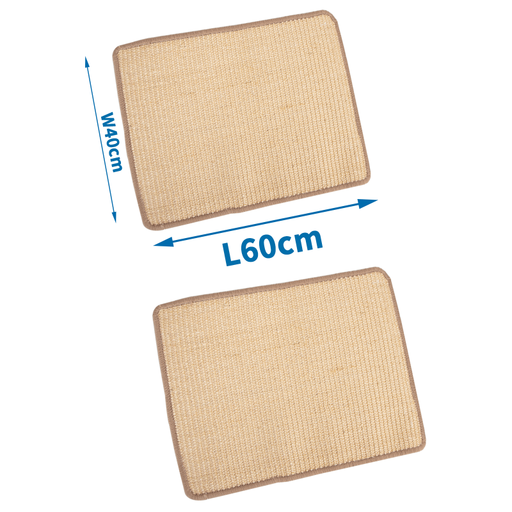
Why It Stands Out: This product acts as both a cat scratch furniture protector and an appropriate scratching surface. Its adhesive backing allows you to apply it directly to the areas your cat is already targeting, making redirection seamless.
Pros:
Who is it for?: Cat owners in smaller homes or flats where a large post isn't practical. It's also an excellent choice for protecting a specific piece of new furniture or for renters wanting to prevent damage.
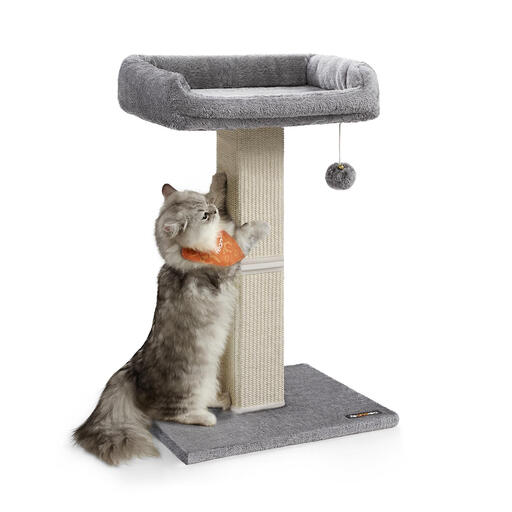
Why It Stands Out: This is a classic, multi-functional piece that combines a scratching surface with a place to rest. It functions as both a cat scratching post and a mini cat tree, satisfying multiple feline instincts at once.
Pros:
Who is it for?: Owners who want to provide an all-in-one station for scratching and lounging. It's a great fit for homes with active cats that enjoy climbing and resting in elevated positions.
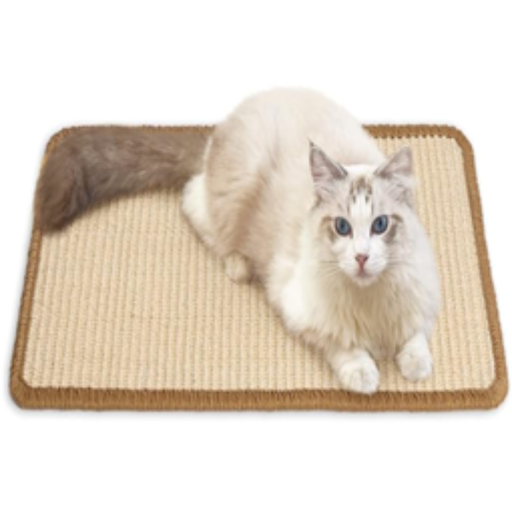
Why It Stands Out: The sheer size and versatility of this mat make it a highly practical choice. It caters to cats who prefer scratching on horizontal or angled surfaces, providing ample room to stretch out.
Pros:
Who is it for?: Owners whose cats ignore vertical posts and prefer to scratch carpets, rugs or the sides of a sofa base. Its simple, effective design makes it a straightforward anti-scratch for cats solution.
Every cat has unique preferences, and sometimes finding the perfect match takes a little more exploration. If the recommendations above aren't quite what you're looking for, or if you want to see a wider range of posts, mats and integrated scratchers, we invite you to browse our full collection.
Discover more styles and find the ideal fit for your feline friend in our Sisal cat furniture category.
1. How can I encourage my cat to use a new cat scratcher? Place the new scratcher in a prominent location, preferably near an area they already like to scratch. You can entice them by sprinkling a little catnip on the surface or using a wand toy to play with them on and around the scratcher. Offer praise or a treat when you see them using it to create a positive association.
2. What is the main difference between sisal rope and sisal fabric? Both are excellent materials for a cat scratcher. Sisal rope is wound tightly around a post and offers a very coarse, deep texture that many cats love for shredding. Sisal fabric is a woven material that provides a flatter but still highly durable surface, which is great for cats who like to hook their claws in and pull. The choice often comes down to your cat's personal preference.
3. How many scratching posts should I have for my cat? A good rule of thumb is to have at least one more scratching post than you have cats. It is also beneficial to provide variety. Offering both a vertical post (like a cat scratching post) and a horizontal or angled surface (like a sisal scratching mat) in different areas of your home gives your cat choices and increases the likelihood they will use them instead of your furniture.