
24/7 Customer Support

Free returns

Same-day & Next-day Delivery

Quality Guaranteed

Unlock Your Welcome Offers: FREE Delivery | Up to 80% OFF | Free 30-day JoyPlus trial
Download the APP
Is your beloved sofa starting to look a bit worse for wear? Are the corners of your wallpaper peeling away? If you share your home with a feline friend, you're likely familiar with the instinctual need for them to scratch. This behaviour isn't malicious; it's essential for their claw health, for stretching their muscles and for marking their territory. The key isn't to stop the scratching, but to redirect it.
A well-chosen cat scratcher can save your furniture and provide your pet with a dedicated, satisfying outlet for their natural urges. But with so many options available, from simple pads to elaborate posts, finding the right one can be a challenge. This guide is designed to help you navigate the choices and find a durable, engaging solution that both you and your cat will appreciate.
Before you make a purchase, consider these key factors to ensure you select a scratcher that your cat will actually use.
The material of a scratcher is perhaps the most important factor for your cat. The two most common options are sisal and cardboard, each with distinct advantages.
A wobbly or undersized scratcher will be ignored by most cats. For a cat to fully engage, the scratcher must be stable enough to withstand their weight and force. A large cat scratching mat is ideal for cats who like to stretch out horizontally while they scratch. For vertical posts or loungers, look for a wide, heavy base that prevents tipping. This stability is crucial for cat scratcher for furniture protection—if the scratcher feels unsafe, your cat will simply return to the sturdy arm of your sofa.
Consider your cat's scratching preferences. Do they stretch up against vertical surfaces like door frames, or do they prefer to scratch horizontally on carpets?
We've selected a few standout options that cater to different feline preferences and household needs.
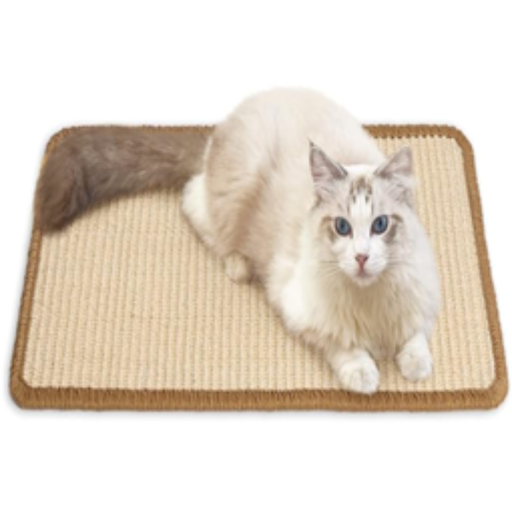
Why It Stands Out: This mat's primary advantage is its generous size. At 60x80 cm, it provides ample room for even large cats to get a full-body stretch while they scratch. It’s made from durable natural sisal fabric, offering the rough texture cats need for effective claw maintenance. The fabric-bound edges are a thoughtful touch, preventing fraying and enhancing its overall lifespan.
Pros:
Who is it for?: This is an excellent choice for owners of larger cat breeds or any cat that enjoys scratching horizontally. It's also a practical solution for protecting specific areas of flooring or the side of a sofa.
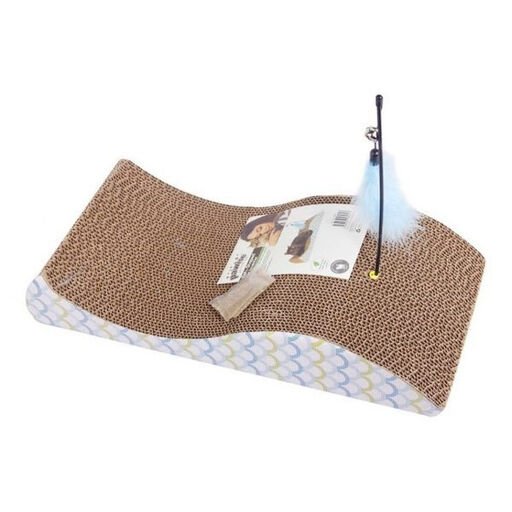
Why It Stands Out: This cardboard cat scratcher combines function with fun. Its wave-shaped, ergonomic design not only provides a satisfying scratching surface but also doubles as a comfortable lounger. The inclusion of a dangling fluffy toy and a sachet of catnip makes it an engaging interactive cat toy that encourages immediate investigation and use.
Pros:
Who is it for?: Ideal for cat owners seeking an affordable, multi-purpose option. It's particularly well-suited for cats that enjoy the texture of cardboard and appreciate having a designated spot to both scratch and nap.
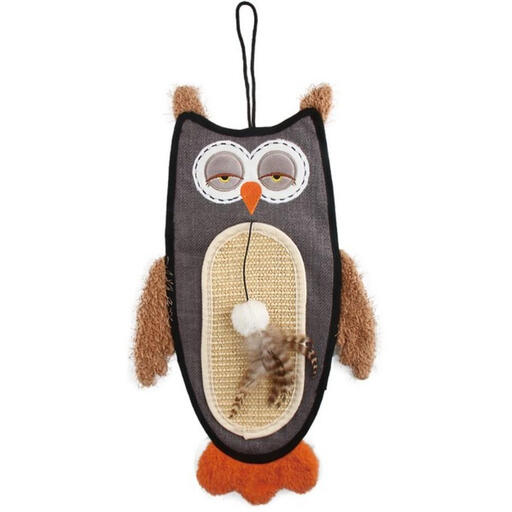
Why It Stands Out: Versatility is the key feature of this charming owl-shaped scratcher. It can be laid flat on the floor or used as a hanging cat scratcher on a doorknob, catering to cats who prefer vertical scratching. The durable sisal belly is complemented by hidden crinkle paper and catnip, providing multiple layers of sensory stimulation to keep your cat engaged.
Pros:
Who is it for?: A great fit for homes with limited floor space or for cats that enjoy stretching upwards to scratch. The added sensory elements make it a fantastic enrichment tool for playful felines.
If your cat has a particular fondness for catnip-infused surfaces, or if the recommendations above aren't quite the right fit, there are many other styles to consider.
Explore our full range of catnip scratch pads to discover more engaging and enticing options for your feline companion.
1. How do I encourage my cat to use a new cat scratcher? Placement is crucial. Position the new scratcher near an area your cat already tends to scratch, or in a socially significant spot like the living room. Sprinkle catnip on the surface to attract them. You can also use a wand toy to play with your cat on and around the scratcher to help them build a positive association.
2. How many cat scratchers should I have in my home? A good rule of thumb is to have at least one scratcher per cat, plus one extra. Placing them in different locations throughout your home gives your cat choices and helps ensure they always have an appropriate scratching outlet nearby, reducing the temptation to use your furniture.
3. Should I choose a sisal or cardboard scratcher? This depends on your cat's preference and your priorities. Sisal is more durable and ideal for powerful scratchers, making it a good long-term investment. Cardboard is often more affordable and has a texture many cats find irresistible, but it will need to be replaced more frequently. Offering both can be a great way to see which material your cat prefers.