
24/7 Customer Support

Free returns

Same-day & Next-day Delivery

Quality Guaranteed

Unlock Your Welcome Offers: FREE Delivery | Up to 80% OFF | Free 30-day JoyPlus trial
Download the APP
For many UK cat owners, cat treats are useful for bonding, rewarding good behaviour or making a familiar meal more appealing. Creamy sachets are particularly convenient: they can be fed by hand, served in a bowl or used as cat food toppers.
However, attractive packaging does not always make a product suitable for your cat. Before buying, check the feeding age, calorie information, ingredient list and whether the product is a treat or a complete food. These details can prevent unnecessary spending and help you choose a snack that fits your cat’s routine.
Most lickable cat treats are labelled complementary food for cats. This means they are intended to supplement a balanced diet, not replace complete cat food. Feeding several sachets on top of normal meals can add calories quickly, even when each portion appears small.
A complete wet food, such as a recipe containing clearly stated meat percentages and minerals, serves a different purpose. Always check the statutory product description and feeding guidance on the packaging.
Creamy cat treats often contain a high proportion of moisture, which creates their smooth texture. That does not automatically make every recipe appropriate for every cat. Check for ingredients your cat needs to avoid, including particular animal proteins, milk derivatives or cereals.
For owners seeking grain-free cat treats, look for a clear wheat- or grain-free statement rather than relying on front-of-pack imagery. Grain-free does not mean calorie-free, nor does it remove the need to monitor portion sizes.
A multipack may offer a lower cost per sachet, but cats can be selective about flavours. Salmon, chicken, cheese, liver sausage and catnip each appeal to different preferences. If your cat is trying lickable treats for the first time, a smaller pack can reduce waste.
Individual cat treat sachets are practical for portion control and freshness, but opened contents should be used or discarded according to the product label.
Age guidance is not decorative packaging. Some products are suitable from 12 weeks, others from three months, while certain adult-focused snacks are not intended for kittens under 12 months.
For example, Webbox Lick-e-Lix with Chicken states suitability from 12 weeks, whereas the catnip version is listed for cats from three months. Dreamies Creamy Snack varieties are not suitable for kittens under eight weeks. Always compare the product’s age guidance with your kitten’s actual age.
A low-calorie treat can be easier to fit into a controlled feeding routine, but the total daily intake still matters. The Webbox catnip and several Webbox yoghurt-style sachets provide 8.5 kcal per 15g sachet. The Dreamies Creamy recipes list 54 kcal per 100g, with feeding guidance of up to one 10g sachet per day.
Use treats sparingly, reduce the main meal if necessary and follow the label. Cats with weight, digestive or other health concerns may require individual advice from a veterinary professional.
Look beyond phrases such as “tasty” or “irresistible”. Check:
Dental cat treats should not be treated as a replacement for routine dental care. A product may describe a texture intended for licking or chewing, but owners should follow the label and seek veterinary advice for existing dental problems.
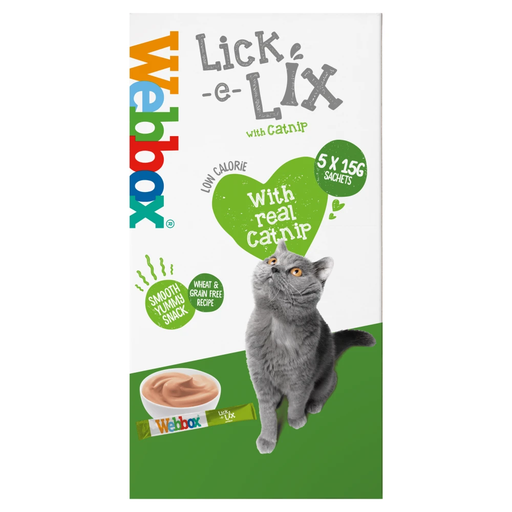
Why This Fits Their Persona: A five-sachet pack provides a manageable way to introduce creamy cat treats without committing to a large bundle. It can be served as a snack or meal topper.
The product lists 8.5 kcal per sachet and states that it is wheat- and grain-free, making the key portion and recipe details easy to check.
15g individual sachets; includes real catnip at 0.5%; suitable for cats from three months.
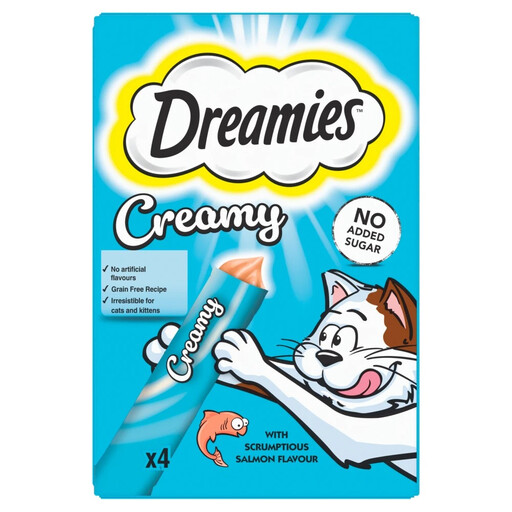
Why This Fits Their Persona: Suitable for owners who want a salmon-flavoured, grain-free creamy treat with several serving methods for bonding or topping meals.
The pack gives a stated maximum of one sachet per day and clearly identifies salmon at 4%, rather than leaving flavour information vague.
10g portions; grain-free recipe; contains taurine and no added sugar or artificial colours and flavours, according to the product information.
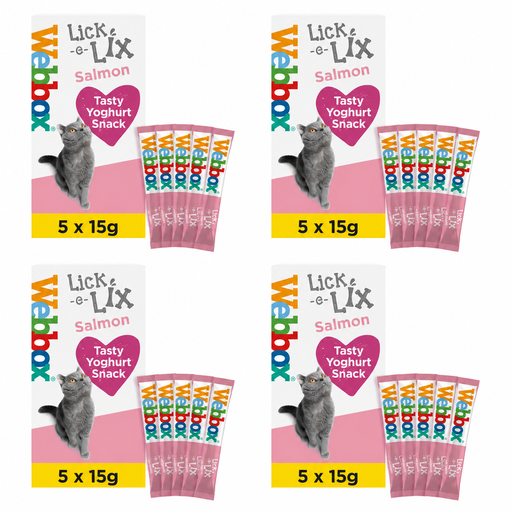
Why This Fits Their Persona: The bundle contains 20 individual sachets, making it practical for multi-cat households or owners who regularly use yoghurt cat treats as food toppers.
The total quantity is stated clearly as 300g, with 20 separate 15g portions. This makes cost-per-serving and daily use easier to manage.
Salmon flavour; smooth yoghurt-style texture; suitable as a treat or topper; individual packaging helps with portioning.
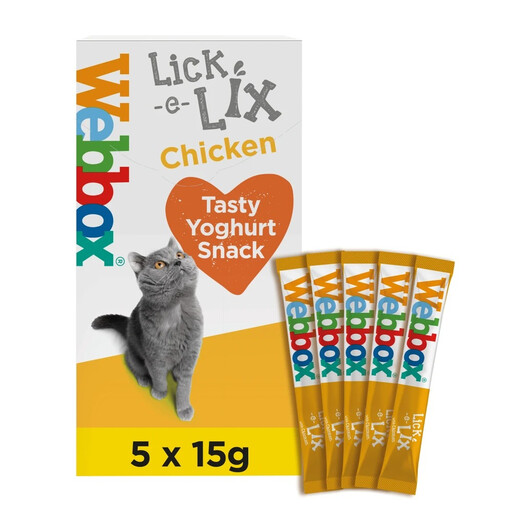
Why This Fits Their Persona: A chicken-flavoured option for cats and kittens from 12 weeks, with a soft texture that can be offered directly or added to biscuits.
The age threshold is clearly stated, helping owners avoid giving an adult-only treat to a young kitten.
8.5 kcal per sachet; includes 4% chicken within the stated meat and animal derivatives; no added artificial preservatives or colours listed.
We have compiled a complete, real-time list of products that fully satisfy these strict selection criteria and UK safety regulations.
Some are, but the minimum age varies. Webbox Lick-e-Lix with Chicken is listed for kittens from 12 weeks, while other products have minimum ages of three months, eight weeks or 12 months. Check the individual pack rather than assuming all lickable treats are interchangeable.
This depends on the product. Some labels advise consuming the contents immediately; others allow up to 24 or 48 hours when stored correctly. Follow the packaging instructions and discard any leftover treat if its appearance, smell or texture changes.
Not necessarily. Compare the price per sachet, pack size and recommended daily amount. A larger multipack may reduce the cost per serving, but a smaller pack can offer better value if it prevents unused treats being thrown away.