
24/7 Customer Support

Free returns

Same-day & Next-day Delivery

Quality Guaranteed

Unlock Your Welcome Offers: FREE Delivery | Up to 80% OFF | Free 30-day JoyPlus trial
Download the APP
Choosing cat treats can seem simple until you compare crunchy biscuits, creamy sachets, soft sticks and dental snacks. Packaging often highlights words such as “natural”, “grain-free” or “low calorie”, but these descriptions do not always tell you whether a product suits your cat’s age, diet or eating habits.
This guide from the Joybuy Product Recommendation Officer explains the key details to check before buying cat snacks, followed by practical recommendations for different households.
Most cat treats are complementary pet food, not a complete and balanced diet. They are designed to sit alongside your cat’s normal food. Feeding too many can displace essential nutrients from the main diet or contribute to weight gain.
Always check the feeding guide and reduce the main meal where instructed. Products such as Dreamies cat treats, Webbox cat treats and Morrisons cat treats should be offered as rewards, toppers or occasional snacks rather than as a replacement for regular food.
A grain-free recipe may appeal to owners looking for simpler ingredient lists, but it does not automatically make a product suitable for a cat with an allergy or digestive condition. Ingredients such as fish, milk derivatives, poultry, oils and vegetable ingredients still need checking.
If your cat has diagnosed dietary sensitivities, ask a vet before changing treats. Also remember that “with salmon” or “with chicken” does not necessarily mean the recipe consists mainly of that ingredient. Check the composition and stated percentages.
Creamy cat treats can be useful for hand feeding or adding to food, but opened sachets may need prompt use. Crunchy cat treats and cat treat biscuits are convenient for training, although some cats eat them very quickly. Soft cat treats and cat treat sticks can be broken into smaller pieces, but calorie content per stick may be considerably higher than a small biscuit.
Buy according to how your cat actually eats. A large multi-pack may offer a lower cost per serving, but only if it can be used before the recommended storage period.
Look for a clear minimum age. Some kitten treats are suitable from 8 weeks, while others are intended for kittens over 3 months or adult cats aged 12 months and above.
For example, Dreamies Creamy Snack Cat & Kitten Treats are labelled as unsuitable for kittens under 8 weeks. Webbox Salmon & Trout Tasty Sticks are intended for cats over 3 months, while the Webbox Smooth Yummy Snack is listed for adult cats over 1 year. These differences matter when shopping for kitten treats.
Follow the pack’s daily quantity rather than estimating by eye. A product offering “up to 20 pieces” for an adult cat is not directly comparable with one sold in 15g sachets.
For cats prone to weight gain, look for a stated calorie figure. Bonkers treats contain less than 2 calories per treat, while Webbox Lick-e-Lix Liver Sausage & Cat Grass contains 8.5 kcal per sachet. A Dreamies Creamy sachet provides 54 kcal per 100g, which equals approximately 5.4 kcal for a 10g sachet.
These figures help you compare products, but the correct amount also depends on your cat’s size, activity and main diet. Low-calorie cat treats are not calorie-free, so include them in the daily food allowance.
Check the composition before relying on front-of-pack wording. Products may include taurine, vitamins or minerals, but these additions do not turn a complementary treat into a complete food.
Taurine-enriched cat treats can be useful when you want a stated taurine addition, such as in selected creamy treats and Morrisons snack pillows. However, a complete main diet should remain the primary source of essential nutrition.
For dental cat treats, inspect the intended age, texture and feeding instructions. A porous or crunchy design may encourage chewing, but dental snacks should not be treated as a replacement for veterinary dental advice or an appropriate home-care routine.
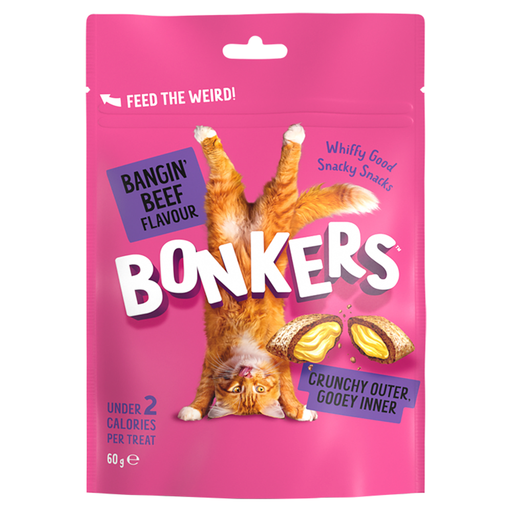
Why This Fits Their Persona: A practical everyday option for UK owners who want a small, portionable reward for play, recall or bonding.
The stated under-2-calorie-per-treat figure makes portion planning clearer than relying on vague “light” wording.
Crunchy outside with a gooey centre; wheat- and soy-free recipe; suitable for all stated life stages.
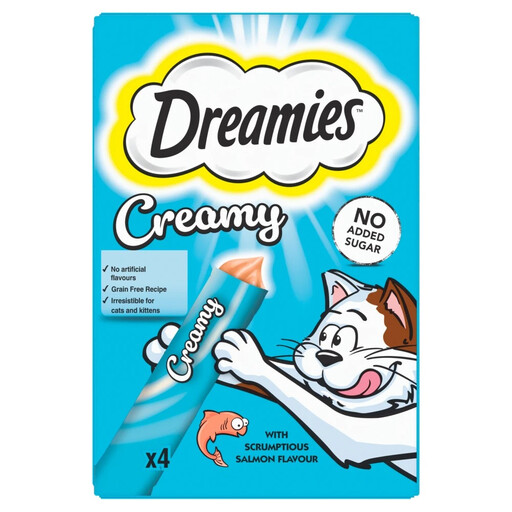
Why This Fits Their Persona: Suitable for owners who prioritise a smooth texture, tidy single portions and flexible feeding at home.
The four 10g sachets make serving easier to measure than an unportioned pouch.
Salmon flavour, grain-free recipe, taurine addition and three serving methods: by hand, in a bowl or as a food topper.
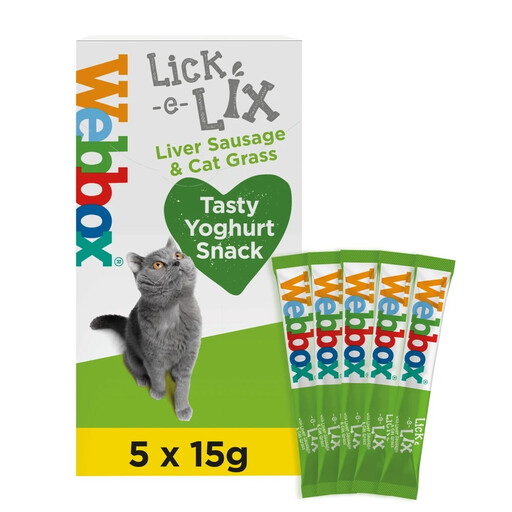
Why This Fits Their Persona: A convenient choice for fussy eaters, hand-feeding routines or owners who want to add flavour to ordinary meals.
Each sachet states 8.5 kcal, allowing owners to compare the serving with other creamy cat treats.
Smooth yoghurt-style texture; individual 15g portions; can be served directly or used as a cat food topper.
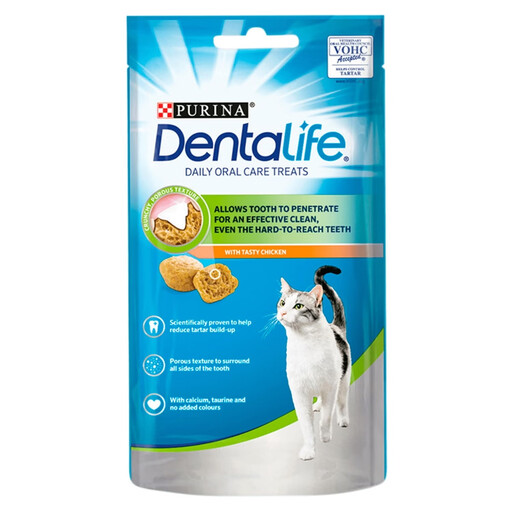
Why This Fits Their Persona: Designed for adult-cat households seeking a treat with a stated oral-care purpose alongside ordinary rewards.
The product specifies an adult age from 1 year and identifies its porous texture, rather than relying only on general dental wording.
Chicken flavour; stated calcium and taurine additions; no added artificial colourants.
We have compiled a complete, real-time list of products that fully satisfy these strict selection criteria and UK safety regulations.
Some are, but the minimum age varies. Dreamies Creamy treats are listed for kittens over 8 weeks, while Webbox Salmon & Trout Tasty Sticks are for cats over 3 months. Always follow the specific product label and choose smaller portions for young cats.
Use the feeding guide, calorie information and your cat’s overall diet together. Treats should remain a small part of daily intake, and the main meal may need reducing. For cats with weight, digestive or other health concerns, seek veterinary guidance.
No. Dental cat treats may provide a purpose-built texture, but they do not replace regular dental care or veterinary assessment. Introduce them gradually, supervise feeding and stop if your cat struggles to chew or swallow.