
24/7 Customer Support

Free returns

Same-day & Next-day Delivery

Quality Guaranteed

Unlock Your Welcome Offers: FREE Delivery | Up to 80% OFF | Free 30-day JoyPlus trial
Download the APP
Choosing cat treats can seem straightforward until you compare creamy sachets, crunchy snacks, food toppers and wet food multipacks. Packaging may highlight flavour, grain-free recipes or “dental” features, but those points do not always tell you whether a product suits your cat’s age, daily diet or feeding habits.
Before buying cat treats, watch for three common pitfalls:
Look for the product’s statutory description and feeding instructions. Complementary pet food is intended to be fed alongside a balanced diet. This includes many creamy cat treats, lickable cat treats and cat food toppers.
By contrast, a product labelled complete wet cat food is formulated to provide the required nutrients when fed as directed. For example, some wet cat food multipacks are suitable for regular meals, while a 15g lickable sachet is generally designed for occasional or supplementary feeding.
Do not replace your cat’s normal complete food with treats unless the packaging specifically states that the product is complete.
Age suitability is a non-negotiable specification. Some products are suitable from eight weeks, while others begin at 12 weeks, three months or one year.
For cats with suspected food sensitivities, inspect the full ingredient list rather than relying only on front-of-pack terms such as grain-free cat treats. Grain-free does not automatically mean suitable for every sensitive cat, as recipes may still contain milk derivatives, fish, chicken or other ingredients.
If your cat has an allergy, digestive condition or prescribed diet, speak to your vet before introducing new treats.
Low-calorie cat treats can make portion control easier, but “low calorie” should be assessed per sachet or serving. Several 15g lickable treats in this selection contain 8.5 kcal per sachet, while other creamy snacks list energy per 100g.
Texture also affects suitability. Creamy treats can be served directly, placed in a bowl or added to meals. Crunchy options may suit cats that prefer chewing, while soft formats can be more convenient for older cats or owners seeking easy portioning. Dental cat treats should not be treated as a substitute for a proper oral-care routine, and any product-specific claims should be checked against its packaging.
Finally, compare the total number of servings. A cat treat multipack with individually portioned sachets can reduce waste and simplify feeding, particularly in multi-cat households.
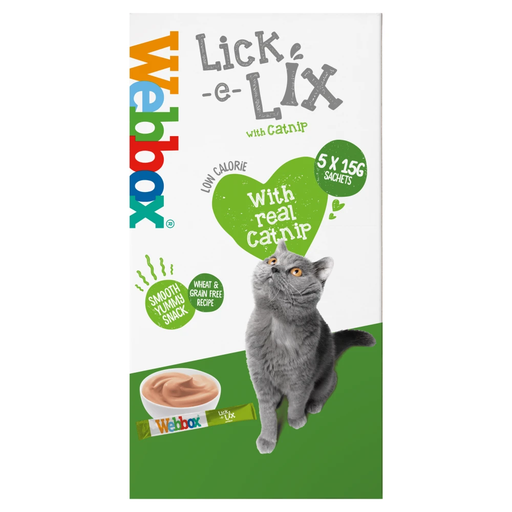
Why This Fits Their Persona: Individually portioned 15g sachets offer an easy way to try lickable cat treats without committing to a large bundle. The recipe is listed as wheat- and grain-free and suitable from three months.
The pack clearly states that it is a complementary treat, helping prevent confusion with complete wet cat food. The listed energy value is 8.5 kcal per sachet.
Smooth texture; real catnip listed in the composition; can be served alone or used as a food topper.
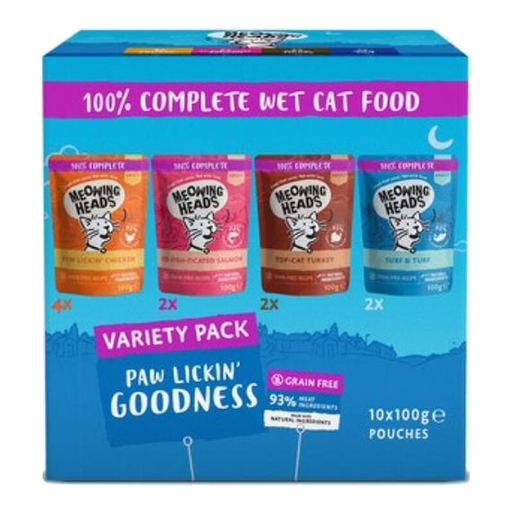
Why This Fits Their Persona: Owners wanting a more substantial feeding format can choose a complete wet food multipack with four recipes and 10 pouches, suitable for cats from eight weeks.
It is identified as complete food rather than a supplementary snack, with feeding guidance for adult cats and gradual-transition instructions.
Four flavours; grain-free recipes; 100g pouches; listed meat and fish content of 93% across the range.

Why This Fits Their Persona: A 300g pack with 20 individual portions suits households using creamy treats frequently as rewards or toppers, while keeping servings separate until needed.
The 15g sachet format makes portions visible, while the product information states a daily limit and confirms it is not suitable for kittens under 12 months.
20 individually packed snacks; 8.5 kcal per sachet; soft texture and adult-cat feeding guidance.

Why This Fits Their Persona: This is a kitten-focused meal option for cats aged two to 12 months, useful for owners who want variety without relying on adult cat treats.
The age range is clearly stated and the product is described as complete wet food, helping distinguish it from complementary kitten treats.
Eight 85g pouches; four recipes; no grains, salt or sugar listed; 81 kcal per pouch.
We have compiled a complete, real-time list of products that fully satisfy these strict selection criteria and UK safety regulations.
Some are, but the minimum age varies. For example, the Webbox chicken yoghurt treat is listed for kittens from 12 weeks, while the catnip version is suitable from three months. Always follow the product label and choose a complete kitten food for main meals.
There is no single amount for every cat. Follow the product feeding guide, consider your cat’s weight and activity, and keep treats within the recommended proportion of daily calories. Reduce the main meal if necessary, particularly when using several snacks in one day.
Unopened sachets are generally stored in a cool, dry place, but opened portions should be used promptly. Some products specify refrigeration and use within 48 hours, while others advise discarding leftovers after 24 hours. Check the packaging for the exact storage instruction.