
24/7 Customer Support

Free returns

Same-day & Next-day Delivery

Quality Guaranteed

Unlock Your Welcome Offers: FREE Delivery | Up to 80% OFF | Free 30-day JoyPlus trial
Download the APP
Buying cat treats can seem simple until you compare creamy sachets, crunchy biscuits, catnip snacks and complete wet food. Packaging often highlights words such as “natural”, “grain-free” or “with chicken”, but these descriptions do not always tell you whether a product suits your cat’s age, daily diet or preferred texture.
The following guide focuses on the details that matter when choosing cat treats for rewards, bonding, food toppers and everyday variety.
Most cat treats are complementary cat food, meaning they are designed to supplement—not replace—a nutritionally complete main diet. Feeding too many can unbalance your cat’s daily intake.
Check the statutory description on the packaging. A product labelled “complementary pet food” should be offered alongside a complete diet, with the main meal adjusted where necessary. Some wet products, such as Meowing Heads Paw Lickin Chicken 100g, are described as complete wet food suitable for adult cats and kittens, which makes them different from an occasional snack.
A flavour description does not always indicate a high percentage of that ingredient. For example, a treat may contain chicken or salmon at a stated percentage while also including cereals, oils, milk derivatives or vegetable ingredients.
Read the composition rather than relying only on the front of the pack. If your cat has a known dietary sensitivity, check the full ingredient list and seek veterinary advice before introducing a new recipe.
Small snacks can add up, particularly with crunchy cat treats or semi-moist sticks. Feeding guidance varies considerably: some products recommend a few pieces daily, while others specify one sachet or stick.
Use treats as part of your cat’s daily food allowance. This is particularly important for indoor cats, older cats or cats with lower activity levels. Individual sachets can make portioning easier, but they still need to be counted.
Choose the texture that matches your cat’s habits:
Look for clearly stated serving instructions and discard any unused portion according to the label. Opened creamy treats may need refrigeration or prompt use.
Age restrictions are not interchangeable. Some products are suitable from 8 weeks, while others are intended for kittens from 12 weeks or cats from 3 months. A product suitable for adult cats is not automatically appropriate for a young kitten.
For kittens, look for explicit kitten treats guidance and follow the age statement on the packaging. Treats should remain a small part of a complete kitten diet.
Terms such as grain-free, “no added sugar” and “low-calorie” can help narrow your options, but they should not replace reading the composition and feeding guide.
For example:
If comparing value, calculate the cost per sachet, stick or 100g rather than judging only by the pack price. Cat treat multipacks may reduce the cost per serving, but only if your cat enjoys the flavour and you can use the product within its storage period.
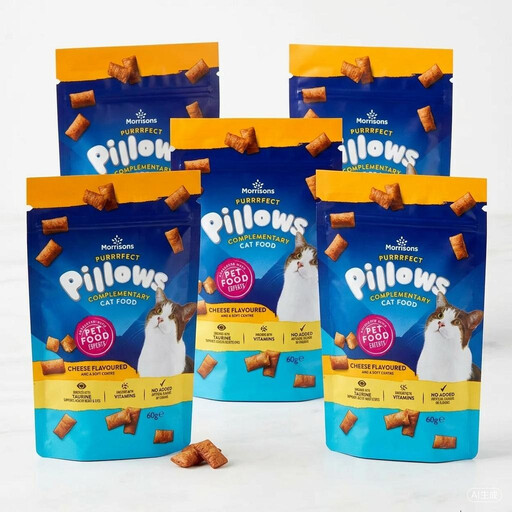
Why This Fits Their Persona: The five-pack format gives new cat owners a practical way to try crunchy treats while keeping several portions available for daily rewards.
It is clearly described as a complementary cat food, so it should not be mistaken for a complete main meal. The composition and feeding instructions are available for checking before purchase.
Five 60g packs; cheese flavour; contains listed taurine and vitamins; no added artificial colours or flavours.
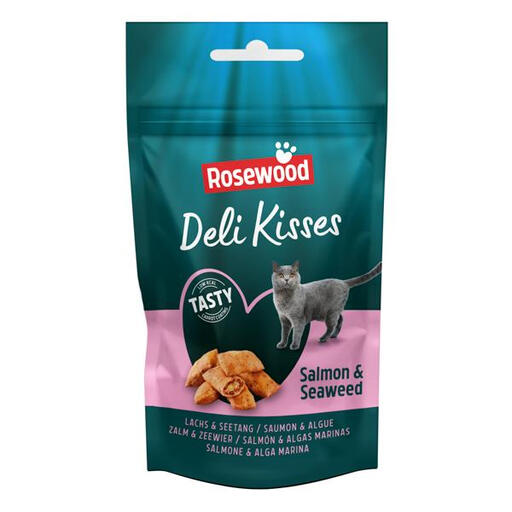
Why This Fits Their Persona: This option suits owners looking for a more varied texture and a salmon-led flavour for bonding or occasional rewards.
The product information identifies it as a snack and gives a suggested daily amount of 3–5 treats, helping owners avoid treating an occasional reward as a free-choice food.
Crunchy shell with a creamy centre; salmon and seaweed flavour; resealable 60g pouch; no added sugar.
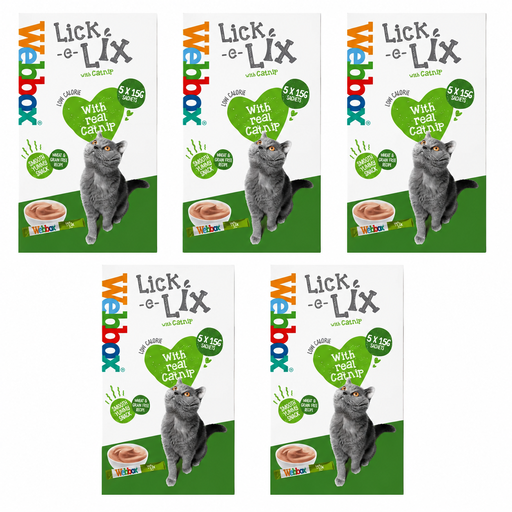
Why This Fits Their Persona: The 25-sachet bundle is suited to multi-cat households or owners who regularly use lickable treats as rewards, bonding snacks or cat food toppers.
Each sachet is portioned at 15g and the product is identified as complementary, making daily quantities easier to monitor than an open bag of loose snacks.
25 individual 15g sachets; real catnip; grain-free recipe; 8.5 kcal per sachet; suitable for cats from 3 months.
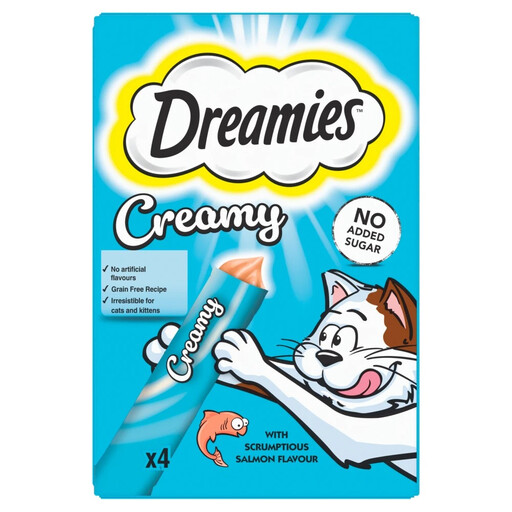
Why This Fits Their Persona: A practical choice for cats that prefer smooth textures, and for owners who want to feed by hand, in a bowl or over a regular meal.
The pack includes individual 10g sachets and states a maximum of one sachet per day. It is also labelled as a supplementary treat rather than a replacement for complete cat food.
Salmon flavour with 4% salmon listed; grain-free recipe; no added sugar, artificial colours or flavours; 4 × 10g sachets.
We have compiled a complete, real-time list of products that fully satisfy these strict selection criteria and UK safety regulations.
Some are, but age limits differ. Look for products specifically labelled for kittens or for a minimum age such as 8 weeks, 12 weeks or 3 months. Do not assume that an adult snack is suitable for a young kitten.
Neither texture is automatically suitable for every cat. Lickable cat treats work well for hand feeding and meal toppers, while crunchy options may suit cats that enjoy chewing. Compare the ingredients, calorie content and feeding instructions rather than choosing by texture alone.
The correct amount depends on the product, your cat’s size, age, activity and main diet. Follow the pack guidance and keep treats as a limited part of daily calories. If your cat has a medical condition, dietary restriction or persistent weight issue, ask a vet for tailored feeding advice.