
24/7 Customer Support

Free returns

Same-day & Next-day Delivery

Quality Guaranteed

Unlock Your Welcome Offers: FREE Delivery | Up to 80% OFF | Free 30-day JoyPlus trial
Download the APP
Choosing cat treats can seem simple until you compare ingredients, textures, portion sizes and feeding instructions. A colourful pouch may promise an exciting reward, but the details that matter most are often found in the small print.
For UK cat owners, the right treat should suit your cat’s age, eating habits and everyday diet. It should also be convenient enough for your routine, whether you need a training reward, a meal topper or an occasional snack.
Most treats are complementary pet food, not a substitute for a nutritionally complete cat food. Feeding too many can add calories and reduce appetite for the main meal. Always follow the pack’s feeding guide and adjust the daily food allowance where instructed.
Flavour names can be misleading. Check the composition for the actual percentage of salmon, chicken or other named ingredients. For example, some salmon cat treats list cereals and vegetable ingredients first, with salmon included at a stated percentage. This does not automatically make them unsuitable, but it gives you a more accurate picture of what you are buying.
A treat containing around 1–2 kcal may be useful for frequent rewarding, but several servings still contribute to daily intake. Liquid and creamy options can also vary considerably in moisture and energy content. Portion control remains important for indoor, older or less active cats.
Choose a texture that matches your cat’s eating style:
Texture is not a substitute for dental care, and crunchy food should not be described as a guaranteed dental treatment. If your cat gulps food, supervise feeding and consider spreading a suitable treat across a slow-feeding mat.
If your cat has a known sensitivity, inspect the complete ingredient list rather than relying only on front-of-pack wording. Grain-free cat treats may be appropriate for owners avoiding wheat or cereals, but grain-free does not necessarily mean lower calorie or higher in animal ingredients.
Also check whether the product contains milk or milk derivatives, colourants, added sugars or specific animal proteins. Salmon cat treats, chicken cat treats and catnip treats can all have very different compositions.
Look for calories per treat, sachet or 100g, depending on the format. A product listing may state “less than 2 kcal per treat”, while another may provide energy per sachet. These figures are not directly interchangeable.
Age guidance is equally important. Some products are suitable from eight weeks, while others are suitable from three months or intended for adult cats. Kittens need an appropriate complete diet, so treats should remain limited and follow the manufacturer’s instructions.
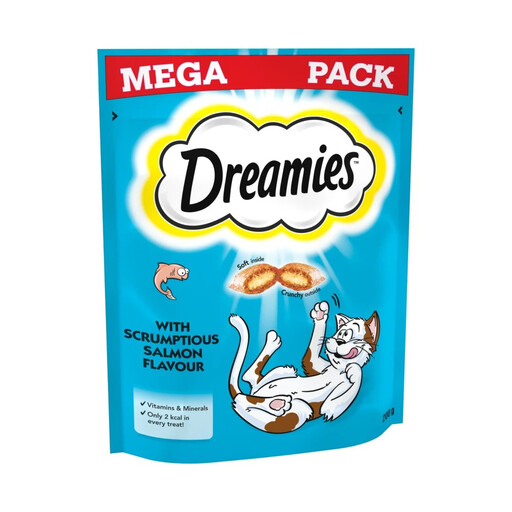
Why This Fits Their Persona: The 200g format gives regular treat-givers a convenient household pack, while the resealable bag helps with storage between servings.
The stated guide gives a daily limit of up to 20 pieces for adult cats and advises reducing the main meal accordingly.
Dual texture, salmon flavour with 4% salmon listed and less than 2 kcal per treat according to the product information.
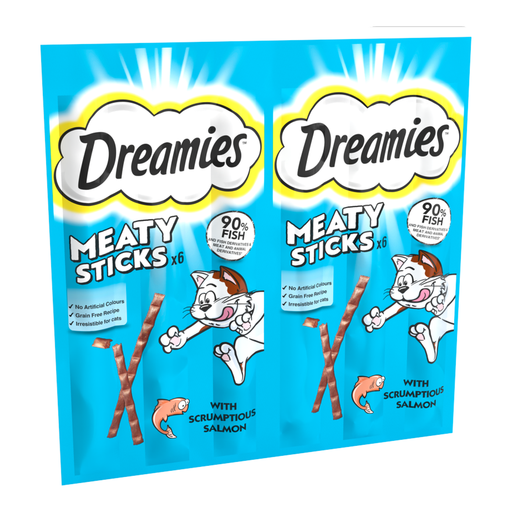
Why This Fits Their Persona: Individually wrapped sticks provide a tidy format for owners who prioritise freshness and controlled portions during daily interaction.
The composition specifies 26% salmon and identifies the product as a complementary treat rather than a complete meal.
Grain-free recipe, 90% fish and meat derivatives stated in the product details and six individually wrapped sticks in a 30g pack.
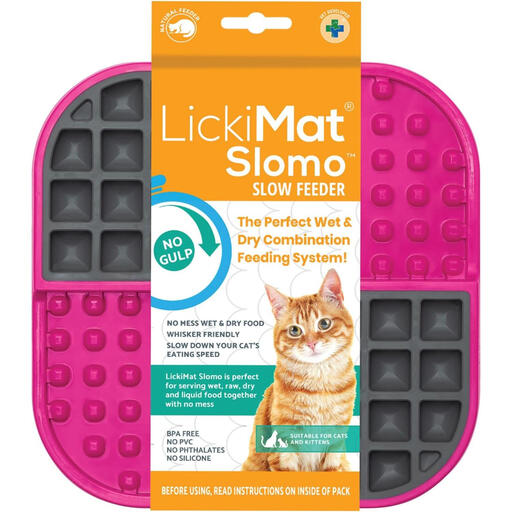
Why This Fits Their Persona: It suits cats that eat rapidly or owners looking to make snacks and meal toppers more engaging at home.
It changes the feeding format rather than encouraging larger portions, and the product instructions clearly state that it is not a chew toy.
Textured sections can hold wet, dry or liquid foods, while the low-profile design is intended to be whisker-friendly.
We have compiled a complete, real-time list of products that fully satisfy these strict selection criteria and UK safety regulations.
Some are labelled for kittens, but age limits vary. Check the product packaging carefully: one treat may be suitable from eight weeks, while another may be suitable from three months. Kittens should receive most of their nutrition from an appropriate complete food.
There is no single suitable number for every cat. Follow the product’s serving guide, consider the treat’s calories and reduce the main meal when instructed. A cat’s weight, activity level and body condition also affect the appropriate amount.
Many smooth treats and food toppers can be spread across a suitable mat, but check the product instructions and clean the mat after use. Supervise your cat, inspect the mat regularly for damage and replace it if it becomes worn.