
24/7 Customer Support

Free returns

Same-day & Next-day Delivery

Quality Guaranteed

Unlock Your Welcome Offers: FREE Delivery | Up to 80% OFF | Free 30-day JoyPlus trial
Download the APP
Buying cat treats can seem straightforward, but attractive packaging and flavour-led marketing do not always tell you whether a product suits your cat’s age, diet or daily routine. A treat may be tempting yet difficult to portion, unsuitable for a young kitten or too calorie-dense for a mostly indoor cat.
This guide explains the practical details to check before buying, from texture and ingredients to serving guidance and pack size. It also highlights suitable options for different UK cat-owner needs.
Most cat treats are complementary feeds, not replacements for a nutritionally complete main diet. Even products containing vitamins, minerals or taurine should be offered alongside regular food. Overfeeding can also add unnecessary calories, so the daily amount matters more than the wording on the front of the pack.
These terms describe particular product characteristics, not a universal guarantee of suitability. A grain-free recipe may still contain milk ingredients, while a creamy treat may not suit a cat with particular dietary sensitivities. Likewise, “low-calorie” needs to be assessed per sachet or piece, rather than by the pack.
For example, Webbox Lick-e-Lix with Real Catnip provides 8.5 kcal per 15g sachet, whereas Dreamies biscuits list 2 kcal per treat. These figures are useful only when matched with the feeding guide and your cat’s normal meal portions.
Cat preferences can be highly individual. A cat that enjoys crunchy cat treats may ignore creamy cat treats, while another may prefer lickable cat treats because they are easier to consume. Buying a cat treat multipack or mega pack can offer better convenience, but a smaller pack may be more sensible when introducing a new flavour.
Always check the minimum age on the packaging. The Dreamies biscuit options listed here are not suitable for kittens under 8 weeks old, with a guide of up to six pieces daily for kittens and up to 20 pieces for adult cats. Webbox Lick-E-Lix with Real Catnip is suitable from 3 months old, so it should not be used for younger kittens.
Treats should be reduced or counted as part of the overall daily intake. The label should also make clear whether the product is intended for adult cats, kittens or all life stages.
The right format depends on how you plan to use the product:
Read the composition rather than relying only on flavour names. “Salmon cat treats”, for instance, may contain a stated percentage of salmon alongside other meat, fish, cereals or derivatives. Dreamies Creamy Snack with Salmon contains 4% salmon, while the meaty salmon sticks list 26% salmon within their fish and animal derivatives.
For sensitive diets, check whether the product is described as grain-free, wheat-free or gluten-free, and look for milk ingredients if your cat has known sensitivities. Single-serve sachets can help reduce waste: Webbox Lick-e-Lix products come as 5 x 15g, while Dreamies Creamy comes as 4 x 10g.
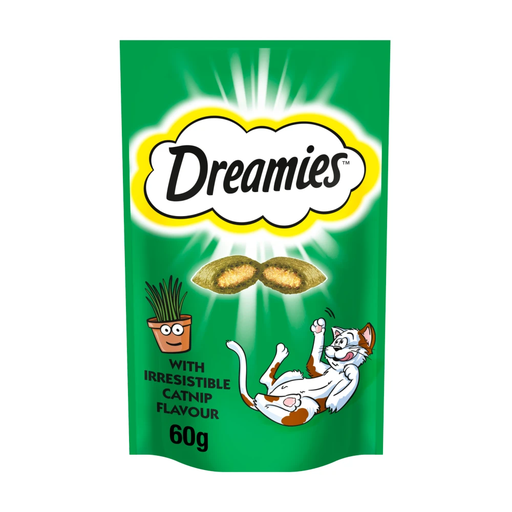
Why This Fits Their Persona: A compact resealable bag offers an accessible way to try catnip treats without committing to a large multipack.
The label states the treat’s 2 kcal-per-piece value and gives separate adult and kitten guidance, making portions easier to manage.
Dual texture, catnip flavour, resealable packaging and listed vitamin and mineral additives.
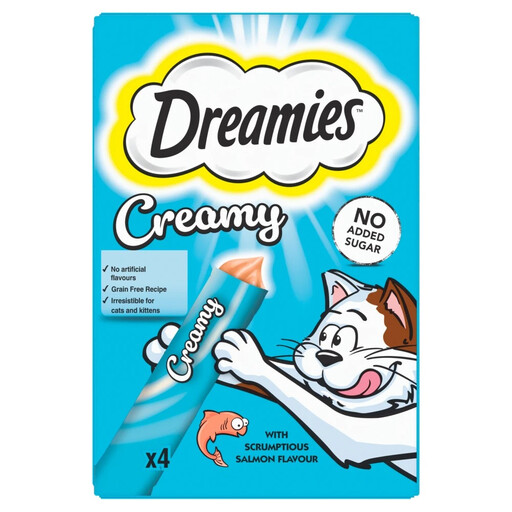
Why This Fits Their Persona: A smooth salmon-flavoured format suits owners who want a hand-fed reward or topper for mealtimes.
Its single-sachet format makes serving more controlled than estimating portions from a loose bag.
Grain-free recipe, 54 kcal per 100g, 4% salmon and taurine listed at 445 mg/kg.
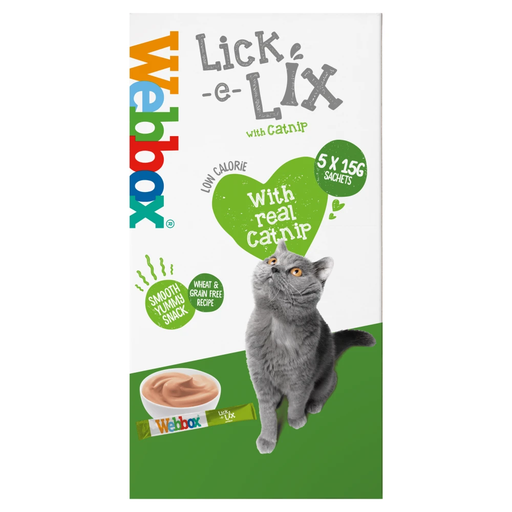
Why This Fits Their Persona: Suitable for cats from 3 months, it works as a lickable reward or topper for owners managing frequent small servings.
The 8.5 kcal-per-sachet figure and individual 15g portions help prevent uncontrolled serving sizes.
Wheat- and grain-free recipe, real catnip and five single-serve sachets.
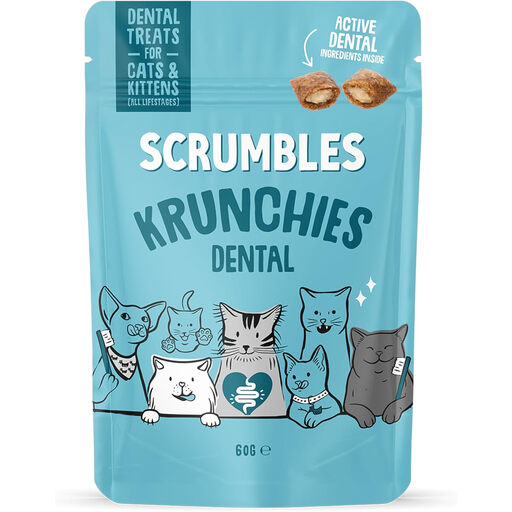
Why This Fits Their Persona: A practical option for owners who want a crunchy reward associated with their cat’s everyday dental routine.
The product clearly identifies SHMP in its composition, so shoppers can assess the stated formulation rather than relying on vague dental wording.
Contains 22% chicken, lists less than 1.5 kcal per treat and uses a crispy-soft texture.
We have compiled a complete, real-time list of products that fully satisfy these strict selection criteria and UK safety regulations.
Some are, but the minimum age differs. Dreamies biscuits listed here are suitable for kittens over 8 weeks, with a maximum of six pieces daily. Webbox Lick-E-Lix with Real Catnip is intended for cats from 3 months. Always follow the specific product label.
A low-calorie treat may make portion control easier, but it does not automatically make it suitable for a weight-management plan. Count treats within the daily calorie intake and reduce the main meal when instructed. A veterinary professional can provide individual guidance where needed.
No. Dental cat treats may complement an established routine, but they should not be presented as a replacement for brushing, professional checks or veterinary advice. Choose products with clear feeding guidance and monitor how your cat manages the texture.