
24/7 Customer Support

Free returns

Same-day & Next-day Delivery

Quality Guaranteed

Unlock Your Welcome Offers: FREE Delivery | Up to 80% OFF | Free 30-day JoyPlus trial
Download the APP
Choosing cat treats can seem straightforward until you compare ingredient lists, serving sizes and age guidance. Many products use attractive flavour names or functional wording that may not tell you whether a treat suits your cat’s everyday diet.
The main traps are easy to miss:
Kittens have different nutritional requirements from adult cats. Check the minimum age printed on the packaging before choosing kitten treats. For example, some Webbox Lick-e-Lix products are suitable from 12 weeks, while the liver sausage version is labelled for cats aged 3 months and older. The salmon variety is intended for adult cats aged 1 year and above.
Treats should remain a small part of your cat’s daily intake. The cheese and taurine variety advises that treats should not exceed 10% of total daily calories. This is particularly important for indoor cats, neutered cats or cats already receiving cat food toppers.
Lickable cat treats often contain a high proportion of moisture, which gives them a smooth, yoghurt-style texture. The Webbox Lick-e-Lix options listed here provide 8.5 kcal per 15g sachet, making the single-serve format relatively straightforward to portion.
However, low-calorie cat treats can still contribute to weight gain if offered in addition to large meals or several other snacks. Use one sachet as directed or divide it if your cat only needs a smaller reward. Discard uneaten portions according to the product label and keep fresh drinking water available.
Read the composition rather than relying only on flavour names. “Salmon”, “chicken” or “cheese” may refer to a percentage of the recipe rather than being the main ingredient.
Also decide how you intend to serve the product:
For cats with diagnosed allergies, digestive conditions, dental problems or recurring hairballs, review the full ingredient list and seek veterinary advice before changing the diet.
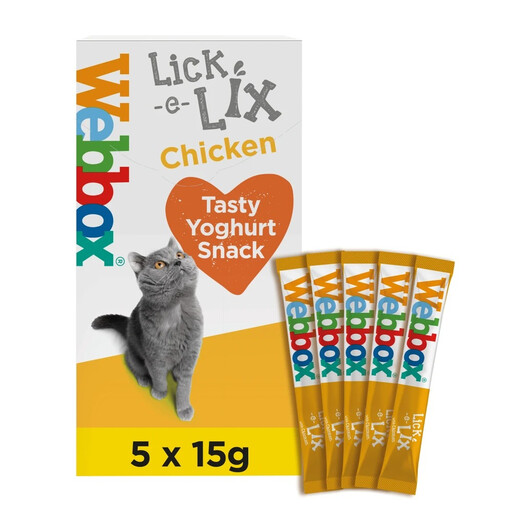
Why This Fits Their Persona: A simple option for new cat owners wanting portioned treats that can also be used as a topper for biscuits. It is suitable for cats and kittens from 12 weeks.
The pack states the serving format and age limit clearly, while each 15g sachet contains 8.5 kcal. This makes it easier to avoid oversized portions.
Contains 30% meat and animal derivatives, including 4% chicken; no added artificial preservatives or colours are listed in the supplied product details.
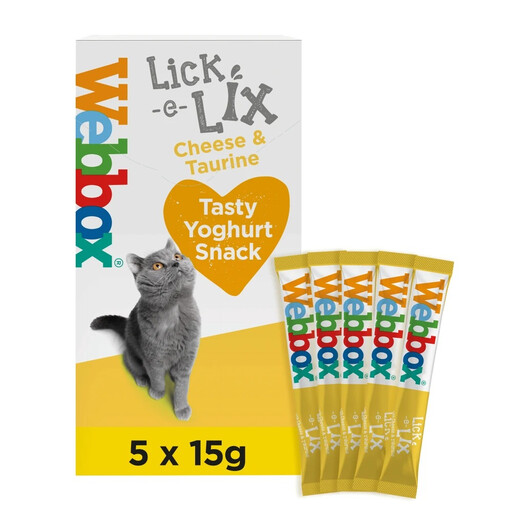
Why This Fits Their Persona: Suits owners who want a cheese-flavoured yoghurt cat treat with a clearly stated composition and the flexibility to serve it alone or over dry food.
The product information identifies it as complementary feed and advises keeping treats below 10% of daily calories, reducing confusion between treats and complete food.
Contains 4% cheese and added taurine; the five 15g sachets provide a convenient, consistent serving format.

Why This Fits Their Persona: A practical choice for owners seeking everyday dry food with fibre included for cats prone to hairball-related concerns, rather than relying only on occasional treats.
It is a 750g complete dry-food product with feeding guidance, so owners can assess it as part of the main diet instead of treating a snack as a hairball solution.
Chicken is listed at 17% in the composition, with 6% crude fibre and chicory root at 2%.
For a fussy cat, a small sachet of liver sausage, chicken, salmon or cheese-flavoured treat may be more useful than a large multipack that goes stale. The liver sausage and cat grass option contains 8.5 kcal per sachet and is labelled for cats from three months. It can be offered directly or squeezed over food.
Salmon cat treats may appeal to cats that prefer fish flavours, but check age guidance carefully. The salmon Webbox product is labelled for adult cats only and recommends no more than one treat per day. Avoid interpreting wording about dental care or calming as a substitute for veterinary treatment.
If you are specifically looking for hairball control cat food, consider the overall diet, grooming routine and symptoms. Persistent coughing, vomiting or changes in appetite warrant veterinary advice. You can also browse the wider hairballs range for related products.
We have compiled a complete, real-time list of products that fully satisfy these strict selection criteria and UK safety regulations.
Some are, but not all. Check the minimum age on the packaging. The Webbox chicken option is labelled for kittens from 12 weeks, while the liver sausage product is suitable from 3 months. The salmon variety is for cats aged 1 year and above.
Follow the product’s feeding guide and keep treats within around 10% of daily calorie intake, unless your vet advises otherwise. Reduce the main food slightly if treats are given regularly, particularly when using low-calorie cat treats alongside other rewards.
Yes, many lickable products are designed to be used as cat food toppers. Squeeze the sachet over dry food to add flavour and moisture, but do not replace a complete meal with complementary treats. Refrigerate or discard opened portions as directed on the label.