
24/7 Customer Support

Free returns

Same-day & Next-day Delivery

Quality Guaranteed

Unlock Your Welcome Offers: FREE Delivery | Up to 80% OFF | Free 30-day JoyPlus trial
Download the APP
A loose shelf, shifting radiator or damaged plasterboard can often be traced back to one simple mistake: using a fixing that does not match the wall construction. Cavity wall fixings are designed for hollow or partition walls, but the options vary considerably in size, installation method, holding design and suitable fixture thickness.
Before buying, check the wall, the load and the fixing dimensions rather than relying on phrases such as “heavy duty” or “universal”. The following guide explains the key details to compare, with practical options for DIY users, tradespeople and maintenance teams in the UK.
Plasterboard may be fixed to timber or metal studs, installed as a double layer, or attached over masonry. Older properties may also contain lath and plaster, while tiled boards introduce additional thickness. A fixing suitable for standard plasterboard may not be appropriate for a radiator on a tiled or double-thickness wall.
If a stud or solid masonry is available at the fixing point, anchoring directly into it may be preferable. Where there is only a cavity behind the board, use a suitable hollow wall fixing, drywall anchor or cavity anchor.
The screw length is not the same as the thickness of the material being secured. A 40mm screw may accommodate only a specified fixture thickness once the anchor has expanded behind the board. If the bracket, tile and plasterboard exceed that allowance, the fixing may not clamp correctly.
Always compare the product’s maximum fixing thickness with the combined thickness of the bracket, wall finish and any washers.
A card of six may suit one household repair, while a trade pack of 20 or 100 can reduce interruptions on a larger installation. However, buying a large quantity of the wrong diameter or length creates waste. Compare the drill size, thread diameter, fixing length and pack quantity before comparing price.
Match the fixing to the substrate:
A larger thread does not automatically mean that a fixing is suitable for every load. For example, the listed RAWLPLUG Interset options use M4 with an 8mm drill size or M5 with a 10mm drill size. Their stated fixing thickness varies by model, so select the version that accommodates your wall finish and fixture.
Longer fixings can be useful through thicker assemblies, but excess length may interfere with services or fail to expand correctly. Before drilling, check for concealed cables and pipes using an appropriate detector and follow safe working practices.
For general indoor work, zinc-plated steel may be suitable where the environment is dry. In kitchens, utility rooms, bathrooms and some outdoor applications, consider corrosion resistance and the surrounding conditions. The Fixman assorted self-tappers use A2 stainless steel, while other screw assortments use BZP zinc-plated steel.
For screws, also check:
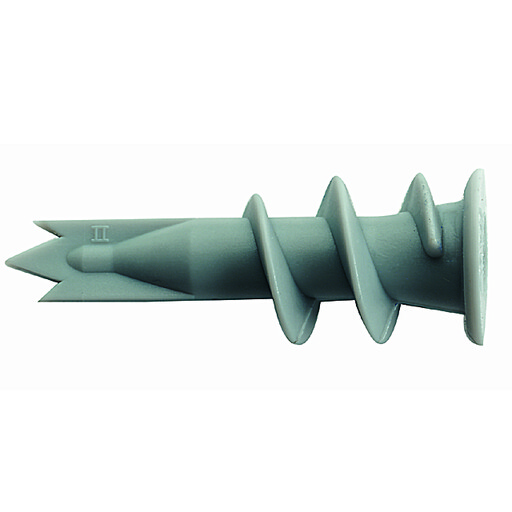
Why This Fits Their Persona: A practical pack for household jobs where quick installation matters, such as lightweight accessories and routine decorating work.
The listed design requires no separate drilling and supports a maximum fixture thickness of 12mm, making the application limits easier to check.
Pack of 25; compatible with panhead or countersink screws; fixing can be removed and reused according to the listing.
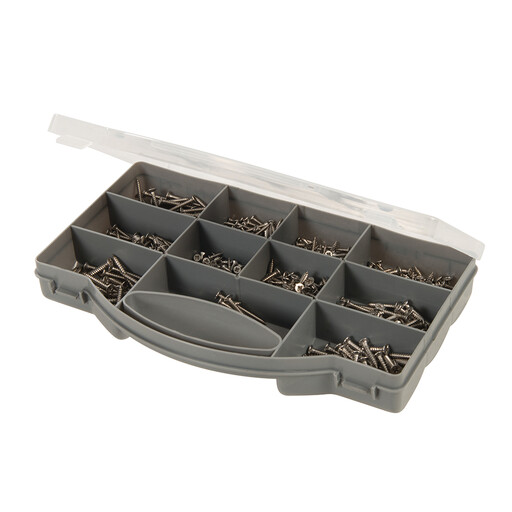
Why This Fits Their Persona: Suitable for buyers who want a broad screw selection for workshops, garages, home repairs and applications where corrosion resistance is a consideration.
The material is clearly specified as A2 stainless steel, rather than leaving corrosion suitability to vague wording.
570 assorted pieces; PZD countersunk heads; supplied in a compartmented storage case.
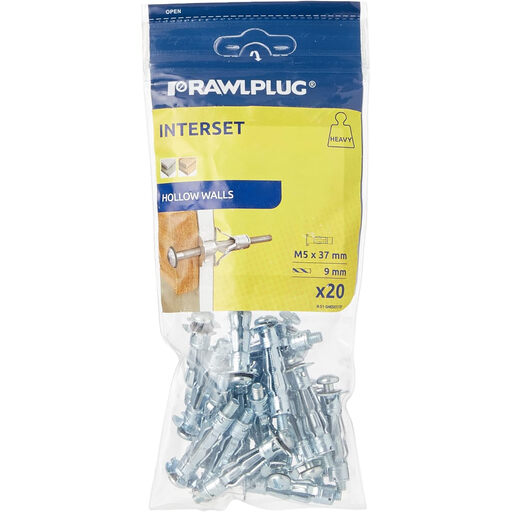
Why This Fits Their Persona: A trade-pack format for installers handling repeated plasterboard, plywood or double-board fixing work.
The listing states a 10mm drill size and 20mm fixing thickness, so the installer can compare these figures with the job before purchase.
M5 x 40mm format; trade pack of 20; screw and fixing can be removed and reused according to the product information.
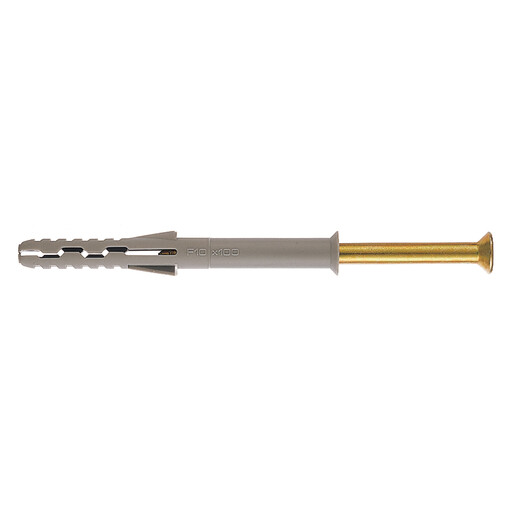
Why This Fits Their Persona: Designed for timber or metal window and door frames secured to concrete, brick, stone or blockwork.
It is positioned for solid substrates rather than being marketed as a universal plasterboard anchor, with a stated maximum fixture thickness of 80mm.
We have compiled a complete, real-time list of products that fully satisfy these strict selection criteria and UK safety regulations.
Some are listed for shelves, radiators, cabinets and bathroom accessories, but suitability depends on the wall construction, fixture weight, fixing positions and manufacturer guidance. For a substantial shelf or radiator, distribute the load across several appropriate fixings and use a stud or solid backing where available.
Not always. Self-drill plasterboard fixings are designed to pierce the board and install with a screwdriver. Interset fixings generally require a specified drilled hole, such as 8mm for certain M4 models or 10mm for M5 models. Follow the individual product instructions rather than applying one method to every anchor.
There is no single lifespan for every fixing. Service life depends on the substrate, moisture, corrosion exposure, load, installation quality and whether the fixture is repeatedly moved. Inspect fixings if a bracket becomes loose, the board shows cracking, or the room has experienced damp. Replace any fixing that is damaged or no longer clamps securely.