
24/7 Customer Support

Free returns

Same-day & Next-day Delivery

Quality Guaranteed

Unlock Your Welcome Offers: FREE Delivery | Up to 80% OFF | Free 30-day JoyPlus trial
Download the APP
Navigating the world of cookware can feel overwhelming. You want a reliable, non-stick surface for your morning eggs, but you're also conscious of health and safety. The ceramic frying pan has emerged as a popular choice for many UK households, promising a healthier, non-toxic frying pan experience. However, not all ceramic pans are created equal. Before you buy, it's crucial to understand the common pitfalls that can lead to a disappointing purchase.
As the Joybuy Product Recommendation Officer, my role is to help you see past the marketing clutter and focus on what truly matters. Let's look at the frequent issues buyers face and how to choose a pan that will genuinely serve your kitchen well.
induction hob pan needs a magnetic base to function. Many pans are advertised as "all-hob compatible," but a thin or poorly bonded steel plate at the bottom can lead to slow, uneven heating and a frustrating buzzing sound. This wastes energy and results in poorly cooked food.To ensure you get a durable and effective non-stick ceramic pan, focus on these key parameters.
A true ceramic non-stick coating is made from a sand-derived sol-gel, which is applied to the pan's body and cured. It contains no plastic or concerning chemicals. The pan's body, typically aluminium, is crucial for heat distribution. A forged or die-cast aluminium body is generally thicker and more robust than a simple stamped one, offering better resistance to warping and more even heating. Some premium models incorporate stainless steel layers for added durability and heat control.
For any hob, but especially for induction, the base is critical. Look for a pan with a thick, flat base that incorporates a bonded stainless steel plate. This ensures maximum contact with the hob, providing rapid, even heat distribution and preventing hot spots that can burn food and damage the non-stick coating. A solid base also makes the pan less likely to warp over time.
An easy clean frying pan is a priority for most. While many ceramic pans are technically dishwasher safe, most manufacturers recommend hand washing to prolong the life of the non-stick surface. Look for features like rivet-less interiors and smooth coatings that can be wiped clean with minimal effort. Also, consider the handle—is it ergonomic, heat-resistant and securely attached?
Instead of a one-size-fits-all approach, we've matched specific pans to different household needs.
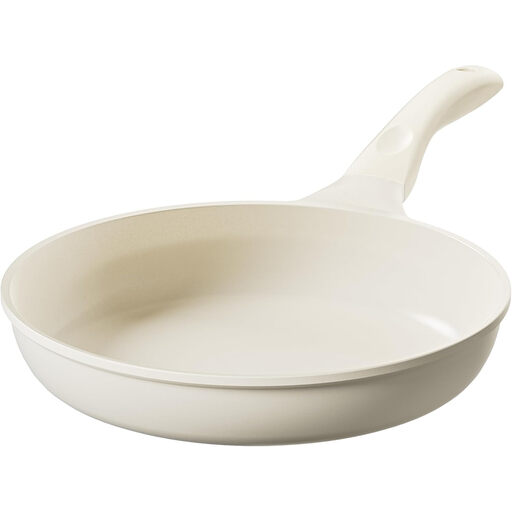
Why This Fits Their Persona: This 28cm pan is a versatile workhorse for daily meals, from family-sized stir-fries to weekend breakfasts. Its size and all-hob compatibility make it a practical choice for the typical UK kitchen.
It is explicitly stated as PTFE/PFOA/PFAS-free, avoiding the health halo trap. The thickened base ensures solid performance on induction hobs, preventing the common mismatch issue.
Features a heat-resistant Bakelite handle for safe handling and is designed for very easy cleaning—often just a wipe or rinse is needed. Compatible with all stovetops.
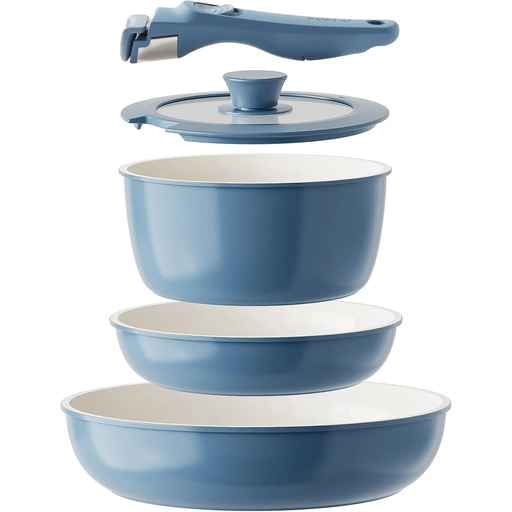
Why This Fits Their Persona: Perfect for those in smaller flats or with limited kitchen storage. The stackable design and single detachable handle can save significant cabinet space, keeping the kitchen tidy and organised.
This ceramic cookware set is fully PFAS, PFOA, lead and cadmium-free. The handle mechanism is robust, and the pots can be used in the oven (up to 450°C) once the handle is removed, adding versatility.
The key benefit is its space-saving design. The removable handle allows the pots to go from stovetop to oven to fridge to table, reducing the number of dishes you need to use and wash.
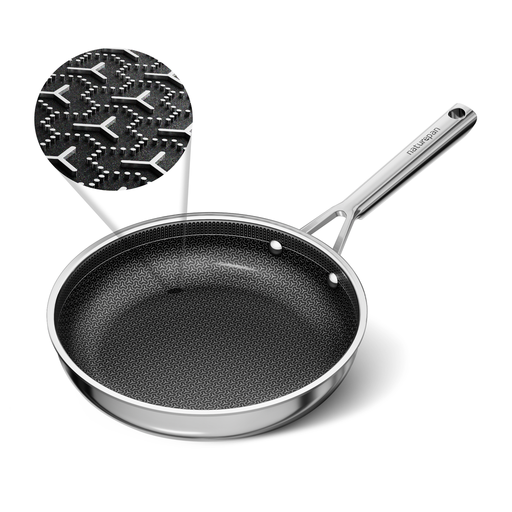
Why This Fits Their Persona: For those who want the searing capability of stainless steel and the easy release of non-stick. This hybrid design is built for durability and high performance, suiting keen cooks who value longevity.
Its 5-layer hybrid construction directly counters the "non-stick for a month" problem by protecting the ceramic coating with a stainless steel lattice. It is also fully PFAS, PFOA and PTFE-free.
The laser-etched hexagon surface allows for excellent searing on the raised steel parts while food releases easily from the ceramic valleys. It is oven-safe to 260°C and dishwasher safe.
We have compiled a complete, real-time list of products that fully satisfy these strict selection criteria and UK safety regulations.
1. How long does a ceramic frying pan's non-stick surface last? The lifespan of a ceramic non-stick coating depends heavily on its quality and how it's cared for. A high-quality pan can maintain good performance for several years with proper use. To maximise its life, avoid using metal utensils, overheating the empty pan and using abrasive scrubbers. Hand washing is often recommended over dishwashing.
2. Are ceramic pans completely non-toxic? Pans with coatings made from sol-gel technology are generally considered a safe and non-toxic option, as they do not contain plastics or chemicals like PFOA, PTFE or lead. To be certain, always look for products that are explicitly certified as PFAS-free, which covers the entire family of related chemicals, not just PFOA.
3. Can you use oil in a ceramic frying pan? Yes, you can and should use a small amount of oil or butter, especially for the first use and for cooking at higher temperatures. While the non-stick surface reduces the amount of fat needed, a little oil helps with heat transfer and can prolong the life of the coating. Avoid using oil sprays, as the propellants can build up on the surface over time and diminish the non-stick performance.