A portable ceramic fan heater is a reasonable choice for quick, supervised warmth during a short hobby session, particularly near a work area. Choose a model you can position clear of materials, and check its output controls and safety features. If the room quickly cools again, a heater alone will not address heat escaping through cold walls or draughts; consider heat retention while preserving necessary ventilation.
Who is this for?
Hobbyists working in short sessions
If you want warmth near a craft or repair bench while you work, a portable ceramic fan heater is worth considering for top-up heat. Dimplex describes this heater type as supplementary heating; check whether the model lets you adjust its output as the space warms.
People whose hobby room loses heat quickly
If cold walls or draughts leave the room chilly even with a heater running, heat retention is part of the decision. Energy Saving Trust explains that heat escapes through building fabric; address unwanted draughts without blocking ventilation needed for safety and air quality.
People working around stored materials
Paper, textiles and furniture can make heater placement difficult. Check that there is a clear, stable position for the appliance before choosing one; the Home Office advises keeping heaters away from curtains and furniture and never using them to dry clothes.
What matters when choosing?
Decide whether you mainly need warmth at the bench or lasting comfort across the room. In either case, make safe placement a condition of using a portable heater.
| Concern | What to check | Who this matters to |
|---|
| Quick warmth at the bench |
Check the heat settings and whether the thermostat gives you useful control after warm-up. |
I want to start a short hobby session without waiting for the entire room to warm up. Around 33% of consumers put targeted warmth first. |
| Comfort despite cold walls |
Assess the room’s draughts and insulation; treat any stated room coverage as model-specific guidance. |
When warmth disappears soon after the heater stops, I need to consider heat retention as well as heater output. For around 42% of consumers, sustained comfort is the primary concern. |
| Safe, controllable use |
Look for tip-over and overheat protection, and confirm that the heater can stand clear of materials. |
With supplies stored near my work area, I need a clear place for the heater while I am using it. Safe, controllable operation comes first for around 25% of consumers. |
Buying pitfalls
-
Trying to solve heat loss with heater output alone
Energy Saving Trust explains that heat escapes through building fabric. A portable heater can add warmth while it runs without preventing a cold-walled room from cooling again.
If the room loses warmth rapidly, check draughts and consider suitable insulation improvements alongside the heater. Keep vents and other airflow needed for safety and air quality open.
-
Treating a stated room area as a guarantee
Manufacturer room-area figures apply to particular models and do not establish how a heater will perform in a poorly insulated hobby room.
Compare output controls, then consider the room’s size, ceiling height, draughts and whether you need to warm a bench or the whole space.
-
Relying on safety cut-outs instead of clear placement
Tip-over and overheat protection do not make it safe to cover a heater or leave it among hobby materials. The Home Office advises keeping heaters away from curtains and furniture and never drying clothes on them.
Use a stable position with clear space around the heater, follow its instructions and unplug it when you go out or go to bed.
Brands to consider for ceramic heating
Dimplex
Dimplex offers portable ceramic heaters for supplementary warmth, alongside convectors positioned for larger rooms.
- The DXUC2BS lists three power settings, an adjustable thermostat, fan-only operation, tip-over protection and overheat protection.
- Dimplex describes ceramic fan heating as top-up heat; that does not establish whether the DXUC2BS can maintain comfort in a room losing heat through cold walls.
Faithfull
Faithfull positions its FPPHEAT2KWC2 ceramic fan heater for locations including homes and workshops.
- The model lists 1 kW and 2 kW settings, a thermostat, thermal cut-out and tip-over protection.
- Faithfull’s stated 20 m² heating area is guidance for this model, not a promise of comfort in a cold-walled room.
Russell Hobbs
The RHCTH2002G illustrates a ceramic tower heater with more detailed controls.
- Russell Hobbs lists temperature selection from 5 °C to 36 °C, oscillation, a 24-hour timer, child lock, overheat protection and a tip-over switch.
- Its stated suitability up to 20 m² is specific to the model and should not replace an assessment of the hobby room’s heat loss.
De'Longhi
The HFX65V20 is a tower-format ceramic heater for consumers who want remote control and additional operating modes.
- De'Longhi lists 1.2 kW and 2 kW heat settings, remote control, anti-freeze protection, a safety thermostat and tip-over shut-off.
- Decide whether the taller format and extra controls suit the available clear space; they do not resolve heat loss through the room’s walls.
Devola
The compact DVSFH15WS offers selectable settings for localised ceramic fan heating.
- Devola lists 900 W and 1,500 W heat settings, three temperature choices, 60-degree oscillation and tip-over protection.
- Devola notes that larger or poorly insulated rooms may need more heat; do not assume this model will warm the whole hobby room.
Ceramic heaters for hobby-room use
These portable ceramic fan heaters are choices to consider for top-up warmth during hobby sessions. Check the space you need to warm and where each heater can stand safely; neither product alone addresses heat escaping through cold walls.
 No image available
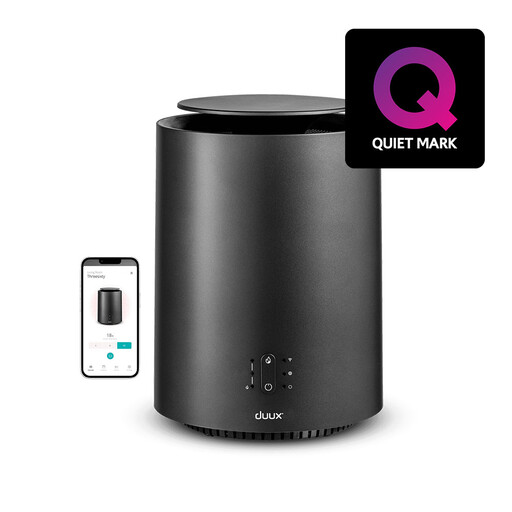
Duux ThreeSixty 2 DXCH09UK ceramic fan heater, black
Consider this model if you want heat directed beyond one work position during a hobby session. Its listed specifications include 1800 W power and 360° oscillation. Check the available output and temperature controls if you need to turn down the heat after warm-up; the room’s heat loss still matters.
View on Joybuy
 No image available
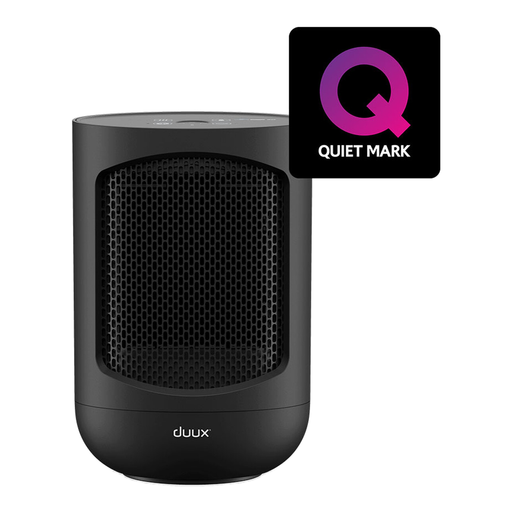
Duux Zone DXCH41UK portable ceramic fan heater, black
Consider this portable model for warmth near a hobby bench during shorter sessions. Its listed specifications include 1500 W power and 60° oscillation. Check its temperature controls if you need the heater to respond to changing room temperature, and do not assume personal heating will keep the whole cold-walled room comfortable.
View on Joybuy
Frequently asked questions
Will a ceramic fan heater fix a hobby room with cold walls?
No: it can provide quick supplementary warmth, but it cannot stop heat escaping through cold walls or draughts. If the room does not hold warmth, consider draught-proofing or insulation while preserving ventilation needed for safety and air quality, as Energy Saving Trust advises.
Can I leave a portable ceramic heater on overnight or while I am out?
Do not use it as an unattended or overnight heating solution. Home Office fire-safety guidance says to unplug electric heaters when you go out or go to bed; follow the individual heater’s instructions as well.
Which safety features matter in a hobby room?
Look for tip-over and overheat protection, but choose a heater only if you can position it safely. Keep it clear of curtains, furniture and hobby materials, and never use it to dry items, in line with Home Office guidance.
Can I use a ceramic heater in a damp hobby space?
Use it there only if the exact model’s instructions permit that location and its electrical suitability matches the conditions. Do not assume that a portable ceramic heater is suitable for a bathroom or another damp space simply because it provides heat.


