Desk-zone warmth seekers
If you work in the office for defined periods, a fan heater may suit your need for local warmth without heating the whole home. Electrical Safety First notes that portable fan heaters provide immediate heat but can be noisy.


A ceramic fan heater can provide desk-side top-up warmth if you can position it safely, keep its airflow clear and plug it directly into a suitable wall socket. Choose controls and safety features for your work routine, but investigate persistent condensation, damp or mould separately: extra heat alone will not usually resolve a cold-wall problem.
If you work in the office for defined periods, a fan heater may suit your need for local warmth without heating the whole home. Electrical Safety First notes that portable fan heaters provide immediate heat but can be noisy.
If you use the room repeatedly, compare adjustable thermostats and heat settings rather than relying on maximum output throughout a work session. Check each model’s controls and instructions before deciding how you would use it.
If the wall develops condensation, damp or mould, distinguish personal warmth from dealing with the cause. Healthy Homes Westmorland and Furness advises that turning up the heating will not usually fix condensation damp by itself.
Check the wall and the available socket position before choosing a heater. Then weigh desk-side warmth against the controls you will use during your working hours.
| Concern | What to check | Who this matters to |
|---|---|---|
| Desk-side warmth | Check the intended room or personal-space use and available heat settings; leave the air inlet and outlet unobstructed. | If I work in the room briefly, I want warmth near my desk without heating the whole property. Around 36% of consumers put quick local warmth first. |
| Repeated-use control | Compare rated input, selectable settings and whether the thermostat offers a temperature setting or a relative dial. | For regular office sessions, I want to adjust the heat as the room warms rather than leave it on maximum. Around 29% of consumers prioritise controllable warmth. |
| Safe placement | Look for tip-over and overheat protection, and confirm that the heater can stand clear of furniture and reach an accessible wall socket. | With cables and furniture around my desk, I need a position where the heater will not be covered or knocked over. Around 21% of consumers put safe placement first. |
| Cold-wall cause | Look for recurring condensation, damp patches or mould; arrange an assessment if the problem persists. | If the wall stays wet or mouldy, I need to address why it happens, not just feel warmer beside it. Around 14% of consumers prioritise the wall problem itself. |
A heater may improve comfort, but Healthy Homes Westmorland and Furness advises that heating alone will not usually fix condensation damp.
Investigate persistent moisture, ventilation and the condition of the wall. If you rent, report damp or mould to your landlord or managing agent in writing.
Safety shut-offs do not make a covered heater or one placed close to furnishings safe to use.
Check the exact model’s clearance instructions, keep it away from curtains and furniture, never use it to dry clothes, and unplug it when you leave or go to bed. The Home Office’s fire-safety guidance gives the same advice on nearby furnishings, drying clothes and unplugging heaters.
Dimplex’s DXUC2B instructions warn that an extension cord may overheat and create a fire risk; check the instructions for the exact heater you choose.
Plan a clear, accessible position beside a suitable wall socket rather than relying on a lead across the workspace.
A safer position may mean rearranging the desk or arranging a suitable socket.
Scheduling or more precise temperature selection does not repair a cold wall or establish how a heater will perform in your room.
If you work predictable hours or need particular controls, check whether you would use those functions. Otherwise, compare models with straightforward thermostat controls.
Its HFX65V20 is a tower-style ceramic fan heater to consider if you want a movable unit with a remote for repeated office sessions.
Its DXUC2BS is a compact PTC ceramic fan heater to consider for local top-up use.
Its Hot+Cool HF1 is relevant if scheduled operation and selected-temperature control matter to your working routine.
These ceramic heaters offer options for personal or desk-adjacent top-up warmth. Compare their stated output and controls with the space around your desk; none should be treated as a repair for a damp wall.
 No image available
Consider this for desk-adjacent top-up warmth when a remote would be useful. The stated output is 1.5kW; check that your chosen position leaves the clearance required by the model instructions.
 No image available
Consider this portable model if you may need to move your top-up heater between suitable positions. It is rated at 1.5kW; check its controls and required distance from nearby furniture before buying.
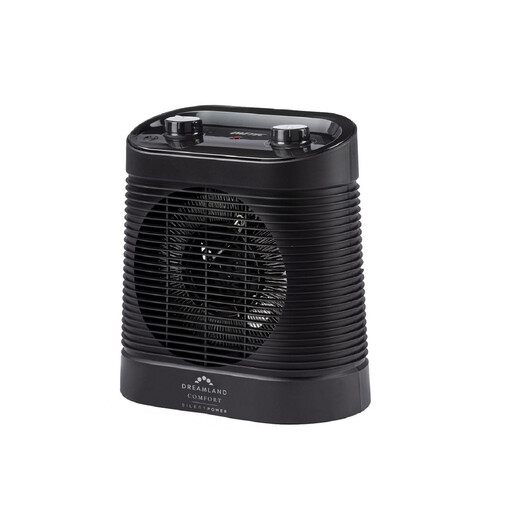 No image available
Consider this model if digital controls matter during regular office use. Its title states 2000W and ceramic heating; if call-time noise is decisive, check noise information for this exact model rather than relying on its name.
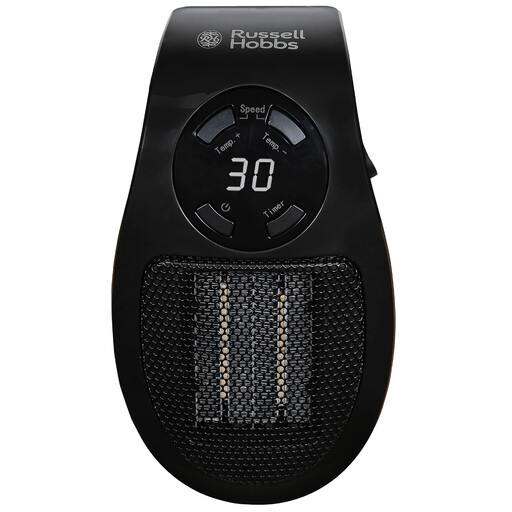 No image available
This plug-in format is worth considering only if an appropriately positioned wall socket lets you keep the heater clear of nearby materials. It is rated at 500W; check the exact instructions and heat controls, as fan speeds should not be mistaken for separate heat settings.
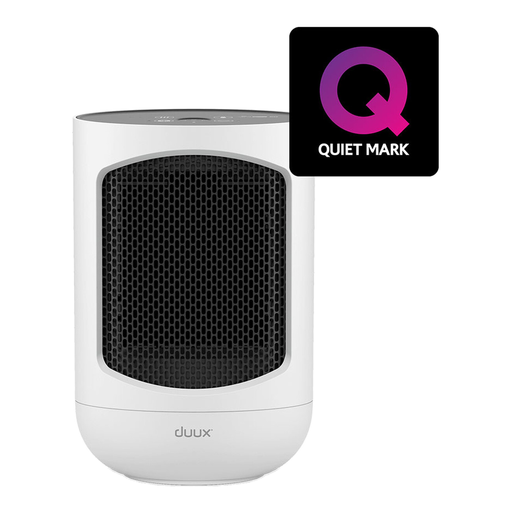 No image available
Consider this personal fan heater if oscillation suits your desk layout. Its title states 1500W and 60° oscillation; check the exact model’s heat modes, thermostat controls and placement instructions before choosing it.
No: it may improve comfort, but heating alone will not usually resolve condensation damp, according to Healthy Homes Westmorland and Furness. Persistent moisture or mould calls for the underlying cause to be assessed.
Check the exact heater instructions and your room conditions before planning prolonged use. Dimplex’s DXUC2B instructions, for example, describe that appliance as suitable only for well-insulated spaces or occasional use; do not assume the same instructions apply to every model.
A thermostat is useful to consider if you use the office repeatedly and want the heater to respond to its selected setting. Check whether the model offers a temperature selection or a relative dial, and use its rated input, expected hours of use and your electricity tariff when assessing running costs.
Plan for a suitable wall socket and follow the exact heater instructions. Dimplex’s DXUC2B instructions warn that an extension cord may overheat and create a fire risk, so an extension lead should not be the default answer to an awkward desk position.
Report the damp or mould promptly in writing to your landlord or managing agent and keep a record. Seek advice specific to your location and tenancy if it persists; a portable heater does not settle what is causing the problem.