Desk-side warmth seekers
If you work, study or game at a bedroom desk, you may want warmth directed towards your immediate area rather than a whole-room solution. Check that a compact heater still has enough clear, stable space for safe positioning.


For short periods of warmth beside a bedroom desk, look for a compact ceramic fan heater with selectable heat, an adjustable thermostat and protective cut-outs, provided you can position it safely. Consider a larger or more extensively controlled model if adjusting it from your chair or spreading airflow matters more than a small footprint; no timer or cut-out replaces clear space around the heater and unplugging it before bed.
If you work, study or game at a bedroom desk, you may want warmth directed towards your immediate area rather than a whole-room solution. Check that a compact heater still has enough clear, stable space for safe positioning.
If the safest position is away from your chair, a remote or accessible controls may make adjustments easier. Switch off and unplug the heater before going to bed or leaving the room.
If you plan to heat the desk area only while you are there, compare selectable power settings and likely running time. An ECO label alone does not establish how much electricity a heater will use in your room.
Start with a position that meets the heater’s clearance instructions, then decide whether compact, directed airflow or controls you can use from farther away matter more.
| Concern | What to check | Who this matters to |
|---|---|---|
| Targeted warmth and space | Check dimensions and placement instructions, then look for suitable heat settings and a stable base. Do not assume a small heater can safely sit on the desk. | I want warmth while I sit at my desk, without putting a heater among papers or too close to bedding. Around 46% of consumers put compact, targeted warmth first. |
| Controls and disruption | Check the exact model for a thermostat, remote, timer and model-specific noise information if these affect your choice. | When I am concentrating or winding down, I want to adjust the heater without repeatedly moving towards it. For around 27% of consumers, convenient, less disruptive control is the primary concern. |
| Electricity use | Compare input power in kW and the time you expect to use each setting; a thermostat may cycle the heater rather than keep it at full output. | I only need extra warmth while using the desk, so the setting and time it runs matter to me. Electricity use comes first for around 27% of consumers. |
A tip-over switch or overheat cut-out does not make it safe to place a heater against bedding, curtains, furniture or desk clutter. Electrical Safety First warns against placing portable heaters near flammable materials or using them to dry clothes.
Identify a stable position with the clearances specified in the heater’s instructions before choosing a model.
Input wattage helps you assess electricity use, but it does not establish how comfortable a particular position will feel or how often a thermostat will cycle.
Compare the available settings and calculate electricity use from the selected input in kW multiplied by the hours it operates.
Electrical Safety First warns that exceeding an extension lead’s, cable reel’s or adaptor’s maximum current rating can cause overheating and fire.
Use a suitable wall socket where practical. If you need an extension, check its marked rating against the combined load, avoid chaining leads and fully unwind a cable reel.
A model’s stated room suitability does not tell you exactly how warmth or fan noise will feel at your desk; placement and room conditions also matter.
Check the claim for the exact model, its placement instructions and any model-specific noise figure that matters to you.
The DXUC2BS is a compact ceramic fan heater that Dimplex describes for desks, bedside tables and small spaces.
Its ceramic tower range includes models for buyers who want controls accessible from a position away from the heater.
Its ceramic-heater models range from a compact oscillating option to a model with digital controls.
These ceramic fan heaters cover personal warmth near a desk and options for adjusting or spreading airflow. Compare each model’s controls and size with the safe position available in your bedroom.
 No image available
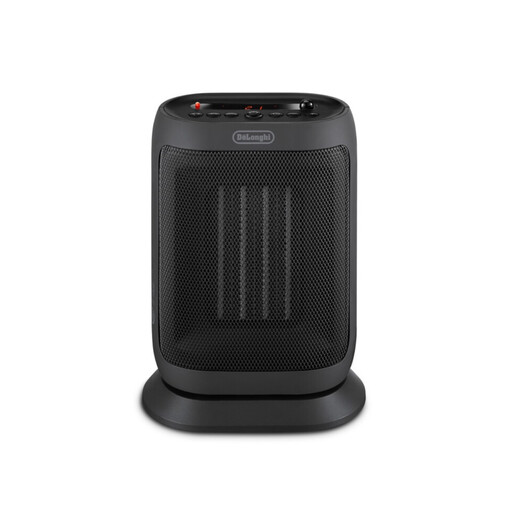
Consider this model if you want to adjust warmth from your chair. Its name specifies an oscillating base, remote control, 24-hour timer and ECO function; check its dimensions against your intended position. A timer is not a reason to leave it running while you sleep.
 No image available
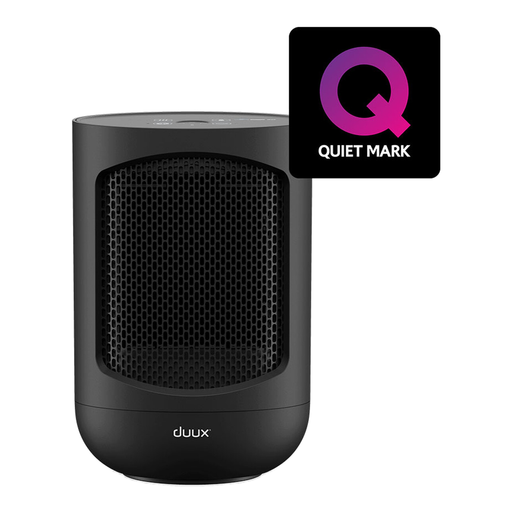
Consider this model for a personal-heating position where it can remain clear of bedding and desk clutter. The product name specifies 60° oscillation and three settings; check whether its temperature controls and the input of each setting meet your needs.
 No image available
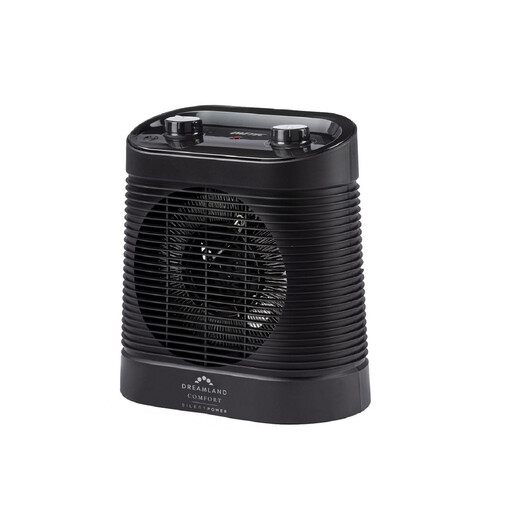
Consider this heater if digital controls matter in a bedroom workspace. Its name specifies digital control and a 2000 W rating; treat “Silent Power” as part of its name rather than a measured noise result, and check the exact protective features needed for your position.
 No image available
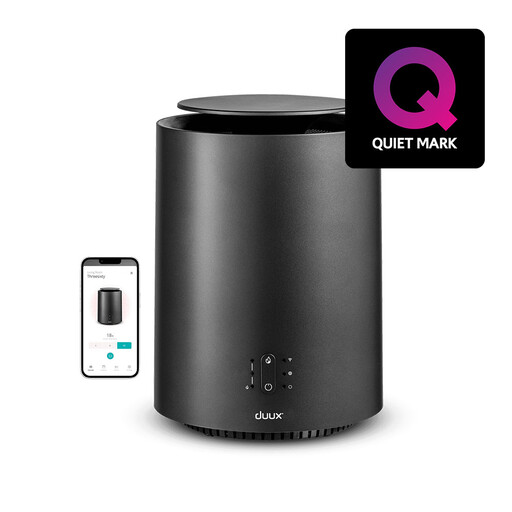
Consider this model if you want airflow directed beyond one fixed desk position. Its name specifies 360° oscillation and smart controls; check the controls, dimensions and placement instructions before deciding whether it fits your bedroom.
Yes, for temporary warmth if you can position it stably and follow its placement instructions. Electrical Safety First advises keeping portable heaters away from curtains and furniture and never using them to dry clothes; keep bedding and desk clutter clear too.
No: GOV.UK fire-safety guidance says to unplug electric heaters when you go to bed or go out. A timer, thermostat or tip-over switch does not change that advice.
Use a suitable wall socket where practical. If an extension is needed, check that its marked maximum current rating accommodates the combined load, do not chain extensions and fully unwind any cable reel; Electrical Safety First warns that overloaded extension equipment can overheat.
Multiply the selected input in kW by the hours the heater operates to estimate use in kWh: a heater drawing 2 kW continuously for one hour uses 2 kWh. Actual use over a longer period depends on the selected setting and whether the thermostat cycles the heater.